
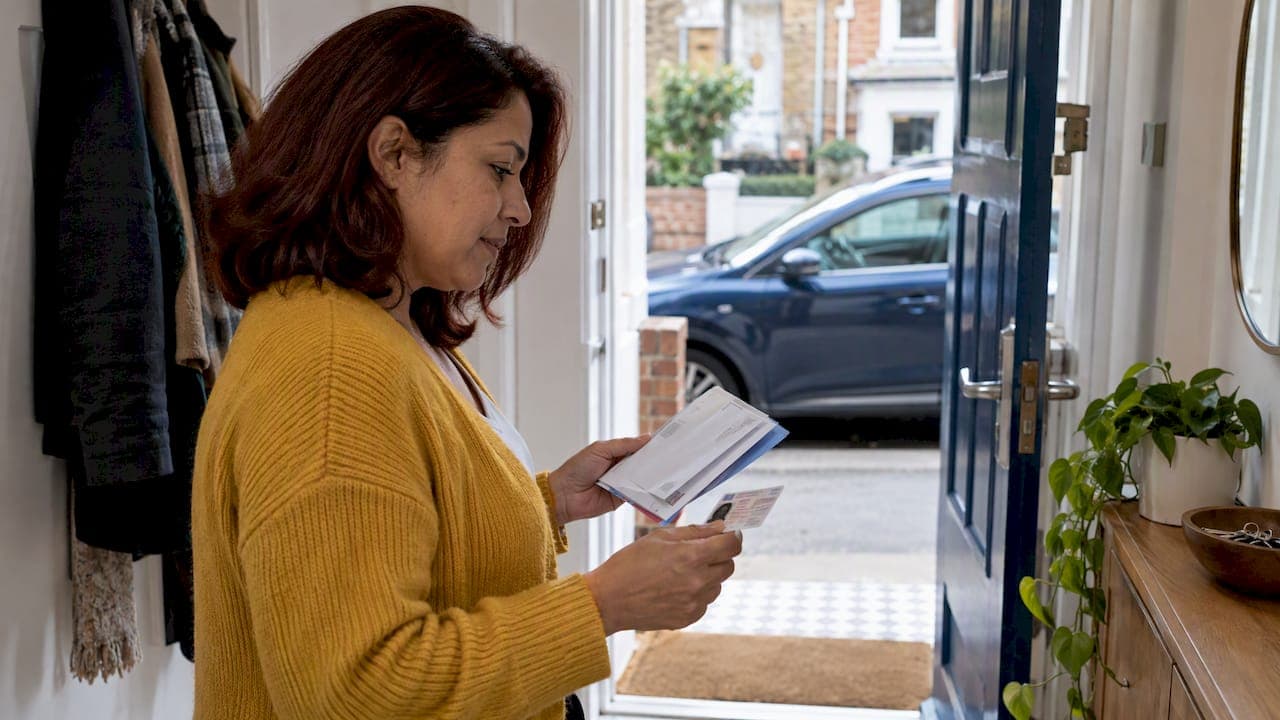
Yes, you can lease a car in the UK as an expat, but the funder has to be able to verify who you are, where you live and how you will pay. A new arrival has no UK credit file, so a standard personal lease is harder to get in the first months. The route that works is usually a mix of preparation (address, bank account, electoral roll, documents) and choosing the right type of agreement. This guide explains each step, what lenders look at and what to do if the answer is no.
TL;DR
- Leasing funders assess a UK credit file, UK address history and proof of income. Expats and returning residents often have thin or empty files, so approval is not automatic.
- You can build a stronger application within weeks: a UK bank account, a proper address, registration on the electoral roll and clean, accurate paperwork.
- Check your own credit report for free before applying, and avoid several applications in a row. Each full application leaves a visible hard search.
- If a standard lease is out of reach, a short-term lease, a business route or a guarantor-backed agreement may be. Read the contract for early termination, mileage and end-of-lease charges before you sign.
- Tell us your arrival date, visa type and income source and we will tell you honestly which route fits.
Table of Contents
- Why leasing is harder when you are new to the UK
- Who counts as an expat for car leasing purposes
- What funders check
- Build a UK footprint before you apply
- Soft searches, hard searches and why you should not shop around blindly
- Income from overseas
- Your driving licence and the car you will use
- What if a standard lease is not available?
- The costs beyond the monthly payment
- Handing the car back
- Perspective: what we see with newcomers
- Talk to us before you apply
- FAQ
- Sources
Why leasing is harder when you are new to the UK
A car lease (contract hire) is a credit agreement. The funder is committing a new vehicle to you for two to four years or more, so it wants evidence that you will pay every month and that it can find you if something goes wrong. In the UK, that evidence is largely a credit file held by the credit reference agencies, plus your address history and income.

If you have just arrived, you may have an excellent record in another country that UK funders cannot see. To them, you look the same as someone with no history at all. That is the whole problem, and it says nothing about your actual reliability.
The regulator expects lenders to look at affordability, not only credit score. The FCA's review of the motor finance market said it was not satisfied that every surveyed lender met the creditworthiness rules, and found some focused unduly on credit risk rather than on whether the borrower could afford the agreement. In practice that means a good income and clear paperwork matter, but the funder's own scoring still decides.
For a wider picture of how lessors judge applicants, see our guide to car leasing eligibility in the UK.
Who counts as an expat for car leasing purposes
Funders do not use a single definition, but the situations tend to fall into four groups:
- New arrivals on a work or family visa. You have a UK address, probably a job offer or contract, and no UK credit history.
- Returning UK residents. You were born or lived here, spent years abroad, and your old UK file has gone quiet or lapsed.
- Contractors and people paid from overseas. Your income may come from a foreign employer or foreign account.
- Directors of UK companies based abroad. A company lease may be an option, though funders will look at both the company and the individuals behind it.
Each group faces different questions. A returning resident with an old UK file may be approved far more easily than a new arrival with a brand-new visa. A person on a short visa may find the funder worried that the agreement will outlast their right to stay.
What funders check
Expect the funder to run through the same short list whether you are an expat or a lifelong resident. The difference is how much of it you can show.
| Check | What the funder wants to see | What helps an expat |
|---|---|---|
| Identity | Passport, and visa or residence document where relevant | Documents that are valid and match your application exactly |
| Address | A stable UK address, ideally with some history | A signed tenancy agreement and a recent utility or council tax bill |
| Income | Evidence you can afford the monthly payment | Payslips, an employment contract, UK bank statements |
| Credit file | Repayment history and no recent defaults | Credit built in the UK, electoral roll registration |
| Right to stay | Residence covering the agreement length | A visa that runs beyond the term, or a shorter agreement |
Lenders in this market commonly mention passports, visas or residence permits, proof of address, payslips or contracts and bank statements, and some will ask for a few months of statements if they cannot link your bank account directly. Treat that as a realistic document pack to gather before you apply, rather than a fixed rule: each funder sets its own.
Build a UK footprint before you apply
You cannot manufacture years of history, but you can make your file look far less empty in a few weeks.
Open a UK bank account and use it
Pay your salary into it and run your regular bills through it. A few months of statements showing steady income and rent paid on time are the most persuasive thing a new arrival can hand over.
Register on the electoral roll
Credit reference agencies and lenders use the electoral register to confirm that you live where you say you do. Government guidance on applying for credit as a newcomer notes that lenders check the Electoral Register, so being registered can strengthen an application. Being registered to vote depends on your nationality and status, so check whether you are eligible, but where you can, do it as soon as you have an address.
Keep your address stable
Moving three times in your first year makes you look less settled. If you can, sign a lease on your home that lasts at least a year.
Check your own credit report for free
It is worth looking at what the agencies hold on you, particularly if you are returning after years away. MoneyHelper explains how to check your credit report for free with the main UK agencies, and says doing so does not affect your credit standing. Look for wrong addresses, accounts you do not recognise and old entries from before you left. Our own explainer on car lease credit checks shows what a funder sees.
Small things that help your application look right
Funders also respond to the basics. Use the same spelling of your name and the same address on every form. Declare income honestly and include any commitments you manage overseas. The same government guidance asks applicants to give complete and accurate information, including evidence of financial commitments held abroad. Mismatches slow things down more than a thin file does.
Soft searches, hard searches and why you should not shop around blindly
The type of credit check matters more for an expat than for anyone else, because you may only get a couple of attempts.
MoneyHelper's guidance explains that hard searches, which happen during full finance applications, are visible to other lenders and can affect your score, while the soft searches used by eligibility checkers do not. So the sensible order is:
- Use a soft-search eligibility check first wherever one is offered.
- Apply only where a provider has told you your profile is a realistic fit.
- Do not submit full applications to several funders in a row, hoping one will say yes. A chain of declines leaves a chain of hard searches, and each one makes the next application look weaker.
This is one reason a broker is useful: we can describe your situation to funders and see where it fits before a formal application goes in, rather than you finding out by being declined. If you want a deeper look at how it works, our guide to leasing with a guarantor and soft checks covers the alternative route in detail.
Income from overseas
This is the question that tends to stop expats. If you are paid by a foreign employer, or into a foreign account, a UK funder cannot easily confirm your income against a UK payroll or UK bank history. Many will simply decline.
What tends to help, in order of strength:
- Moving your salary or contract payments into a UK account so the statements show regular credits.
- A UK employment contract or letter from a UK employer confirming your pay.
- A company lease, where the business has its own UK accounts and trading history. Our page on leasing a car for business use sets out when this applies.
- A UK-based guarantor with a good credit record who is willing to stand behind the agreement.
Which of these works depends on the funder and your circumstances, and we do not promise approval. What we can do is tell you early which path looks realistic.
Your driving licence and the car you will use
A lease does not change the rules on who may drive. As an overseas resident passing through, you may usually drive in Great Britain on a qualifying foreign licence or international driving permit for up to 12 months from your last entry, and the Motor Vehicles (International Circulation) Order 1975 sets the vehicle and licence conditions. The rules for people who become resident, and for licences from different countries, can differ, so check the current DVLA guidance for your own licence before you plan a three-year agreement around it.
Insurance has to be in place before the car is driven. Northern Ireland's official guidance says a vehicle used on the road must have valid insurance covering at least third-party injury or damage, and the same principle applies across the UK. Insurance is a real cost for newcomers, since insurers may not recognise your driving history from abroad, so get quotes before you commit to a monthly payment. Ask your previous insurer for a letter confirming your no-claims history, as some UK insurers will take it into account.
One point that surprises people who ship a car to the UK instead: an imported vehicle has to be registered and licensed with the DVLA, and the official notice on bringing a private vehicle sets out a first registration fee of £38. That notice is withdrawn, so confirm the present fee and process on GOV.UK. Shipping a car is often more hassle than leasing locally, especially if your home car is left-hand drive.

What if a standard lease is not available?
A decline is not the end. There are several routes, and each has a trade-off.
| Route | Best for | Trade-off |
|---|---|---|
| Short-term lease (typically 3 to 12 months) | Arrivals who need a car now and expect to settle | Usually a higher monthly cost than a long lease |
| Waiting 3 to 6 months, then a standard lease | People who can manage without a car, or use a rental, at first | You rely on other transport in the meantime |
| Guarantor-backed lease | Those with a trusted UK contact | Your guarantor takes on real risk |
| Business lease | Company directors, contractors with a UK limited company | The business must have its own credibility |
| Car subscription or rental | Very short stays | Most expensive per month, but most flexible |
Short-term leases are the usual bridge. We cover them on our short-term vehicle leasing page, and agreements are for months rather than years, which also suits people on a fixed-length visa or a short assignment. Use that period to build the track record that a longer lease will need: pay everything on time, stay at one address, and get on the electoral roll.
The costs beyond the monthly payment
A lease payment is only part of the cost of running a car in the UK. Expat guides list the usual running costs as insurance, road tax, MOT and servicing, fuel, and parking permits and charges, and insurance is compulsory. Add congestion or low-emission zone charges if you live or work in a major city.
Before signing, make sure you understand what the payment includes. Our guides to monthly payments, hidden costs and what the typical car lease costs cover the numbers in plain language. If you are considering an electric car, as many newcomers do for city charging and tax reasons, read what electric car leasing really costs first, since home charging access changes the sums.
Read the contract, because it protects you
The Consumer Rights Act 2015 requires consumer contract terms to be fair, transparent and balanced, as the Financial Ombudsman Service's decision reference on a hire agreement dispute describes. The same decision notes that a hire agreement can involve early termination and excess-mileage charges. Those are the two clauses an expat should read twice, because your plans may change faster than most people's: a job ends, a visa is refused, a posting moves you to another country.
Before you sign, check:
- The term and the annual mileage allowance, and the cost per excess mile.
- What happens if you need to leave the UK early, and how much early termination costs. Our guide to early termination of a lease explains the usual structure.
- The condition standards the car must meet when it goes back.
- Whether maintenance is included.
- Any fees at the start or end of the agreement.
Our guide to understanding lease agreement terms and the key facts summary explain the wording line by line.
Handing the car back
Leasing ends with an inspection, and marks beyond fair wear and tear can be charged. If you are leaving the UK, the final payment and return date should be planned well in advance. Keep the car clean and well maintained throughout, take dated photographs when it is collected and returned, and make sure that routine washing does not damage the paint: a guide to the best car pre wash is a good starting point for gentle, effective cleaning that keeps the body in good order before the inspection.
Perspective: what we see with newcomers
We are a family-run broker with more than 30 years of experience, and we are FCA authorised and BVRLA members. Most newcomers who contact us assume the answer is no. Often the real answer is not yet, or not this way. The people who get approved fastest are not the richest, they are the best prepared: UK bank statements, a signed tenancy, a clean credit report and honest answers about their visa and income.
We would rather tell you early that a long lease is unlikely than run a hard search that harms your file. If a short-term agreement is the sensible bridge, we will say so, and we will point you to a longer one once your record supports it. We compare contracts across funders and explain the terms, because a lease that looks cheap but penalises you for leaving is the wrong lease for someone whose plans may shift.
— Jason
Talk to us before you apply
Lease World arranges personal and business leases with fixed monthly payments, no deposit options and free UK delivery on eligible vehicles. We can look at your circumstances first and recommend the sensible route, whether that is personal car leasing, a business lease, or a short-term agreement. Send your details through our enquiry form with your arrival date, visa type and income source, and we will come back with options.
FAQ
Can I lease a car in the UK with no UK credit history?
Sometimes. A standard lease is harder because the funder cannot see a track record, so approval depends on your income evidence, address, visa and the funder's own scoring. Building a UK footprint first, or choosing a short-term or guarantor-backed agreement, improves your chances.
How long should I live in the UK before I apply?
There is no single rule, as each funder sets its own criteria. A few months of UK bank statements, a stable address and an electoral roll entry make a visible difference, so many people find their application is stronger after three to six months than in their first weeks.
Will checking my eligibility harm my credit score?
Not if it is a soft search. MoneyHelper says soft searches used by eligibility checkers do not affect your score, while the hard searches in full applications are visible to other lenders. Ask which type is being used before you agree to a check.
Can I drive a leased car on my foreign licence?
Possibly for a limited time. Overseas residents temporarily in Great Britain may generally drive on a qualifying foreign licence for up to 12 months from their last entry, but the rules differ by country and by residence status. Check the current DVLA guidance for your licence before you commit to a long agreement.
What happens if I have to leave the UK during the lease?
You are normally liable for early termination charges, which can be substantial. Read the early termination and excess mileage clauses before signing, and consider a shorter term if your stay is uncertain.
Sources
- Our work on motor finance: final findings (FCA)
- Guidance notes for service personnel applying for unsecured credit (GOV.UK)
- How to check your credit report for free (MoneyHelper)
- The Motor Vehicles (International Circulation) Order 1975 (legislation.gov.uk)
- Motor vehicle documentation (nidirect)
- Notice 3: bringing your belongings and private motor vehicle to the UK (GOV.UK)
- Financial Ombudsman Service decision DRN-3811437
- How to buy, lease or rent a car in the UK as an expat