
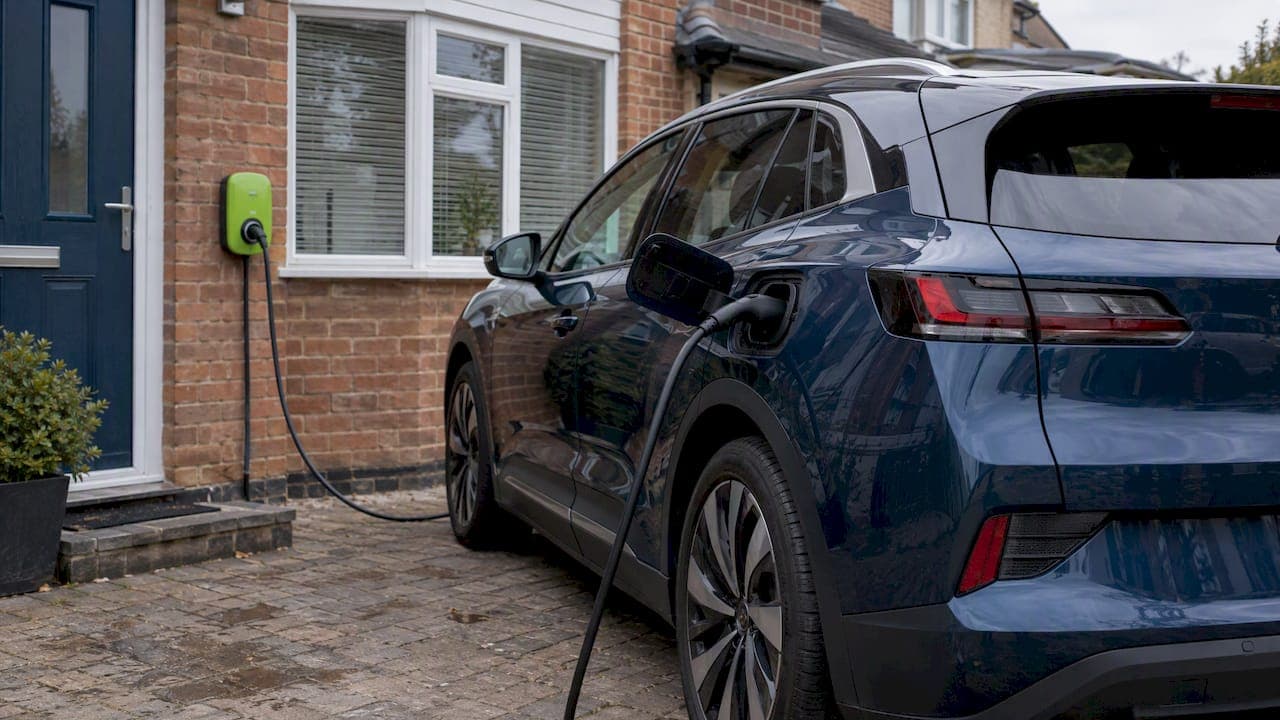
There is no single price for leasing an electric car in the UK. The monthly rental depends on the model, the contract length, your annual mileage and the size of the initial payment, and the rental is only part of what you spend. On top of it you pay for insurance, charging, tyres and any excess mileage or damage at the end. This guide shows you how to add the lot up, so you compare deals on the true cost and not the headline figure.
TL;DR
- The monthly rental is fixed, but a lease also brings costs outside it: insurance, charging, tyre wear and end-of-contract charges.
- The initial payment is often a multiple of the monthly rental, so it changes the real cost more than most people expect.
- Home charging is far cheaper than public charging: the government's advisory rates are 7p per mile at home against 15p per mile in public.
- Salary sacrifice and the Electric Car Grant can cut the cost, but only for some employees and some models.
- Compare quotes on total cost over the whole term, not on the monthly figure alone.
Table of Contents
- What an electric car lease includes, and what it does not
- The five numbers that set your monthly rental
- Running costs: charging is where electric leasing pays back
- Insurance, tyres and servicing
- Cutting the cost: grants, salary sacrifice and tax
- Hidden costs at the end of the contract
- A simple way to compare two electric car lease quotes
- Our view on electric leasing costs
- Get a tailored quote
- FAQ
- Sources
What an electric car lease includes, and what it does not
A personal or business contract hire agreement is a long rental. You pay a fixed monthly amount for an agreed term, usually two to four years, and an agreed annual mileage. You never own the car, and you hand it back at the end.
As the RAC explains, the benefits of leasing include fixed monthly repayments, no worry about depreciation and the flexibility to switch to a new car at the end of the contract. That matters more with electric cars than with petrol ones. Battery technology is moving fast and nobody can say with confidence what a given EV will be worth in four years. In a lease, the funder carries that risk, not you.
Typically the monthly rental covers the car itself and the finance. Whether it also includes road tax, breakdown cover or servicing depends on the deal, so ask. What it almost never covers:
- Insurance. You arrange this yourself, and the funder will set minimum cover requirements.
- Charging. Home electricity or public charging, plus a home charger if you want one.
- Tyres and wear items, unless you add a maintenance package.
- Excess mileage and damage charges at the end of the term.
MoneyHelper makes the same point about car finance in general: budget for insurance, maintenance and excess mileage charges as well as the monthly payment, and stick to the contract terms to avoid surprises at the end.
The five numbers that set your monthly rental
Two quotes for the same car can differ widely. These are the variables that move the price.
Model and list price
The funder's rental reflects how much the car is expected to lose in value over your term, plus interest and fees. A car that holds its value well is cheaper to lease than one that does not, even at the same list price. The RAC notes that the monthly leasing cost of an EV can be higher than for an equivalent petrol or diesel model, but that the difference can be cancelled out by lower running costs.
Contract length
Longer contracts usually mean lower monthly payments, because the depreciation is spread over more months. The trade-off is that you stay in the car longer and pay more in total, and you carry the car's warranty and battery age into the later years.
Annual mileage
Mileage bands are set at the start. Pick too low and you pay a charge per mile over the limit when you hand the car back. Pick too high and you pay for miles you never drive. Look at your last two years of MOT records for an honest figure, then think about whether your commute or job is about to change.
The initial payment
Most leases ask for an initial rental, commonly expressed as a number of monthly payments. A larger initial payment lowers the monthly figure, but the total over the term is what counts. Here is an illustrative example, not a quote:
| Illustrative structure | Initial payment | Monthly rental | Term | Total over the term |
|---|---|---|---|---|
| 1 month up front | £250 | £250 × 35 | 36 months | £9,000 |
| 9 months up front | £2,250 | £250 × 27 | 36 months | £9,000 |
On those figures the total is the same at £250 a month, but in practice a bigger initial payment is paired with a lower monthly rental, so you must compare totals. If you cannot spare a large sum, a no deposit style structure keeps cash in your pocket at the start. We cover no deposit options below.
Your credit profile
Leasing normally involves a credit check. The RAC notes that a hard credit check leaves a mark on your credit file. Funders generally favour applicants with a good credit history, so avoid making several applications in a short space of time. Ask for an eligibility check before a full application.
Running costs: charging is where electric leasing pays back
Petrol and diesel drivers pay at the pump. Electric drivers pay at a socket, and the price per mile depends enormously on which socket.
The government's Clean Energy campaign says EV drivers can save up to £1,400 a year on running costs compared with comparable petrol cars, and that home charging on some off-peak tariffs can cost as little as 2p per mile, with rates around 8p/kWh. Those are best-case figures. A more cautious guide is the HMRC set of rates. From 1 September 2026, advisory electric rates for company cars are 7p per mile for home charging and 15p per mile for public charging, and the same guidance gives national average public charging costs of 54p per kWh for standard and fast chargers and 77p per kWh for rapid chargers.
Turn that into a yearly bill for 8,000 miles:
| Where you charge | Rate per mile | Cost for 8,000 miles |
|---|---|---|
| Home (advisory rate) | 7p | £560 |
| Public (advisory rate) | 15p | £1,200 |
The gap is £640 a year, or about £53 a month. If you have no driveway and must rely on public rapid chargers, your running costs look very different from those of a driver with a wall box. That is the single most important question to ask before you sign.
We break the figures down further in our guide to electric car charging costs in the UK, and the 2026 charging cost article on our blog covers tariffs.

Installing a home charger
A home charger is a one-off cost that is not part of your lease. If you rent or own the property, you can ask what installation will cost; an EV charger installation cost breakdown shows what drives the price. The government has also announced that renters, landlords and businesses can claim up to half the cost of installing a charger, saving up to £500, with grants extended for a final year. Check eligibility before you buy, as schemes change.
Insurance, tyres and servicing
Insurance. Get quotes for the exact model before you commit. Some EVs cost more to insure because repairs and parts are pricier, and the leasing company requires fully comprehensive cover. Compare the insurance cost across two or three candidate cars when you pick between them.
Tyres. The RAC points out that heavier EVs can wear tyres and suspension faster, so budget for them even though servicing is generally cheaper with fewer moving parts. On a lease you must return the car with tyres in acceptable condition, so a worn set can turn into a bill at handback.

Servicing. Electric cars still need servicing, though usually less than petrol ones. An optional maintenance package spreads the cost into the monthly rental and removes the guesswork. Whether that pays off depends on your mileage and the car.
Battery. Most new electric car batteries carry warranties of around eight years and 100,000 miles, typically guaranteeing at least 70% capacity. A lease of two to four years sits well inside that window. For the finer points, see our pieces on what happens to EV batteries after leasing and checking the battery warranty start date and service records.
Cutting the cost: grants, salary sacrifice and tax
The Electric Car Grant
The Electric Car Grant takes up to £3,750 off eligible new EVs with a starting price at or below £37,000. The discount is applied by the manufacturer, and the amount depends on the model, so only some cars qualify for the top band. It is worth asking which cars on your shortlist are eligible and whether the saving is reflected in the monthly rental you are quoted.
Salary sacrifice
If your employer runs a scheme, you can pay for the lease from gross salary. NHS and other public sector staff often have access to this. The scheme can save tax and National Insurance, though it may reduce pensionable pay, and these schemes are usually run by a third-party fleet provider on the employer's behalf. Our NHS guide explains the savings, pension impact and exit risks of a salary sacrifice car, and a separate piece covers who qualifies for an NHS car lease.
Business leasing
If you are self-employed or run a company, the tax treatment is different from a personal lease. Our page on leasing a car for business use is a starting point, and an accountant should confirm how it applies to you.
Hidden costs at the end of the contract
The bill that surprises people comes at handback. The car is inspected against the BVRLA Fair Wear and Tear guidelines. Deep scratches, kerbed wheels and stained upholstery can all be recharged. Ask your broker for the current BVRLA guide on day one, and photograph the car at regular intervals.
Other end-of-term charges to know about:
- Excess mileage, charged per mile over the agreed total.
- Early termination, which can be steep. Local authority low carbon car schemes, for instance, list termination charges and insurance excess among the costs a driver may face. Read your own contract for its terms.
- Missing service history or keys, which a funder may also charge for.
A simple way to compare two electric car lease quotes
- Write down the total rental. Add the initial payment to the monthly rental multiplied by the remaining months.
- Check what is included. Maintenance, road tax, breakdown cover and delivery.
- Add running costs. Use 7p per mile for home charging and 15p per mile for public charging as a cautious yardstick, multiplied by your annual mileage.
- Add insurance. Get a real quote for each model.
- Allow for tyres and handback. A modest reserve helps.
- Divide the total by the number of months. That is your real monthly cost.
The cheapest monthly rental is not always the cheapest car to run, and the reverse applies too.
Our view on electric leasing costs
We arrange car and van leases every day, and the pattern we see is consistent: people compare the monthly rental, then discover the rest of the cost later. We would rather you saw it first.
Three things matter most. First, work out where you will charge before you choose a car, because that decides whether an EV saves you money or not. Second, look at the whole term and not just one month. Third, read the contract for mileage, damage and early exit terms.
We are a family-run broker, so we compare contract hire agreements for you and set out the detail in plain terms. Our aim is fixed monthly payments with no hidden fees, and no deposit options where they suit you. We are FCA authorised and BVRLA members. If an EV does not suit your driving, we will say so, and our electric vs petrol lease cost comparison is there so you can check the numbers yourself.
— Jason
Get a tailored quote
If you want to see what an electric lease would cost for your mileage and budget, browse our electric car lease deals or read more on electric car leasing. When you are ready, send us an enquiry and we will compare contracts for you. We also help drivers who want personal car leasing or business car leasing, and offer free UK delivery on eligible vehicles.
FAQ
How much does it cost to lease an electric car in the UK?
It varies by model, term, mileage and initial payment, so any single figure would mislead you. The reliable approach is to add the initial payment to all monthly rentals, then add insurance, charging and tyres. A tailored quote for your own mileage gives you the real number.
Is leasing an electric car cheaper than buying one?
Not always, but the monthly outlay is often lower than the finance payments on a purchase. The RAC says leasing suits EVs because it shields you from depreciation uncertainty. The catch is that you own nothing at the end.
Does a lease include charging and insurance?
Usually not. Charging is paid at home or at public chargers, and you arrange insurance yourself. Check your quote to see whether road tax, maintenance and delivery are included.
Can I lease an electric car without a deposit?
Some deals are structured with no deposit, and we offer no deposit options on eligible vehicles. Be aware that a lower initial payment is usually balanced by a higher monthly rental, so compare the total cost over the term.
Sources
- Electric car leasing explained, RAC Drive
- The costs of running an electric car, RAC Drive
- How long do electric car batteries last, RAC Drive
- Electric Car Grant, RAC Drive
- Car finance explained, MoneyHelper
- Get an electric vehicle, Clean Energy Homepage
- Advisory fuel rates, GOV.UK
- EV charger grant boost, GOV.UK
- Salary sacrifice decision record, Haringey Council
- Low Carbon Car Scheme FAQs, Perth and Kinross Council
- EV charging station cost breakdown, Arcpoint Connect