
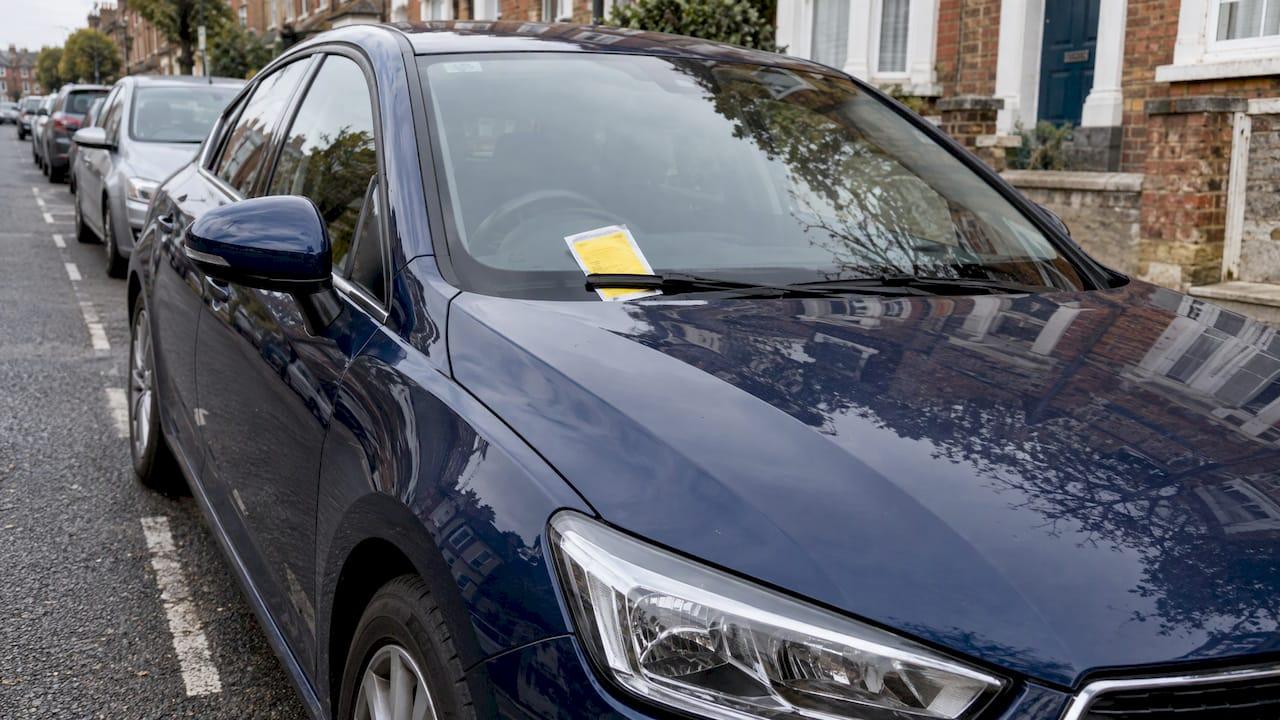
Whoever was driving usually ends up paying a parking ticket on a leased car, but the route the ticket takes depends on who issued it. A council penalty charge notice (PCN) goes to the registered keeper, which on most leases is the finance company, and it is then passed on to you under your agreement. A private parking charge is aimed at the driver, and the leasing company has a set process for handing over your details. Knowing which type you hold, and what your contract says about recharges, tells you what to do next.
This guide is for private motorists, business drivers, driving instructors and NHS staff on a lease. It covers the two types of ticket, what happens when the funder is involved, the deadlines, and how to check your contract before you sign.
TL;DR
- A council PCN is the registered keeper's responsibility. On a lease that is normally the funder, who will then recharge you under your contract.
- A private parking charge is the driver's responsibility. The operator can only pursue the keeper if strict legal conditions are met.
- Do not pay a ticket you intend to appeal. Paying is usually treated as admitting the ticket was right.
- Council tickets: 28 days to pay, with a discount in some cases if you pay within 14 days. Ignore it and the charge can rise by 50%.
- Check your lease for administration fees on recharged fines before you sign, not after the first ticket arrives.
Table of Contents
- First, identify which kind of ticket you have
- Council PCNs: the keeper pays, then the lease contract decides
- Private parking charges: the driver is responsible
- Appeal deadlines you need to know
- What happens if you ignore it
- Check these clauses before you sign a lease
- A practical routine for the first week
- Our view on parking tickets and leasing
- Find a lease where the terms are clear
- FAQ
- Sources
First, identify which kind of ticket you have
The wording on the ticket decides everything that follows, so start there.
A council ticket is a Penalty Charge Notice (PCN), or an Excess Charge Notice at some locations. It is issued by a local authority for parking on public roads and council car parks. These are enforced under statute.
A private ticket is a Parking Charge Notice from a company managing a retail park, hospital, station or residential estate. It is a claim for money under a contract, not an official fine. The operator should say whether it belongs to the British Parking Association (BPA) or the International Parking Community (IPC), the two trade bodies that run the appeals routes.
Police Fixed Penalty Notices are a third category, covering things like parking on double yellow lines in some circumstances. MoneyHelper stresses that the rules for missed payments differ between council PCNs, private charges and Fixed Penalty Notices. Do not apply advice for one type to another.

Council PCNs: the keeper pays, then the lease contract decides
For a council PCN, Citizens Advice explains that the registered keeper stays responsible even if someone else was driving. On a typical personal or business contract hire agreement, the funder is the registered keeper and you are the lessee. Our guide to who owns a leased car in the UK explains why, and why it matters for fines.
In practice the notice lands with the funder. Many funders then pay it, to protect the discount or avoid escalation, and recharge you, sometimes with an administration fee. Others forward the notice and ask you to deal with it. Your contract sets out which, which is why it is worth reading before you need it.
What council tickets cost and how fast they escalate
MoneyHelper reports that council parking fines range from £50 to £160 depending on location and seriousness. If you appeal within 14 days and the challenge is rejected, you may only have to pay 50% of the fine.
- You usually have 28 days to pay a PCN, and in some cases the amount is reduced if you pay within 14 days.
- If it is unpaid after 28 days, you receive a charge certificate and have 14 days to pay the original fine plus 50%.
- If that is also missed, a court order demanding payment follows.
A lease adds a delay to this timeline: the notice goes to the funder first, then to you. If a recharge letter arrives with only a few days left, act the same day. The 14-day discount is often lost in transit, so tell your funder promptly if you move house, as they use the address on file.
Challenging a council PCN
If you think the ticket was wrongly issued (the signage was unclear, the pay machine was broken, you had a valid permit), challenge it with the council within the deadline on the notice. Do this before the funder pays on your behalf. Tell the funder that you are challenging, so there is no argument later about a payment made without your agreement.
Private parking charges: the driver is responsible
Private tickets work differently. For a private Parking Charge Notice, Citizens Advice states that the person driving is responsible. If the notice is sent to the registered keeper, the keeper can give the parking company the driver's full name and address, and the company must cancel the ticket against the keeper and reissue it to the driver.
Under the Protection of Freedoms Act 2012 (POFA), a keeper can only be held liable when specific requirements are met. Department for Transport guidance says the landholder must wait 28 days after issuing a ticket before requesting keeper details from the DVLA, or must write to the keeper within 14 days where a camera detected the contravention. The same guidance says charges must be reasonable, a genuine pre-estimate of loss, and not set to penalise the driver.
The Notice to Hirer: how a lease changes the process
When the keeper is a leasing company, the operator cannot simply chase the funder for the money. The funder can supply the lease documents, and the operator must then reissue the demand to you as the hirer. According to PCN Beater's explanation, the funder has 28 days from receiving the Notice to Keeper to provide the hire or lease documents, and the operator then has 21 days from receiving them to serve a Notice to Hirer with copies attached.

The BPA's sector single Code of Practice also requires operators to provide a process for rental and leasing companies to transfer liability. In other words, the system expects leased cars and has a mechanism for them. You are not expected to pay a charge that was never properly addressed to you.
You do not have to name the driver
Citizens Advice notes that you are not obliged to give a private parking company the driver's details: you can choose to pay the ticket yourself instead. If you do send details, it recommends recorded delivery and noting the name, date and time of any phone call in case it comes up in a later appeal. On a lease, the funder is the one providing those details, so make sure your contact information with them is current.
Appeal deadlines you need to know
The golden rule from Citizens Advice's appeals guidance: do not pay a ticket you are appealing, because paying is usually seen as admitting it was right.
| Ticket type | First step | Next step |
|---|---|---|
| Council PCN | Challenge within the period on the notice; the discount may apply for 14 days | Formal representations, then tribunal if rejected |
| Private, BPA member | Informal appeal to the operator, which should allow 28 days | 28 days from informal rejection for a formal appeal to POPLA |
| Private, IPC member | Appeal to the operator | Free appeal within 21 days, or within one year of rejection for a £15 fee |
POPLA is the independent appeals service for BPA members. DfT guidance confirms that from 1 October 2012 all members of an accredited trade association must offer free access to an independent appeals service. In its 2024 annual report, POPLA records that for 1 October 2023 to 30 September 2024, 92% of the 64,808 appeals it handled had a decision within its 55-day target.
The BPA Code of Practice also requires operators to:
- allow appeals within 28 days;
- respond within 28 days;
- allow 28 days to pay after an appeals service decision in the operator's favour;
- add no more than £70 where a charge becomes overdue.
This voluntary Code has applied since late 2024, and government work towards a statutory Code is ongoing, so check the operator's trade body and the latest rules on the official pages if your ticket is recent.
What happens if you ignore it
For council tickets the escalation is set: charge certificate, 50% increase, then a court order. Citizens Advice adds that you could be taken to court and have to pay court costs if you ignore the fine.
For private tickets, ignoring one carries different risks, including debt recovery letters and possible court claims. A lease complicates matters because the funder may pay a charge and recharge you regardless of whether you wished to contest it. So if you are appealing, tell the funder in writing straight away, and keep copies of everything.
Worth noting if you are a driving instructor or an NHS employee: if you park at hospitals or on work rounds, check whether the site is run by a private operator, and whether permits or exemptions apply to you, before assuming a charge is valid. A ticket on a leased car that you use for work is as much your business as a personal one.
Check these clauses before you sign a lease
The lease agreement is where the real cost of a parking ticket is set. Before you sign, read these points, ideally with our guide to understanding lease agreement terms:
- Who deals with fines. Does the funder pay and recharge, or forward the notice to you?
- The administration fee. Is there one for each fine, and is the amount stated in the contract? Having a stated figure lets you compare agreements properly.
- Payment of recharges. How quickly must you repay, and how is it collected: by direct debit or by invoice?
- Contact details. How do you update your address so notices reach you in time?
- End of lease. Fines can arrive after you hand the car back, so find out how the agreement treats them. Our guide on returning a leased car correctly covers what to do at the end.
The same logic applies to other penalty types. Our article on speeding tickets on a leased car explains the 14-day rule for driver nominations, which works along similar lines.
A practical routine for the first week
- Photograph the ticket and the location, including signs, bay markings and the machine, before you leave if you can.
- Work out the type: council or private, and which trade body if private.
- Diary the dates: 14 days for the council discount, 28 days to pay or appeal.
- Contact the funder if the notice has not reached you, or if you intend to appeal, so that they do not pay without telling you.
- Appeal in writing and keep proof of posting. Do not enclose payment with a private appeal.
- Pay promptly if you decide not to contest, especially within the discount window on council tickets.
Our view on parking tickets and leasing
Most drivers who contact us about a ticket on a leased car are not worried about the ticket itself. It is the surprise of a recharge from a company they never expected to hear from, with a fee they did not know about.
That is a contract question, and it is best answered before signing. As a family-run broker, we compare contract hire agreements for our customers, and that includes looking at the terms around fines and charges, so the monthly payment you see is not the whole picture. Our approach is built around fixed monthly payments and no hidden fees, and that starts with reading the small print together.
Whether you are a private motorist, a driving instructor on the road all day or an NHS worker parking at a busy site, you deserve to know how a ticket would be handled before it happens.
Jason
Find a lease where the terms are clear
Lease World is a UK vehicle lease broker, FCA authorised and a BVRLA member, with over 30 years of experience. We offer personal and business contract hire with fixed monthly payments, no deposit options and free UK mainland delivery on eligible vehicles, and we compare contracts for you so you can see the terms side by side. We also have dedicated offers for driving instructors and NHS staff.
To see what suits you, start with personal car leasing, look at business car leasing if the vehicle is for your company, or send a leasing enquiry. If you are new to it, our step-by-step leasing process guide shows what to expect from enquiry to delivery.
FAQ
Does the leasing company pay my parking ticket?
Often the funder pays a council PCN to avoid escalation and then recharges you under your agreement, sometimes with an administration fee. Others forward the notice to you. The method is set in your contract, so check it before you sign and tell the funder promptly if you intend to appeal.
Do I have to pay a private parking ticket on a leased car?
A private ticket is a contractual claim, not an official fine, and it is the driver's responsibility. If the notice reaches the funder, it can supply the lease details so the operator reissues the charge to you as the hirer. You can appeal, and do not pay while you are appealing. If you decide the charge is valid, pay within the stated period.
Can I appeal a council parking ticket if I lease the car?
Yes. The notice is addressed to the registered keeper, but you, as the driver, can make representations to the council within the deadline on the notice. Tell your funder in writing that you are challenging it, so they do not pay it first. If you appeal within 14 days and it is rejected, you may only have to pay 50% of the fine.
What happens if a ticket arrives after I return the car?
A ticket issued during your lease can still be recharged afterwards, depending on your agreement. Keep your address up to date with the funder and keep the records of the dates you had the car. Ask the funder for a copy of the notice so you can check the date and location.
Sources
- Citizens Advice: appealing a parking ticket when someone else was driving
- Citizens Advice: appealing a parking ticket
- MoneyHelper: paying a council car parking fine
- GOV.UK: parking fines and penalty charge notices
- DfT guidance on Section 56 and Schedule 4 of the Protection of Freedoms Act 2012
- BPA sector single Code of Practice
- POPLA annual report appendix 2024
- PCN Beater: Notice to Hirer explained