

TL;DR:
- Returning a leased car involves meeting BVRLA fair wear standards, completing documentation, and managing mileage. Early inspection and professional repairs help avoid charges, and collecting detailed photos supports disputes. The process ends with a careful inspection and review during collection, ensuring a smooth handover.
Returning a leased car correctly means handing back the vehicle in an agreed condition, within your contracted mileage, and with all required documentation in place. The industry standard for assessing condition is the BVRLA (British Vehicle Rental and Leasing Association) fair wear and tear guide, which defines what counts as acceptable deterioration over a typical lease period of 2–5 years. Get this wrong and you face charges that can run into hundreds of pounds. Get it right and the handover takes minutes. This guide covers every stage of the process, from self-inspection to final handover, so you can avoid penalties and close your lease cleanly.
What are the requirements to prepare your leased car for return?
Preparation is the single most effective way to avoid end-of-lease charges. The BVRLA fair wear and tear standard defines acceptable condition as normal decline expected after regular use, excluding neglect, impacts, or accident damage. Your leasing provider will measure your vehicle against this standard on collection day.
The table below summarises the key condition areas inspectors check.
| Area | What inspectors look for |
|---|---|
| Exterior bodywork | Dents, scratches, and scuffs beyond fair wear and tear |
| Glass | Chips or cracks in the windscreen or windows |
| Tyres | Tread depth, uneven wear, and sidewall damage |
| Interior | Stains, burns, tears, and odours |
| Lights and electrics | Working bulbs, indicators, and dashboard warning lights |
| Mechanical | Service history compliance and outstanding warning lights |
Before you inspect the car, gather the right materials. You will need a tread depth gauge for tyres, a clean cloth to wipe down surfaces, and good lighting. Read your leasing provider's specific condition guide alongside the BVRLA guidelines, as some providers apply stricter standards.

Pro Tip: Inspect your vehicle in dry, clean, well-lit conditions. Dirt and moisture hide dents and scratches that will show up clearly during the official inspection.
Starting your preparation 10–12 weeks before return gives you enough time to book professional repairs, gather documents, and address any issues without rushing. Leaving it to the final week almost always costs more.
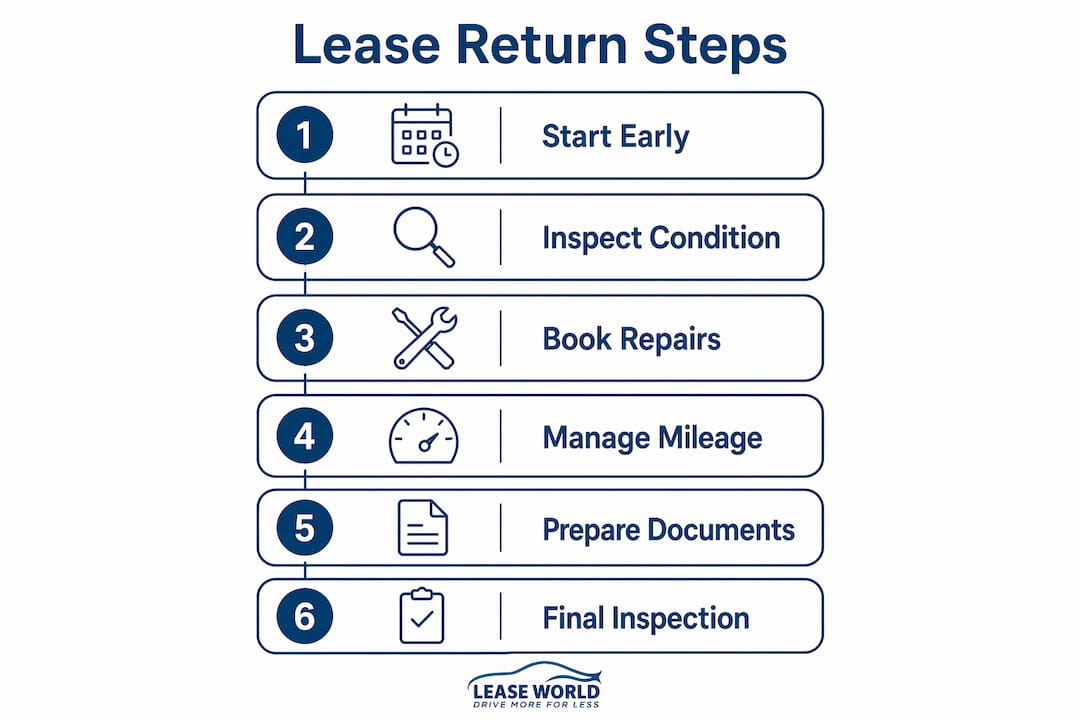
How to inspect and repair your leased vehicle before return
A structured walkaround inspection catches problems early and gives you time to act. Work through the vehicle in a fixed sequence so nothing gets missed.
- Start with the exterior. Walk around the car panel by panel. Look at each door, the bonnet, the boot lid, and the roof. Crouch down to catch low-angle dents and scratches that are invisible when standing upright.
- Check the glass. Run your fingers along the windscreen to feel for chips. Even a small chip can be charged if it falls outside fair wear and tear limits.
- Inspect the tyres. Use a tread depth gauge to confirm you meet the UK legal minimum of 1.6mm across the central three-quarters of the tyre. Check for uneven wear and sidewall damage, both of which attract charges.
- Examine the interior. Check seats, carpets, and the headlining for stains, burns, and tears. Smell the interior for persistent odours, which leasing companies can and do charge for.
- Test all lights and electrics. Switch on headlights, indicators, brake lights, and interior lights. Start the engine and confirm no warning lights remain on the dashboard.
- Review the mechanical condition. Check oil and coolant levels. Confirm the service history is complete and that no outstanding manufacturer recalls are unresolved.
The distinction between fair wear and tear and chargeable damage is critical. A light surface scratch on a door edge is typically fair wear and tear. A deep gouge or a dent with broken paint is chargeable damage. When in doubt, consult the BVRLA guide directly or ask your leasing provider for clarification before spending money on repairs.
Poor-quality DIY repairs often cost more than the original damage. A mismatched paint repair or a visible smart repair that does not blend correctly will be flagged by the inspector and charged at a higher rate than the untouched damage would have been. The safest approach is to obtain quotes from professional repairers and compare those costs against the likely recharge rate from your leasing company before committing to any repair. A good auto repair checklist helps you assess which damage genuinely warrants professional attention and which falls within acceptable limits.
Pro Tip: Photograph every panel, every tyre, and the interior before the collection agent arrives. Date-stamped photos give you solid evidence if you need to dispute a charge later.
How to manage mileage and documentation to avoid extra charges
Mileage charges and condition charges are separate costs. Many drivers focus entirely on bodywork and overlook the per-mile fees that apply when they exceed their contracted annual mileage. Excess mileage fees are calculated independently of any damage assessment and can add up to a significant sum if you have been driving well above your agreed limit.
Check your current odometer reading against your contracted mileage allowance as early as possible. If you are tracking above your limit, you have two options: contact your leasing provider to discuss a mileage adjustment before the contract ends, or budget for the excess charge. Lease World has detailed guidance on what happens with excess mileage and how to manage it effectively.
For documentation, gather everything on this list before collection day:
- Service history book (stamped at every service interval per the manufacturer's schedule)
- MOT certificate (if the vehicle is over three years old)
- All keys and key fobs (including any spare sets supplied at the start of the lease)
- Charging cables (for electric or plug-in hybrid vehicles)
- Locking wheel nut key
- Owner's handbook and any supplementary manuals
- Any accessories supplied with the vehicle (parcel shelves, boot liners, and so on)
Missing keys or accessories trigger additional charges even when the vehicle itself is in excellent condition. Leasing companies verify these items against the original delivery record and charge accordingly. Equally, incomplete service history is treated as neglect and can result in penalties on return. Keep your service book updated at every interval and retain receipts as backup evidence.
For a broader understanding of how mileage limits work across different lease types, Lease World's guides explain the mechanics clearly.
What to expect during the final vehicle inspection and handover
Collection day follows a predictable process. The collection agent will arrive at the agreed time, carry out a physical inspection of the vehicle, verify the mileage, and review your paperwork. The whole process typically takes 30–45 minutes.
Be present for the entire inspection. Do not leave the agent to work alone. Walking around the vehicle with them gives you the opportunity to discuss any findings in real time and to point out pre-existing issues you have already documented.
Key points to keep in mind on collection day:
- Confirm the agent is using the BVRLA fair wear and tear standard, not a stricter internal policy.
- Ask for a copy of the inspection report before the agent leaves. You are entitled to this.
- Note any damage the agent records and confirm whether it is classified as fair wear and tear or chargeable damage.
- If you disagree with a finding, say so clearly and note your objection on the report.
- Do not sign anything that accepts charges you believe are incorrect without first reviewing the evidence.
"Leasing companies rely on detailed inspection reports and photographic evidence. Challenging charges effectively requires access to these documents alongside the leasing company's condition and charge guidelines."
If charges appear after collection that seem unfair, request the full inspection report and any photographs taken by the agent. Compare these against the BVRLA guidelines and your own pre-return photographs. If the dispute cannot be resolved directly with the leasing company, the BVRLA offers a formal conciliation service for members. Understanding your rights under the car safety and maintenance standards that apply throughout the lease period also strengthens your position.
Voluntary termination is a separate route available under regulated finance agreements. If you end a finance agreement early, you must return the vehicle in good condition and settle any arrears and excess mileage charges. If you have not yet paid half the total amount due, you owe the balance up to that halfway point plus any additional charges.
Key takeaways
Returning a leased car correctly requires meeting BVRLA fair wear and tear standards, completing all documentation, and managing mileage separately from condition charges.
| Point | Details |
|---|---|
| Start preparation early | Begin your self-inspection 10–12 weeks before return to allow time for professional repairs. |
| Use BVRLA standards | Measure your vehicle's condition against the BVRLA fair wear and tear guide, not guesswork. |
| Separate mileage from damage | Track excess mileage independently and budget for per-mile fees alongside any condition charges. |
| Document everything | Photograph every panel and the interior before collection day to support any dispute. |
| Gather all documentation | Service history, MOT, all keys, and accessories must be present to avoid additional charges. |
What I have learned from watching drivers get this wrong
Most end-of-lease charges are avoidable. The drivers who pay the most are rarely the ones with the most damage. They are the ones who left preparation too late, skipped the service book, or handed back a car with a missing key fob they forgot was in a kitchen drawer.
Interior odours are the most commonly overlooked issue. A vehicle that looks immaculate but smells of cigarette smoke or pets will attract a cleaning charge that a professional valet could have prevented for a fraction of the cost. Book a professional interior clean at least two weeks before collection, not the day before.
DIY repairs worry me more than the original damage. I have seen drivers use touch-up pens that do not match the paint code, or polish out a scratch in a way that leaves a visible swirl mark. The inspector sees both the original damage and the failed repair attempt, and charges for the latter. If you are unsure whether damage warrants repair, get a quote from a professional repairer and compare it against your leasing company's published recharge rates. That comparison takes 20 minutes and can save you a significant sum.
Knowing the BVRLA guidelines thoroughly before your return date changes the dynamic entirely. You walk into the inspection with confidence, you know what is and is not chargeable, and you can have a productive conversation with the collection agent rather than an anxious one. Read the guide. It is freely available and written in plain English.
— Jason
Lease World is here to help throughout your lease
Returning a leased vehicle is the final stage of a process that works best when you have clear guidance from the start.
Lease World provides expert leasing guides covering every stage of the lease lifecycle, from choosing the right contract to managing your return without surprises. Whether you are considering personal car leasing for the first time or managing a business fleet, Lease World's team offers straightforward advice and tailored deals with no hidden fees. If you want to understand leasing terms before your next agreement, the leasing terminology guide is a practical starting point. Get in touch with Lease World to find a deal that fits your needs and to get support at every stage of the process.
FAQ
What does returning a leased car correctly mean?
Returning a leased car correctly means handing it back within your contracted mileage, in a condition that meets the BVRLA fair wear and tear standard, and with all keys, documents, and accessories present.
How early should I start preparing for a lease return?
Start your self-inspection around 10–12 weeks before the return date. This gives you enough time to book professional repairs and gather all required documentation without incurring rushed costs.
What is the difference between fair wear and tear and chargeable damage?
Fair wear and tear covers normal deterioration from regular use over 2–5 years. Chargeable damage includes dents with broken paint, large scratches, interior burns, and tyre tread below the UK legal minimum of 1.6mm.
Can I be charged for missing accessories when returning a leased car?
Yes. Missing keys, charging cables, locking wheel nut keys, and any accessories supplied at the start of the lease are verified against the original delivery record and charged accordingly.
What can I do if I disagree with a charge after the inspection?
Request the full inspection report and any photographs taken by the collection agent. Compare these against the BVRLA guidelines and your own pre-return photos. If the dispute remains unresolved, the BVRLA offers a formal conciliation service for member companies.