

Leasing is a practical choice for most small UK businesses that need a handful of vehicles without tying up capital, and the right move now is to define each vehicle's role, expected annual mileage, and driver list, then request comparable quotes on identical terms. From there, check the Benefit-in-Kind and VAT treatment before signing anything.
TL;DR:
- Small fleet leasing offers predictable monthly costs for businesses with up to a handful of vehicles, avoiding significant capital outlay.
- Contract hire is the predominant option, with the leasing company managing residual risk and often including maintenance, while finance lease provides more control over vehicle disposal.
- Costs are influenced by lease term length, annual mileage, and residual value, with additional charges for excess mileage, early termination, and wear and tear.
- Benefit-in-Kind tax rates for 2026/27 vary widely by vehicle type, with electric cars taxed at 4% of the list price and higher emissions vehicles up to 37%, which can significantly impact the tax bill.
- Most VAT-registered businesses can only recover half of the VAT on lease rentals for passenger cars unless using exemptions like driving instructor vehicles or short-term business hires.
Table of Contents
- What is small fleet leasing and which contract type fits?
- How do costs, timings, and charges work on a small fleet lease?
- What are the 2026/27 tax and VAT rules for a leased fleet?
- Who is responsible for driver and vehicle safety on a leased fleet?
- What should you check before signing a small fleet lease?
- How does Lease World support small fleet leasing for UK businesses?
- A broker's view on the mistakes that cost small fleets money
- Get a tailored small fleet quote from Lease World
- Sources
- FAQ
What is small fleet leasing and which contract type fits?
Small fleet leasing means arranging finance for a group of cars or vans, typically a modest number of vehicles, under one broker or funder rather than negotiating each vehicle separately. It suits businesses that need predictable monthly costs and don't want the hassle of owning depreciating assets outright, from courier firms running vans to consultancies running a handful of company cars.
Two contract structures dominate the small business market:
- Contract hire: you rent the vehicle for a fixed term and hand it back at the end. The leasing company carries the residual value risk, and maintenance is often bundled in. This is the more common route for cars and light vans.
- Finance lease: you take on more of the asset risk and, depending on the agreement, may have a balloon payment or the option to sell the vehicle at term end and keep a share of the sale proceeds. It suits businesses that want more control over what happens to the vehicle later.
The maintenance question changes the liability picture more than most people expect. Under a fully maintained contract hire deal, the leasing company handles servicing, tyres, and often breakdown cover, which shifts admin away from your business but doesn't remove your legal duty of care as an employer. Self-managed maintenance keeps monthly costs lower but means you (or a nominated fleet contact) must track service intervals across every vehicle, which gets harder fast once you pass three or four. Vans typically carry higher mileage allowances than cars in these agreements, reflecting heavier daily use.
How do costs, timings, and charges work on a small fleet lease?
Monthly rental is driven by three levers: the term length, the annual mileage you commit to, and the vehicle's predicted residual value at the end of that term. A higher mileage allowance or a shorter term generally pushes the monthly figure up, because the funder is pricing in faster depreciation.
Beyond the headline rental, watch for:
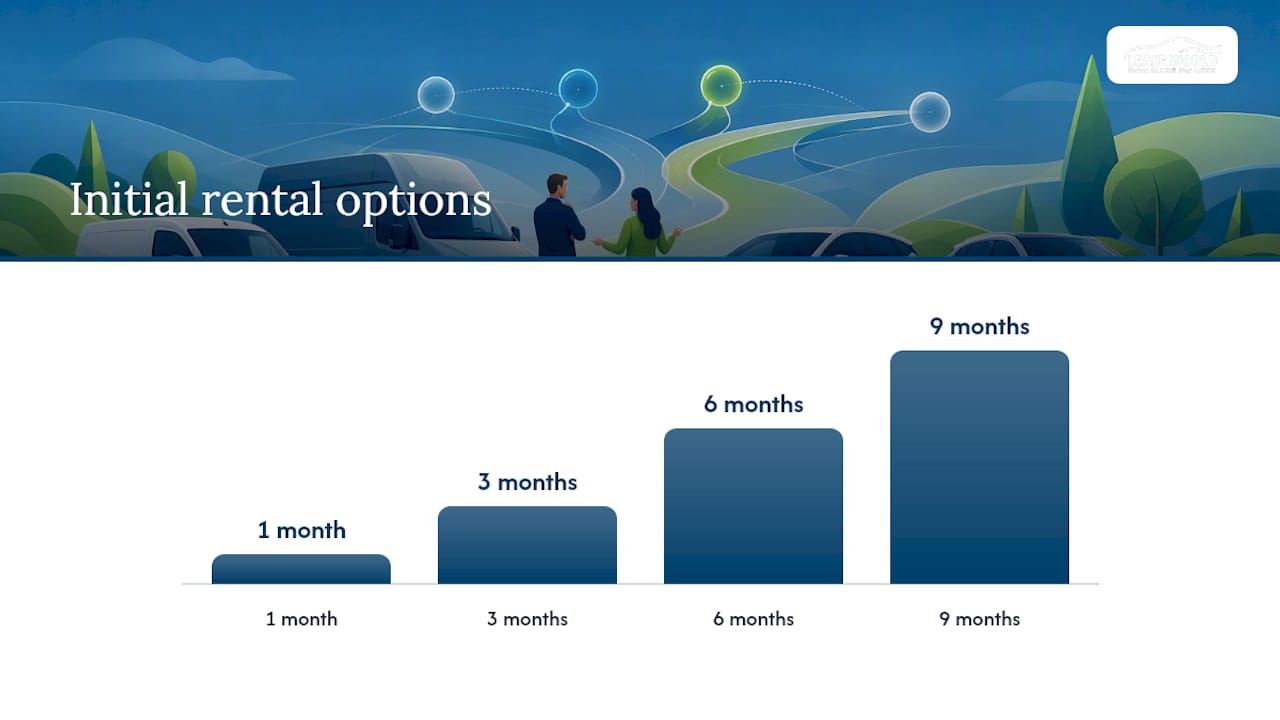
- Initial rental — usually equivalent to one, three, six, or nine months' payments, paid upfront to lower the ongoing monthly cost.
- Excess mileage charges — a pence-per-mile penalty if you exceed the agreed annual mileage, calculated and billed at the end of the contract.
- Fair wear and damage charges — assessed against a published fair wear and tear standard when the vehicle is returned; anything beyond that gets charged.
- Early termination fees — often the steepest cost on the list, since ending a contract early breaks the funder's pricing model.
Comparing quotes only works if you hold every variable constant. Get quotes on the same term, the same annual mileage, and the same maintenance basis (fully maintained versus non-maintained), otherwise you're comparing two different products dressed up as one.
Timelines from signed quote to delivery typically run several weeks for stock vehicles and considerably longer for factory-order specifications, particularly for vans built to a specific conversion.
Pro Tip: Ask for the excess mileage rate and the fair wear standard document at quote stage, not at handback. Both are negotiable before you sign and effectively fixed once you don't.
What are the 2026/27 tax and VAT rules for a leased fleet?
Company car tax now depends heavily on which vehicles you choose. For 2026/27, HMRC sets fully electric cars at a 4% appropriate percentage, while hybrids sit between 4% and 16% depending on electric range, and higher-emission petrol and diesel cars can reach 37%. That percentage is applied to the vehicle's list price, known as the P11D value, not the monthly lease rental, which is where a lot of small business owners misjudge the real cost of a company car.
Worked example: a director choosing a £45,000 electric car pays Benefit-in-Kind tax on 4% of that list price, roughly £1,800 of taxable benefit. Choose a £45,000 petrol equivalent at 37%, and the taxable benefit jumps to around £16,650, even if the monthly lease payments are similar. The list price, not the lease cost, drives the tax bill.
On VAT, most VAT-registered businesses can only recover 50% of the input tax charged on the lease rental for a passenger car, a restriction set out in VAT Notice 700/64. This block exists because most cars have some private use available, even if that's not the reality on the ground. There are exceptions: driving instructor cars, self-drive hire cars, and taxis can often qualify for full recovery, and short hires of no more than 10 days used strictly for business may also escape the block. Vans used exclusively for business generally don't face the same restriction. A detailed look at what businesses can reclaim is worth reading before you commit to a mixed car and van fleet.
A few things to nail down before you sign:
- Confirm whether each vehicle is classed as a "qualifying car" for VAT purposes. This affects what you can and can't reclaim on maintenance charges.
- Document business use properly. HMRC can and does ask for evidence if BiK or VAT treatment is challenged.
- Talk to an accountant before choosing between EV, hybrid, and petrol for company car drivers. The tax gap between those bands is now wide enough to change which vehicle makes financial sense. Electric car tax benefits for 2026 are worth understanding properly before you build a shortlist.
Who is responsible for driver and vehicle safety on a leased fleet?
Leasing a vehicle doesn't lease away your legal responsibilities. HSE guidance is explicit that employers must manage the risks of anyone driving for work, whether they're in a leased company van or their own car on business mileage. That means checking driving licences, confirming insurance cover, and making sure drivers are trained and fit for the vehicle they're using.
Practical obligations that catch small fleets out:
- Daily and periodic vehicle checks: tyres, lights, mirrors, and fluid levels, logged somewhere retrievable, not just remembered.
- MOT timing for vans: vans under 3,500kg need their first MOT once they reach three years old, the same as cars, which surprises businesses running a mixed fleet.
- Defect reporting: drivers need a clear route to report a fault, and a policy that an unsafe vehicle simply doesn't go out.
- Operator licensing triggers: certain weights and uses push a van fleet into operator licensing territory, so check this against your GVW figures rather than assuming vans are always exempt.
A fully maintained lease package takes the admin load off your desk. It gets the servicing booked, tracks the schedule, and often handles tyres and MOT bookings for you. What it doesn't do is transfer your duty of care as an employer. You still own the checks, the training, and the record of who drove what and when. Recordkeeping tools like a structured vehicle safety check process make this far less painful across five or six vehicles than trying to remember it all manually.
What should you check before signing a small fleet lease?
Run every quote through the same filter before it reaches your signature.
- Total cost over the term, not just the monthly figure, once initial rental and any add-ons are included.
- Contract type, confirming whether it's contract hire or finance lease and who carries the residual risk.
- Maintenance basis, and whether it's genuinely fully maintained or has exclusions buried in the small print.
- Permitted drivers, since some agreements restrict who can legally drive the vehicle, which matters if staff rotate between roles.
- Mileage flexibility, checking whether you can adjust the annual allowance mid-term if your usage changes.
- Early termination terms, particularly the penalty structure if the business needs to exit before the contract ends.
- Delivery timing, especially for van conversions or bespoke specifications that can add weeks to lead times.
At quote stage, ask the broker directly for a written VAT statement per vehicle, the residual value assumptions used to build the monthly figure, how excess mileage is calculated, and which fair wear standard applies at handback. Vague answers to any of these are a red flag worth pausing on.
Pro Tip: Loop in your accountant and your insurer before signing, not after. A five minute conversation with both can save a costly correction three months into the contract.
Watch for quotes that don't state the maintenance basis clearly, or that quietly change the mileage or term between the first quote and the paperwork you're asked to sign.

How does Lease World support small fleet leasing for UK businesses?
Lease World is a family-run broker built around comparing leasing contracts properly rather than pushing whichever deal pays the best commission. For a small fleet, that means:
- Tailored quotations across business car leasing and van leasing, built around your actual roles and mileage rather than a generic package.
- Transparent pricing with no hidden fees, so the figure you're quoted is the figure you pay.
- Fixed monthly payments and no deposit options for businesses seeking predictable cash flow.
- Free UK delivery on eligible new vehicles, reducing the logistics burden of collecting multiple vehicles at once.
- Assistance with assembling VAT statements and P11D-related information to help your accountant with necessary paperwork after the contract is signed.
A broker's view on the mistakes that cost small fleets money
The costliest mistakes I see are quiet ones: quotes compared on different mileage bands, VAT treatment left unconfirmed until the invoice lands, or maintenance packages with exclusions nobody read closely. Fix those three before signing anything, and most of the risk in small fleet leasing disappears. Ask for a tailored quote rather than accepting the first offer at face value.
— Jason
Get a tailored small fleet quote from Lease World
An advantage for a small fleet is having a single team comparing contracts, offering fixed monthly payments, no deposit options, and free UK delivery on eligible vehicles, rather than managing multiple leasing companies' paperwork yourself.
Before requesting a quote, have three things ready: the role each vehicle will do (courier van, sales rep car, pool vehicle), your expected annual mileage per vehicle, and whether you want maintenance bundled in or handled separately. If your fleet mixes cars and vans, it's worth reviewing Lease World's van leasing page alongside the business car leasing page so you can compare both against the same criteria. For fleets planning ahead of upcoming Benefit-in-Kind changes, it's also worth checking fleet tracking options like Moto Watchdog's small fleet tracking guide to keep tabs on mileage and usage across several vehicles at once. Head to the business leasing enquiry page to get a tailored comparison started.
This article is general information, not a substitute for advice from a qualified financial advisor. Consult a qualified financial professional about your own circumstances before acting on anything here.
Sources
FAQ
Is leasing cheaper than buying for a small fleet?
Leasing usually preserves more cash upfront since there's no large capital outlay, though total cost over time depends on mileage, term, and residual values. It suits businesses that value predictable monthly costs over asset ownership.
Do I pay Benefit-in-Kind tax on a leased company van?
Vans used only for business, with no significant private use, generally avoid car-style Benefit-in-Kind rates, though a flat van benefit charge can apply if private use exists. Company cars are taxed differently, using the percentage bands tied to CO2 and list price.
Can I reclaim all the VAT on a leased fleet car?
Most businesses can only reclaim 50% of the VAT on the rental charge for passenger cars, under the restriction set out in VAT Notice 700/64. Exceptions exist for driving instructor cars, self-drive hire, and some short-term hires.
Does Lease World offer maintenance packages for small fleets?
Yes, Lease World offers optional maintenance packages alongside its business car and van leasing options, with pricing available on request based on your fleet's specifics.
What's the minimum fleet size Lease World can quote for?
Lease World works with businesses leasing anything from a single vehicle up to a full small fleet, tailoring quotations to the mix of cars and vans you need. Current terms and eligible vehicles are best confirmed directly through a quote request.