
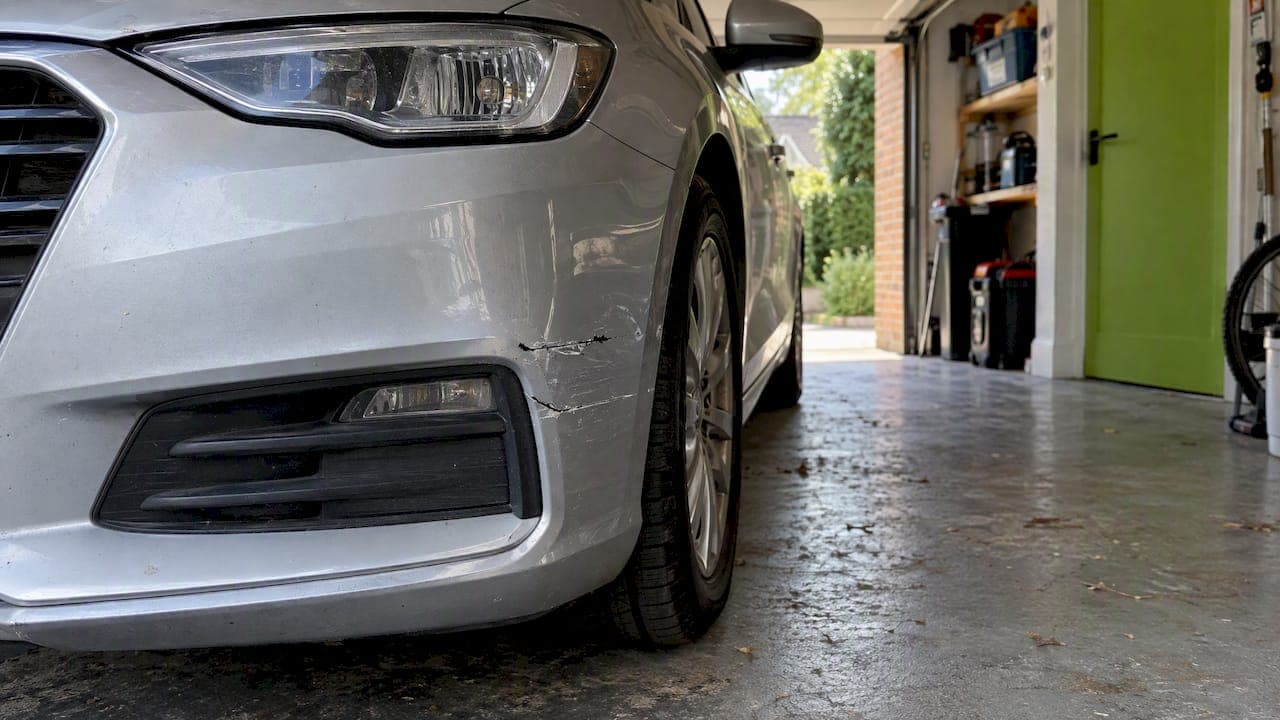
Lease damage charges are what the leasing company bills you at the end of a contract for damage beyond fair wear and tear, or for missing items such as keys and service history. They are not a penalty for using the car. They cover the cost of putting right what normal use would not have caused. Most of the bill is avoidable with an early inspection, a clean car and the right paperwork, and any charge you disagree with can be challenged.
TL;DR
- Charges apply to damage from a specific event (an impact, careless loading, harsh treatment) and to missing items such as keys or service history. Normal ageing for the mileage and age of the car is not chargeable.
- Inspect the car yourself 10 to 12 weeks before it goes back, in good light, after a proper wash.
- Photograph the car at delivery and again at return, and keep both sets of pictures with the paperwork.
- Repair damage only through a reputable repairer that offers a transferable warranty, and compare the quote with what the funder would charge.
- If you dispute a charge, you can pay for an independent engineer's examination, and unresolved disputes can go to the BVRLA.
Table of Contents
- What lease damage charges actually are
- Fair wear and tear versus chargeable damage
- How the inspection and charging process works
- How much can damage charges cost?
- A handover timeline that keeps charges down
- Lease handover checklist
- Lease car delivery checklist: protect yourself on day one
- What to do if you think a charge is unfair
- Our view: be boringly thorough
- Thinking of leasing? Know the return terms first
- FAQ
- Sources
What lease damage charges actually are
When you lease a car you are paying for the use of it, not owning it. At the end of the contract the car goes back to the funder, who has to sell it on or re-lease it. Any damage that lowers its value falls to you under the terms you signed.
The BVRLA's consumer guidance on returning a leased vehicle explains that end-of-lease charges compensate the leasing company for the cost of rectifying damage, or for missing items such as keys or service history. Two points follow from that:
- The charge is meant to reflect the cost of repair, not to punish you.
- It covers more than bodywork. A missing key, a gap in the service record or an unrepaired interior tear can all appear on the invoice.
The terms of your own contract matter most. Your agreement will say which condition standard applies, how the car is inspected and how charges are calculated. Read that section before you plan anything else.
Fair wear and tear versus chargeable damage
The dividing line is cause. Fair wear and tear is deterioration through normal usage. Damage, in the BVRLA's description, results from a specific event or series of events, such as an impact, inappropriate stowing of items, harsh treatment, or negligent acts or omissions.
In practice that means:
| Usually acceptable for the age and mileage | Likely to be charged |
|---|---|
| Light surface marks from everyday use | Deep scratches that reach primer or bare metal |
| Normal, even tyre wear within legal limits | Tyres below the legal minimum, cuts, bulges or mismatched types |
| Small stone chips on the front of the car | Cracked or heavily chipped windscreen |
| Minor scuffs on interior trim consistent with use | Burns, tears, stains or holes in upholstery and carpets |
| Light wear to seat bolsters | Dents with broken paint, and underside impact damage |
| A dirty car that has simply been used | Kerbed or cracked alloy wheels |
The BVRLA publishes an industry Fair Wear and Tear Guide, and many funders base their inspection standards on it. It sets measured tolerances for dents, scratches, wheels and interior condition, so you can check your car against actual figures instead of guessing. Ask your broker or funder which version your contract uses, and note that some funders apply their own, stricter standard.
Age and mileage count. A car returned at 36 months and 30,000 miles is expected to show more wear than one returned at 12 months. But low mileage does not excuse damage: a cracked bumper is a cracked bumper at any mileage.
Our own guide to BVRLA fair wear and tear and the 10 to 12 week checklist goes through the standard area by area.
How the inspection and charging process works
The car is collected and inspected by an independent company, not by the broker you leased through. The inspector compares what they see against the condition standard in your contract and records anything outside it, usually with photographs. The funder then prices each item and sends you an invoice.
A few practical points:
- The inspector's report is your evidence of what was found. Ask for the full report with photographs if the invoice does not include them.
- Each charge should be itemised. A single lump sum with no breakdown is a reason to ask questions.
- Missing items are charged too. Keys, the service book or digital service record, the locking wheel nut key and the handbook should all go back with the car.
- Warning lights can cause trouble. A dashboard warning light can lead to a collection being declined, so fix any fault before the collector arrives rather than on the day.
For a wider view of what happens as the contract finishes, see what happens when a car lease ends.
How much can damage charges cost?
There is no single figure, because the bill depends on what is damaged, the funder's repair pricing and your contract. A small scuff on a bumper is a very different charge from a cracked windscreen or a damaged alloy. Rather than relying on averages from other people's leases, get a repair quote for each flaw on your car before the inspection, then compare it with the funder's published charge list if they have one. That comparison tells you whether to repair first or take the charge.

One point that surprises business lessees: the tax treatment of a damage charge is different from a normal lease rental. If you are a company or sole trader, check the position with your accountant, and see our guide to VAT on lease cars for the rental side.
A handover timeline that keeps charges down
10 to 12 weeks before the return
The BVRLA advises appraising the vehicle 10 to 12 weeks before return. That gives you time to get quotes, book repairs and have the work done without a rush.
- Wash the car thoroughly and let it dry. Water on the paintwork can hide faults, and dirt hides scratches.
- Inspect in good light, outdoors or in a bright space, not at dusk or in a dim garage.
- Walk round every panel, including the roof and bonnet. Crouch down to look along the sides: dents and scratches show up where the reflection distorts.
- Check the wheels and tyres, including the spare or repair kit if your car has one.
- Check glass for chips and cracks, particularly in the driver's line of sight.
- Check the interior: seats, headlining, carpets, boot trim, and every screen and switch.
- Photograph everything with the date on your phone's timestamp. Take close-ups of each flaw with something for scale.
The interior is where many drivers lose points. A tired, grubby dashboard looks worse than it is, and a proper clean often removes marks that would otherwise look like wear. This guide on how to clean a car dashboard properly is a sensible starting point for the cabin.
4 to 6 weeks before
- Get quotes for anything outside the standard. The BVRLA advises using a reputable repairer that offers a transferable warranty on its work, because repairs that are poor or unguaranteed can be rejected at inspection.
- Book smart repairs for scuffs and small dents, wheel refurbishment for kerbed alloys and glass repair for chips where practical.
- Find out whether the funder wants to be told about repairs. Some contracts require you to use approved repairers, so check before you pay anyone.
- Gather the service history. A full record matters, and a missing one can be charged.
In the final fortnight
- Have the car valeted or washed again, inside and out.
- Clear all personal belongings, including the glovebox, boot well and door pockets.
- Confirm there are no warning lights. If one is on, get it diagnosed now.
- If your car is old enough to need one, make sure a valid MOT certificate is available to go back with it.
- Remove any aftermarket accessories you added, such as dashcam fittings, phone mounts or tow bars, and make good any holes. Check whether your contract allows them to stay.
- Take a final set of photographs from every angle and of the interior, mileage and fuel or charge level.
Lease handover checklist
On the day, have this in front of you:
- All keys and key fobs, including any spare
- Full service history, stamped book or digital record
- Handbook and any manufacturer wallet
- Locking wheel nut key
- Spare wheel, repair kit and tools, if originally supplied
- Valid MOT certificate, if applicable
- Charging cables, if you leased an electric car
- Clean car, no warning lights, belongings removed
- Timestamped photographs of every panel, wheels, glass and interior
- Your contract's condition standard and the collection reference
When the collector arrives, walk round the car with them if they allow it. If the driver fills in a condition form, read it before you sign and note any disagreement on the form itself. Take a photo of the signed document.
Our step-by-step guide to returning a leased car correctly covers the collection day in more detail.
Lease car delivery checklist: protect yourself on day one
Charges at the end start with the condition record at the start. If a mark was on the car when it arrived and you did not report it, it is harder to argue later that it was not yours.
When a new or nearly new car is delivered, do this before the driver leaves:
- Check the paperwork against the car. The registration, model, trim, colour and options should match your order.
- Walk round in daylight. Look at every panel, the roof, bumpers, wheels and glass. New cars are sometimes marked in transit.
- Check the interior. Look at seats, carpets, screens and trim for scuffs, marks or damage.
- Check the dashboard. There should be no warning lights when the ignition is on.
- Check the contents. Count keys, and look for the handbook, locking wheel nut key, and spare wheel or repair kit. Electric cars should come with the charging cables listed in your order.
- Note any damage on the delivery paperwork before you sign. Be specific: which panel, what kind of mark, how large.
- Photograph everything, including any flaw you note, and email the photos to your broker and funder the same day so there is a dated record.
If you are unhappy with the condition, say so on the day and do not accept the car until the issue is settled. Signing a satisfaction note without comment can be read as agreement that the car arrived in good condition.
What to do if you think a charge is unfair
Do not simply pay the invoice. The BVRLA's guidance sets out a route for disputes:
- Compare the charge with your evidence. Put your delivery and pre-return photographs against the inspector's report. Check the condition standard in your contract.
- Ask the funder to explain each item in writing, and for the photographs behind it.
- Ask for an independent examination. If you dispute the condition or damage, you can pay for an examination by an independent qualified engineer agreed by both parties. If the engineer finds in your favour, the BVRLA member refunds the reasonable cost of the examination.
- Escalate if it is not resolved. Unresolved disputes can be referred to the BVRLA, provided your funder is a member.
This is also the reason to keep your records. A report without your photographs is one-sided.
If the damage happened during the lease because of an accident, read what happens if you damage a leased car first, because insurance, repairs and your contract all interact.
Our view: be boringly thorough
We have been arranging leases for over 30 years as a family-run broker, and the pattern is consistent. The drivers who get a clean handover are rarely the ones with the newest-looking cars. They are the ones who treated the return as a project: they looked at the car early, kept their receipts, photographed it and asked questions before the collector turned up.
Three habits do most of the work. First, keep a folder from day one with the delivery notes, photos, service invoices and any correspondence. Second, fix small problems when they happen, because a scuffed alloy repaired now is cheaper and easier than one discovered in the final week. Third, read the condition standard in your contract when you sign it, not when the car is going back.

We also compare contracts before you commit, so you know what the return terms look like in advance. Fixed monthly payments are only fixed if you hand the car back in the condition the agreement expects.
See also our guide to UK lease maintenance responsibilities.
— Jason
Thinking of leasing? Know the return terms first
If you are comparing deals, ask about the end-of-contract terms as well as the monthly price. At Lease World we offer personal and business car leasing, van leasing, electric car leasing and specialist schemes for driving instructors and NHS staff, with fixed monthly payments, no deposit options and free UK mainland delivery on eligible new vehicles. We will talk you through the contract and the condition standard before you sign. Start with personal car leasing or request a quote.
FAQ
Can I return a leased car with damage and not repair it?
Yes, you can, but expect to be charged for anything outside the contract's condition standard. Get a repair quote first and compare it with what the funder would bill. Sometimes a repair through a reputable repairer with a transferable warranty is cheaper than the charge, and sometimes it is not.
Are small scratches counted as lease damage?
Not necessarily. Light marks consistent with the age and mileage of the car are usually treated as fair wear and tear. Deeper scratches, or any that expose primer or bare metal, are likely to be charged. Check your contract's standard and the BVRLA guide for the measurements.
When should I check my car before returning it?
The BVRLA advises appraising the vehicle 10 to 12 weeks before return. That leaves time to get quotes, book repairs and gather paperwork. Do it after a thorough wash and in good light.
Do I get charged for missing keys or service history?
Yes. The BVRLA lists missing items such as keys or service history among the things that can result in charges. Locate every key and your full service record well before the collection date.
What can I do if the damage charge seems too high?
Ask the funder for an itemised breakdown and the inspector's photographs. You can then pay for an independent qualified engineer, agreed by both sides, to examine the car. If they find in your favour, the member refunds the reasonable cost, and unresolved disputes can be referred to the BVRLA.