
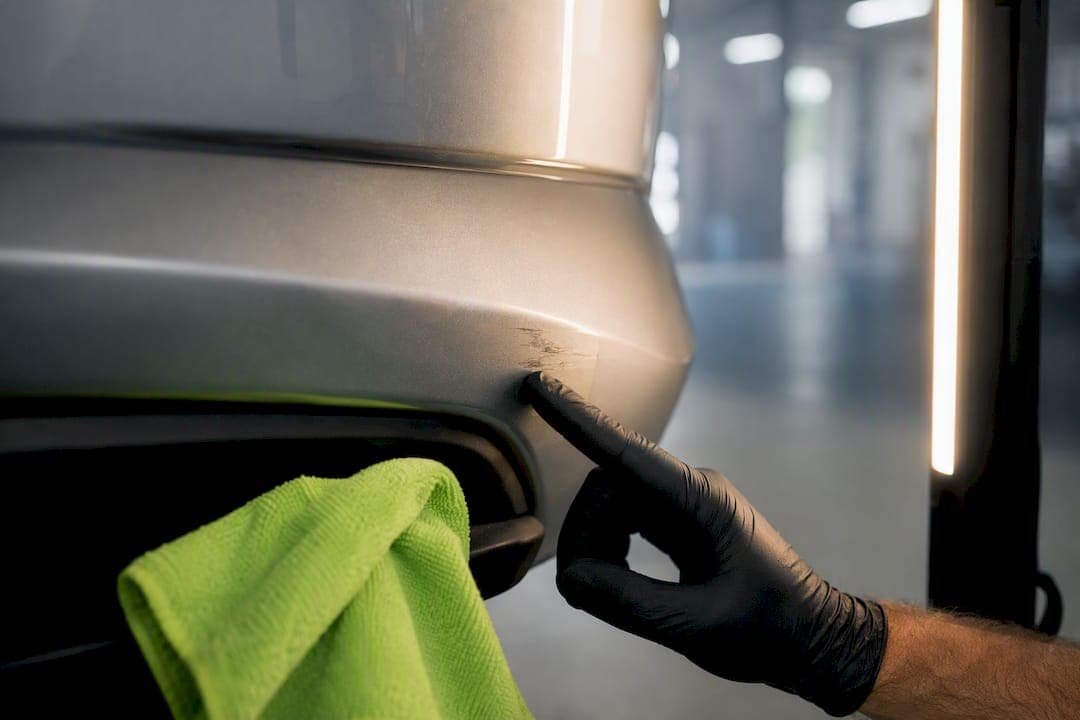
Light scuffs, faded paint and normal interior ageing usually count as fair wear and tear under BVRLA rules, and lessees shouldn't expect a charge for them. Broken paint, dents needing a new panel, torn seats or a botched repair are a different matter and will almost always cost you. Age and mileage shift the line, and a professional fix beats a DIY one every time. You can find guidance towards the right guide and a sensible pre-return plan.
TL;DR:
- Higher-mileage or longer lease vehicles are allowed more cosmetic wear before charges apply, according to a sliding scale based on age and usage.
- Damage such as broken paint, dents requiring panel replacement, cracked windscreens, or torn upholstery will almost always incur costs at return.
- Preparing the vehicle 10 to 12 weeks in advance with professional repairs and proper documentation can lower end-of-lease charges and prevent disputes.
- Disputes over damage charges can be resolved through independent inspections or the BVRLA's dispute resolution service, especially if evidence shows fair wear.
- Small cosmetic repairs are often cheaper when done privately with a warranty, rather than paying the leasing company’s inflated repair charges at the end.
Table of Contents
- What the BVRLA fair wear and tear standard actually covers
- Wear and tear examples: what gets waved through and what gets charged
- How to prepare your vehicle for return: the 10 to 12 week checklist
- What happens at collection and how charges get calculated
- If you disagree: independent inspections and dispute routes
- Repair or accept the charge? A quick decision framework
- Lease World's practical support for lease returns
- Need help before your lease ends? Talk to Lease World
- Sources
- FAQ
What the BVRLA fair wear and tear standard actually covers
The BVRLA defines fair wear and tear as the deterioration you'd expect from careful, everyday driving. It's the opposite of damage caused by a specific event, like a kerbed alloy or a scrape reversing out of a car park, or by neglect such as skipped servicing. This is the benchmark almost every UK leasing company uses when a vehicle comes back, so it's worth knowing it properly rather than guessing.
There are three separate BVRLA guides, covering cars, vans and other commercial vehicles, because a transit van doing daily site runs wears differently to a family hatchback. Make sure whoever inspects your vehicle is applying the right one.
The standard also works on a sliding scale. A car returned after three years and 30,000 miles is allowed noticeably more cosmetic ageing than one back after twelve months on a low-mileage deal, according to industry guidance. A scuffed bumper that would raise eyebrows on a nearly-new short lease is unremarkable on a well-used long one.
Wear and tear examples: what gets waved through and what gets charged
Inspectors work from a detailed checklist covering paintwork, glass, tyres and wheels, mechanical condition, and the interior. The BVRLA fair wear and tear guide sets out measurable limits rather than vague impressions, which is genuinely useful when you're trying to work out whether a mark will cost you anything.
Generally acceptable, no charge expected:
- Light surface scratches that haven't broken through the paint
- Minor stone chips consistent with normal driving
- Scuffs on alloy wheels or trims within acceptable size limits without structural damage
- Interior wear consistent with the mileage, such as faded seat fabric or a worn steering wheel rim
- Minor scuffing on plastic trim from normal use
Usually chargeable:
- Paint broken through to bare metal or filler, even in a small area
- Dents deep enough to need a replacement panel rather than a simple repair
- Cracked or chipped windscreens, particularly where water could get in
- Torn or burned upholstery, and stains that won't clean out
- Tyre sidewall cuts or bulges, and tread below the legal minimum
- A panel that's been badly repaired, with mismatched paint or visible filler lines
Mechanical condition matters too. Warning lights left unresolved, missing service history, or tyres that don't meet legal tread requirements will all be flagged at return, regardless of how clean the bodywork looks.
How to prepare your vehicle for return: the 10 to 12 week checklist
Book a self-appraisal 10 to 12 weeks before your contract ends. That window gives you time to book repairs, and repairs booked yourself are almost always cheaper than the same job invoiced by the leasing company after collection. At the same time, ask your provider for a copy of the BVRLA guide so you're both working from the same benchmark.
Work through this before the collection date:
- Give the car a proper valet, inside and out. Dirt hides marks an inspector will still find.
- Check tyre tread and look for sidewall damage, including on the spare if one's fitted.
- Inspect all glass for chips or cracks in the driver's line of sight.
- Test every light, indicator and warning light.
- Pull together the full service history and MOT certificates.
- Locate every key, fob, charging cable and the handbook.
- On an EV or PHEV, check charging cables are present and undamaged.
- Wipe any linked phones, apps or navigation history from the infotainment system.
For anything more than light cosmetic marks, book professional repair rather than tackling it yourself. Alloy refurbishment, paint touch-ups and small dent removal are worth doing properly, and always ask for a transferable warranty on the work in case questions come up at collection.
Pro Tip: Photograph every panel, wheel and interior surface before you book the appraisal, with the date visible somewhere in shot. If a dispute comes up in twelve weeks' time, dated photos are worth more than your memory of what the car looked like.
What happens at collection and how charges get calculated
At collection, the driver or engineer walks the vehicle and notes any damage on a condition sheet or handheld device. Be present for this if you possibly can, because it's your chance to agree the record on the spot rather than querying it after the fact. If you can't be there, you'll get a written condition report afterwards, and you need to read it and raise any concerns quickly.
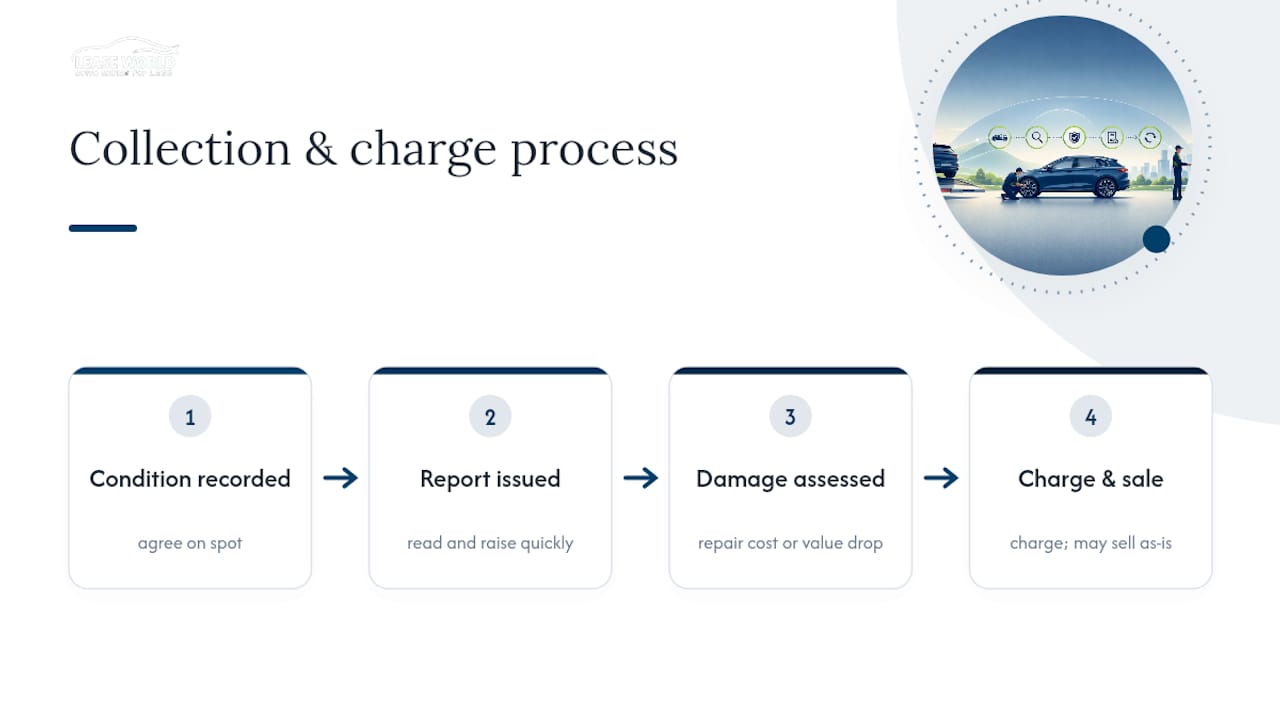
Charges are worked out to reflect the drop in the vehicle's resale value or the cost of putting the damage right, not simply what an inspector feels like billing. Crucially, leasing companies generally aren't obliged to carry out repairs themselves before selling the car on; they can charge you and sell it as is.
If you've had work done before return, it needs to be to a genuinely professional standard. Flaking touch-up paint, a colour that doesn't quite match, or a panel that's obviously been filled will usually be picked up and charged again, on top of whatever you already paid for the first attempt.
If you disagree: independent inspections and dispute routes
You don't have to accept a charge you think is wrong. Both parties can agree to bring in an independent engineer to reassess disputed items, usually at a modest fixed cost that's split or refunded depending on the outcome. If the engineer sides with you, the inspection fee is often returned.
If you leased through a BVRLA member, and most mainstream UK leasing companies are, you also have access to the BVRLA's Alternative Dispute Resolution service as a further backstop before anything gets more formal. Keep every photo, email and the original condition report; they're what any dispute actually turns on.
Repair or accept the charge? A quick decision framework
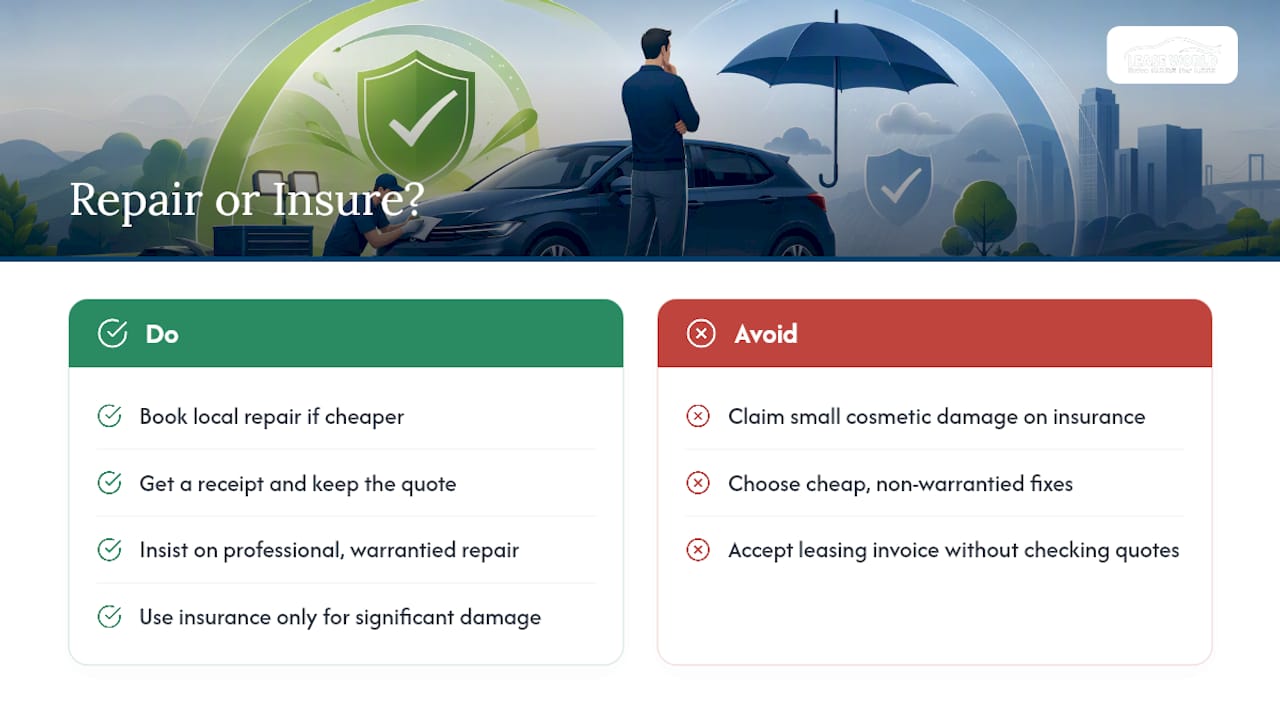
Small, well-executed private repairs almost always beat an end-of-lease invoice, which often carries an administration uplift on top of the raw repair cost. As a rough rule, if a local bodyshop quotes less than the leasing company's likely charge for the same job, book it yourself and get a receipt.
Think carefully before claiming small cosmetic damage on your motor insurance. A modest alloy scuff or bumper scrape will usually cost less to pay for directly than the hit to your no-claims discount and next year's premium. Save insurance for the jobs that genuinely warrant it, like significant accident damage.
Whichever route you take, insist on a professional, warrantied repair. A cheap job that fails inspection means paying twice, once for the botched fix and again for the leasing company's correction, and warrantied work gives you something to point back to if a repair is challenged.
Lease World's practical support for lease returns
It is recommended to work to the BVRLA fair wear and tear standard and to book a pre-return appraisal well before your contract ends. Guides and support can help prevent small cosmetic questions turning into unexpected invoices. If you're within a few months of returning a vehicle, ask for a copy of the BVRLA guide and talk through a checklist before you book anything.
Need help before your lease ends? Talk to Lease World
A good vehicle leasing service is built around the principle to know what's expected before collection day, not after. Transparent, no-surprises policies and comprehensive leasing guides covering return preparation, terminology, and the whole process from enquiry through to delivery can be very helpful.
If your current contract is coming up for renewal, consider getting in touch for a personal car leasing quote or checking the Fair Price Policy before you commit to anything. For small business fleet or van leasing needs, looking into an in-stock van leasing range might provide a quick turnaround. Whatever stage you're at, request a quote to learn about fixed monthly payments with no hidden fees and no deposit required on eligible deals.
Sources
For the full detail, go straight to the BVRLA's consumer advice on returning your vehicle and the full BVRLA fair wear and tear guide (PDF). Both set the standard nearly every UK leasing company inspects against.
FAQ
What counts as fair wear and tear on a leased car?
Normal cosmetic ageing from careful driving, such as light scratches, small stone chips and interior wear matching the mileage, generally counts as fair wear and tear under BVRLA rules.
Does mileage affect what's acceptable?
Yes. Higher-mileage and longer leases are allowed more cosmetic ageing than short, low-mileage contracts, since the BVRLA standard works on a sliding scale.
Will I be charged for a small stone chip in the paint?
Usually not, provided the paint hasn't been broken through to bare metal or filler; small surface chips are typically treated as fair wear and tear.
Can I dispute a lease-end damage charge?
Yes. You can request an independent engineer's inspection, and BVRLA members also offer an Alternative Dispute Resolution route if you can't reach agreement.
When should I start preparing my car for return?
Start 10 to 12 weeks before the return date so you've got time to book professional repairs, which are generally cheaper than accepting the same charge on your final invoice.
Should I get small scratches repaired before returning a lease car?
Often, yes. A private, professionally executed repair with a warranty usually costs less than the equivalent charge added by the leasing company after collection.