
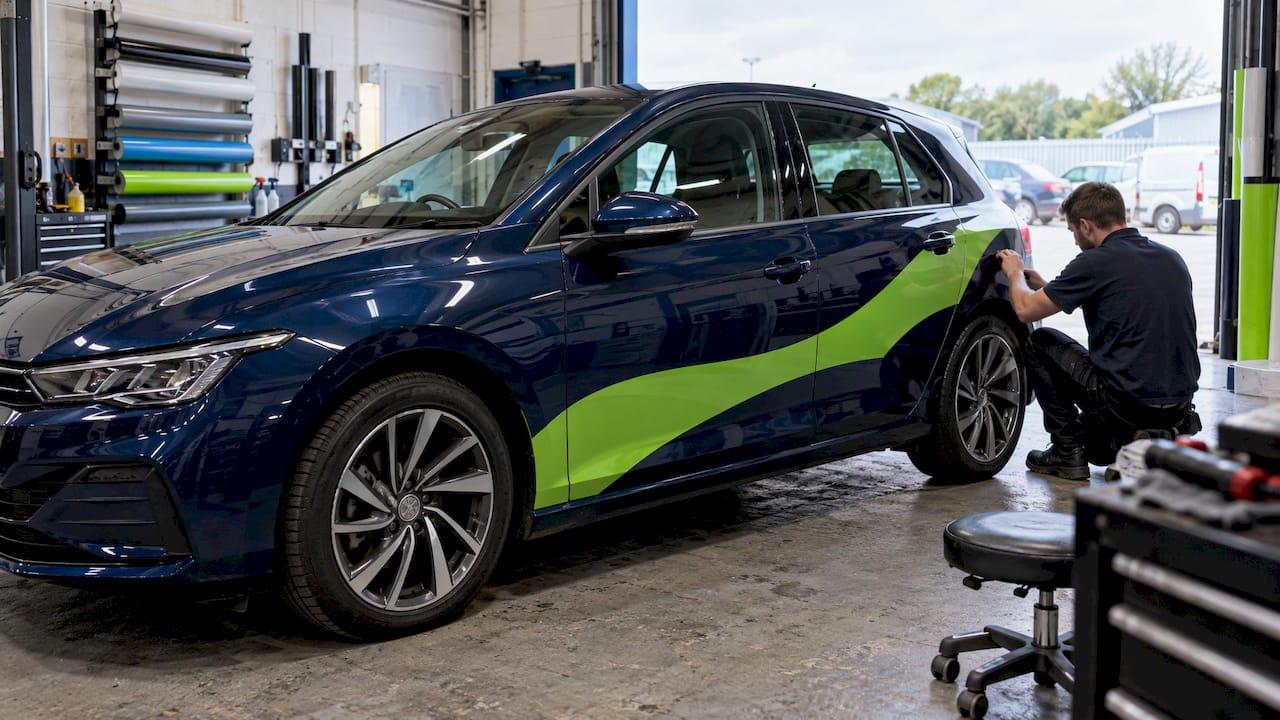
Yes, you can put signwriting or a wrap on a lease car, but only with the leasing company's written permission, your insurer told, and a plan to have it professionally removed before the car goes back. Get those three right and branding a leased car or van costs you a graphic and its removal, not a return charge. Get them wrong and the cost lands on you at the end of the contract.
This guide is for UK drivers who lease a car or van and want their name, trade or business on it: sole traders, driving instructors and small business owners. It covers the order to do things in, what the industry standard says about removal, and how factory options and price protection fit into the same decision.
TL;DR
- Ask the leasing company for written permission before any vinyl, wrap or lettering goes on the vehicle. If they say no, do not fit it.
- Tell your insurer. A wrap or even small signwriting counts as a modification for most insurers and should be declared.
- The BVRLA fair wear and tear standard expects customer-applied livery to be removed professionally and the car returned in its original colour and condition unless agreed otherwise in writing.
- Check the bodywork first: a wrap does not repair existing paint faults, and existing damage should be reported where the contract requires it.
- Plan the removal 10 to 12 weeks before the car is due back, not the week before.
Table of Contents
- Can you signwrite a lease car?
- Step 1: Get permission before you order anything
- Step 2: Tell your insurer
- Step 3: Check the paintwork before you cover it
- Step 4: Have it fitted by a professional
- What the BVRLA standard says about signwriting at return
- Step 5: Remove it properly and plan the timing
- Where factory options fit in
- Price protection and signwritten cars
- Who this matters most for
- Perspective
- Choosing your next lease with branding in mind
- FAQ
- Sources
Can you signwrite a lease car?
In most cases, yes. A lease is a contract hire agreement: you pay to use the car, but the funder owns it. That ownership is why permission matters. Most major UK leasing companies allow wraps when you have written permission, the wrap is removable and leaves no trace, and the vehicle is returned in its original state.
Three conditions sit inside that sentence, and each is worth reading properly:
- Written permission. A phone call or a verbal "should be fine" is not enough. You want an email or letter you can find in two or three years.
- Removable. Vinyl and wraps are designed to come off. Paint, etching, cut-in lettering or anything that marks the surface is a different matter and should not be considered on a leased vehicle.
- Original state on return. The car goes back looking as it did when you collected it, bar fair wear and tear.
If the leasing company refuses, that is the end of it. Lalamove's October 2026 UK guide on stickers for leased vehicles says that if permission is refused, you should not install them.
What counts as signwriting
For lease purposes, treat all of these the same way: full colour-change wraps, partial wraps, vinyl lettering on doors and tailgate, magnetic signs that sit on paint for long periods, and window graphics. The BVRLA standard we cover below names badges, emblems, labels, logos and any advertising livery applied to the bodywork or glass. If it was not on the car when it was delivered and you added it, assume it needs permission and removal.
Step 1: Get permission before you order anything
The order matters. Do not book the signwriter first and ask afterwards, because a refusal leaves you with a design you cannot use.
What to ask for. Write to the funder, or to your broker, and describe what you want to fit: the area of the vehicle, whether it is vinyl lettering or a wrap, and whether it touches glass. Ask them to confirm in writing that it is allowed and whether they attach any conditions, such as using a professional installer or removing it by a set point before collection.

What to keep. Save the reply with your lease paperwork. At return, when an inspector asks why there is a mark or a different panel finish, that email is your evidence.
Who to ask. The permission comes from the funder that owns the car, not from the dealer who delivered it. If you leased through us, tell us what you plan and we will take the question to the funder with you, which saves you working out who to write to.
If you are still choosing a vehicle and know you will want branding, mention it at the quote stage. Panel vans are the usual choice for trade lettering, and our panel van leasing and van leasing pages are the place to start. Driving instructors fitting a roof sign or door livery should say so when they ask about instructor cars.
Step 2: Tell your insurer
Permission from the leasing company does not cover your insurance. Lalamove's guide stresses that permission is not a substitute for insurance checks: contact whoever provides your cover, ask whether adding branding is allowed under the policy, and ask whether it needs to be declared.
The risk of skipping this is real. Most insurers count a wrap as a vehicle modification, even minor graphics like signwriting must be declared, and if you do not declare it there is a risk the policy is revoked when they find out. For a vehicle you are paying for every month, an invalid policy is the most expensive outcome in this article.
A simple routine:
- Email your insurer or broker with the design and the vehicle registration.
- Ask for written confirmation that the policy stands and whether the premium changes.
- If you use the vehicle for business, check the policy covers business use with the branding on it.
- Keep the reply with the funder's permission.
Do the same again when you remove the signwriting if your insurer asks to be told.
Step 3: Check the paintwork before you cover it
A wrap is not a repair. Car Wrap 24 states that a wrap protects sound factory paintwork from day-to-day exposure but does not repair existing faults or make damaged paint safe to cover, and that existing damage should be reported to the lease company where required.
Walk round the car in good light on the day it is delivered. Note and photograph chips, scratches, dents and lacquer problems on the panels you plan to cover. Do it again just before fitting. If the signwriter finds a problem under the vinyl later, you want a dated record showing whether it came with the car.

Our guide on what happens if you damage a leased car explains how damage is treated, and the piece on types of lease vehicle modifications allowed sets out what funders usually accept.
Step 4: Have it fitted by a professional
The return standard expects removal to be professional, so it makes sense to treat fitting the same way. A good installer will:
- clean and prepare the surface without abrasives that mark the paint;
- use vinyl and adhesive meant for removal, not permanent lettering;
- avoid panel edges, seals and rubber trims where lifting vinyl is hard to reverse;
- tell you how long the graphic should last and how it should be washed.
Tell the installer at the start that the vehicle is leased and will need to be returned clean. Ask them what removal will involve, and ideally what it will cost, before you agree to the job. That figure belongs in your budget alongside the design price.
What the BVRLA standard says about signwriting at return
The British Vehicle Rental and Leasing Association (BVRLA) publishes the fair wear and tear standard that most UK leasing companies use to judge a car when it comes back. On advertising, it is direct. Badges, emblems, labels, logos and any advertising livery applied by the customer to the bodywork or glass should be removed before return. They must be removed professionally, and the vehicle returned to its original colour and condition unless otherwise agreed in writing with the leasing company.
Two points follow from that:
- "Professionally" is a requirement, not a suggestion. Peeling vinyl off in a car park the night before collection is the way marks, ghosting and adhesive residue end up on an inspection report.
- "Agreed in writing" is your way out. If you want the graphics to stay on, perhaps because the next user is part of the same business, that has to be agreed with the leasing company in writing. Do not assume.
The same standard recommends appraising the vehicle 10 to 12 weeks before it is due for return, leaving time to put right any unacceptable wear and tear. For a signwritten car, that is also your removal window.
What happens if you leave it on
Some leasing companies will let the signwriting stay and pass the job to the collecting dealer, but this is not a free option. One published leasing guide on the question explains that the funder can tell dealers the signage is theirs to remove, and that this may affect the value of any settlement. Whether or not your funder takes that approach, you should expect to pay for removal or for any damage it reveals, so it is cheaper to remove it yourself under control.
Step 5: Remove it properly and plan the timing
Car Wrap 24 says removal should be carried out in controlled conditions using the right heat, tools and adhesive-removal products, and that pulling vinyl off quickly or using harsh chemicals can create more risk than the original wrap. In practice that means booking the installer who fitted it, or another professional, rather than doing it yourself.
A sensible timeline:
| When | What to do |
|---|---|
| 3 to 4 months before the end date | Book the removal slot and ask what the installer will charge |
| 10 to 12 weeks before return | Appraise the vehicle against the BVRLA standard, with the graphics off or about to come off |
| After removal | Photograph every panel in daylight, including where the vinyl was |
| Before collection | Tidy the car and have your insurer's confirmation and funder's permission on file |
Paint under a wrap that has been on for years can look different from the paint around it. Sun fades exposed paint unevenly, and removal may reveal that. Polishing or professional paint correction by a specialist can help narrow the difference before inspection. If you need to refresh a faded decal that is staying on the car during the term, Diamondbrite explains how to revive faded car decals without harming the surface around them.
For the wider return process, our guides on how to return a leased car correctly, fair wear and tear with a 10 to 12 week checklist and the end of lease inspection walk through the whole sequence, and lease damage charges shows what an unresolved mark can cost.
Where factory options fit in
Some readers searching this topic are really asking whether they should buy branding as a factory option instead. Factory options are items fitted at the manufacturer's build, such as paint colour, wheels, towbars or racking packs. They are chosen when the lease is ordered and they form part of the car and the monthly rental.
That has two consequences for signwriting:
- Colour is the biggest decision. Signwriting reads best on a plain, light body colour, and a vehicle that comes back in its original colour is easier to return. Choose the colour with your branding in mind before you order.
- Options affect the monthly figure and delivery. Ordering a car with a specific colour or equipment can change the rental and the lead time, so ask for the quote with and without each option.
The practical point is that factory fit and signwriting are different things. Options are part of the contract from day one. Signwriting is something you add and take off. Never treat a sticker as an option, and never assume a funder will treat it like one.
Price protection and signwritten cars
The phrase "price protection" in leasing usually points to one of two things: the fixed monthly payment, which stays the same for the whole term, and gap cover that protects you if the car is written off.
On the first, a lease from us is set up with fixed monthly payments, so the rental you agree is the rental you pay. What can still change the cost is what happens at the end: charges for damage or for items left on the car.
On the second, Contract Hire GAP Insurance, as described by the Association of Leasing Advisers (ALA), will in the event of a total loss claim (accident, theft, fire or flood) cover up to 100% of the outstanding rental payments and any shortfall in the insurer's market value settlement. It lists exclusions, including vehicles over 3,500kg, motorcycles, left-hand drive vehicles and vehicles fitted with non-manufacturer specified modifications. Read the exact policy wording before you branded the car, and ask the cover provider in writing how it treats removable signwriting. That is the same discipline as the insurer check in step 2.
Who this matters most for
Sole traders and small businesses. A branded van is cheap, constant advertising, and the removal cost is a small, known figure if you plan it. Business customers can look at our business car leasing and van leasing options.
Driving instructors. Door signs and roof boxes are part of the job. Treat them exactly as above: permission, insurer, removal on return. We have dedicated driving instructor car leasing deals, with brand pages for Toyota, Ford and Kia among others.
Personal lessees. A small decal or club sticker is still a modification. The same permission and removal rules apply, and the personal car leasing page shows what is available if you are choosing a car.
Perspective
Branding a leased vehicle is one of the most common requests we hear, and it is almost always sorted without drama when the order is right: funder first, insurer second, installer third.
What trips people up is the end of the term, not the start. A wrap that looked sharp for three years can become an inspection problem if nobody planned its removal, and the only protection is a written permission and a booked professional removal well before the 10 to 12 week mark.
This is where a broker earns its place. We are a family-run business with 30+ years of experience, FCA authorised and BVRLA members, and we compare contract hire agreements so you can see what you are signing before you sign it. Our customers get fixed monthly payments and dedicated support, so a question like this goes to someone who knows your agreement rather than a general helpline.
If you know you want signwriting, tell us when you ask for a quote. It is much easier to match the right vehicle and colour, and to ask the funder the right question, at the start.
Jason
Choosing your next lease with branding in mind
If your current lease is ending and you want to branded vehicle again, or you are about to start one, we can help you choose a vehicle that suits signwriting and arrange the agreement. We offer personal and business car leasing, van leasing, electric car leasing, no deposit options and free UK delivery on eligible vehicles, with detailed comparisons of contracts so you know what the agreement says about modifications and returns.
Start with a car leasing enquiry and mention the branding you have in mind.
You can also browse car brands available for leasing and van manufacturers to shortlist a vehicle before you talk to us.
FAQ
Do I need permission to put stickers or lettering on a lease car?
Yes. The funder owns the car, so get their permission in writing before you fit anything. If they refuse, do not fit it. Also tell your insurer, as permission from the leasing company does not replace that check.
Do I have to remove signwriting before I hand the car back?
Under the BVRLA fair wear and tear standard, customer-applied advertising livery should be removed before return, professionally, with the car back in its original colour and condition unless you have agreed otherwise in writing with the leasing company.
When should I arrange removal?
Book it early. The BVRLA guide recommends appraising the vehicle 10 to 12 weeks before return, so aim to have the removal done by then, which leaves time to fix any marks the vinyl reveals.
Does signwriting affect my insurance?
Most insurers treat a wrap as a modification, and even minor signwriting should be declared. Ask your insurer in writing whether the branding is covered and whether your premium changes, and keep the reply.
Is a wrap a good way to protect the paint on a lease car?
A wrap can protect sound factory paint from daily exposure, but it does not repair existing faults. Record any existing damage before fitting, and report it to the lease company where the contract requires it.
Sources
- Can You Wrap A Leased Vehicle? - CJ Signs
- Stickers on Leased Vehicles: UK Installation Guide - Lalamove
- Can you wrap a leased car or van? - Raccoon
- Can a Leased Van Be Wrapped? What to Check - Car Wrap 24
- BVRLA fair wear and tear guide
- Contract Hire GAP Insurance - ALA
- How to Revive Faded Car Decals Safely - Diamondbrite