

Fleet mileage pooling lets a business with several leased vehicles share one combined mileage allowance across the whole contract, rather than policing each vehicle against its own limit. It suits multi-vehicle Business Contract Hire fleets on the same funder with usage that varies month to month, and it typically pays off when one vehicle's under-mileage can offset another's excess at the end of the term. It has nothing to do with HMRC's "pooled car" tax rules.
TL;DR:
- Pooled mileage typically requires a minimum fleet size of around four to five vehicles on Business Contract Hire with the same funder.
- It usually involves quarterly reconciliation, with under- and over-mileage credits applying within predefined cap-and-collar limits to avoid abuse.
- Effective management demands regular, detailed mileage tracking and proactive adjustments during the contract to prevent unexpected excess charges.
- Pooled mileage does not eliminate excess charges if the total fleet mileage surpasses the combined allowance.
- Clarify all terms, especially caps, allowances, and mid-contract flexibility, before committing to avoid hidden restrictions or costs.
Table of Contents
- What is fleet mileage pooling and how does it work?
- Who qualifies for pooled mileage and what should you check?
- Does mileage pooling actually save fleets money?
- How do you manage pooled mileage during the lease?
- What questions should you ask before signing a pooled mileage clause?
- Why pooled mileage gets more credit than it deserves
- Get pooled mileage arranged properly with Lease World
- Sources
- FAQ
What is fleet mileage pooling and how does it work?
Fleet mileage pooling takes the individual mileage allowance attached to each leased vehicle and merges it into one shared total for the fleet. Instead of a driver clocking up 15,000 miles against a 12,000 limit and facing an excess charge on that vehicle alone, the extra 3,000 miles gets weighed against another vehicle in the fleet that came in under its own allowance. Gateway2Lease explains this is usually only available on Business Contract Hire, and normally requires several vehicles funded through the same provider.
Pooling runs over an agreed pooling period, often quarterly, though annual reconciliation happens too. FleetAdvice notes that a three-month cycle is common practice, with under-mileage credits applied against excess mileage at each checkpoint rather than left to accumulate untouched until the contract ends.
Most funders protect themselves with a cap and collar: a ceiling on how much excess any single vehicle can offset, and a floor below which under-mileage stops earning credit. This stops one wildly under-used van from masking serious over-use elsewhere in the fleet. Fleet News reported that some funders, including Lombard, no longer charge an explicit premium for pooled mileage, managing their exposure through these structural limits instead.
- Individual allowances get merged into one fleet-wide total for the pooling period
- Under-mileage on one vehicle offsets excess mileage on another, within cap-and-collar limits
- Reconciliation typically happens quarterly, not just at contract end
- Accurate, vehicle-by-vehicle mileage records are essential at every checkpoint, not just the final one
Pro Tip: Ask your funder for the exact cap-and-collar figures in writing before you sign. "Pooled mileage available" on a quote sheet means very little without the maths behind it.
Who qualifies for pooled mileage and what should you check?
Not every fleet gets offered pooled mileage, and the terms attached to it vary sharply between funders. Before you assume it applies to your business, run through the checks that actually decide the answer.
- Fleet size. Most funders set a minimum number of vehicles, commonly starting around four or five, before pooling becomes commercially worthwhile for them to administer.
- Contract type. Pooling is a Business Contract Hire feature. Personal Contract Hire and single-vehicle agreements are almost never eligible.
- Same funder, aligned dates. Vehicles usually need to sit with the same finance provider, and some funders prefer contracts starting within a similar window so the pooling period lines up cleanly.
- The pooled mileage clause itself. Read exactly how under- and over-mileage is calculated, not just that pooling is "included".
- Early termination handling. Check what happens to the pooled allowance if one vehicle leaves the fleet mid-term. It can distort the maths for everyone still on the contract.
- Residuals and maintenance. Confirm pooled mileage doesn't quietly affect residual value calculations or maintenance package pricing on individual vehicles.
If your fleet is small, on mixed funders, or made up of personal leases, pooled mileage is unlikely to be on the table. Growing towards a consolidated Business Contract Hire arrangement is usually the first step, and multi-vehicle lease agreements show how that structure typically looks in practice.
Does mileage pooling actually save fleets money?
Pooling earns its place on fleets with uneven usage, sales teams covering different territories, seasonal delivery spikes, or multi-site operations where one depot's vehicles rack up motorway miles while another's sit largely idle. Rather than paying excess charges on the high-mileage vehicles while the low-mileage ones waste unused allowance, the fleet nets the two off against each other.
Benefits:
- Smooths out excess mileage charges across the fleet instead of penalising individual vehicles
- Gives flexibility when usage patterns are genuinely unpredictable
- Can meaningfully reduce total end-of-contract charges for fleets with wide mileage variance
Risks:
- Some funders expect a solus, or near-solus, commitment, which limits your ability to shop the market freely
- Cap-and-collar limits can quietly cap how much value the pooling actually delivers
- Managing pooled data across a fleet takes more administrative discipline than tracking single contracts
Pooled mileage is not the same as unlimited mileage. It only redistributes an agreed total, and if the whole fleet collectively exceeds that total, excess mileage charges still apply across the pool. The way to test whether it will save you money is simple: pull twelve months of mileage data per vehicle, and see how often high and low mileage vehicles would have offset each other under a realistic cap-and-collar structure. If the variance is minimal, pooling adds admin without adding much benefit.
How do you manage pooled mileage during the lease?
Pooled mileage only works if someone is actually watching the numbers. A clause on paper does nothing if nobody reconciles it until the contract ends and the excess bill lands unannounced.
- Centralise your mileage logging. One spreadsheet or system covering every vehicle in the pool, updated monthly, not scraped together at renewal time.
- Run a monthly review, not just a quarterly one. Even if your funder reconciles quarterly, checking monthly gives you time to react before a checkpoint locks in a bad number.
- Use vehicle swaps tactically. If one vehicle is running consistently high and another consistently low, consider swapping drivers or routes before the imbalance becomes expensive.
- Request a mid-contract mileage review. Usage patterns shift. If your original allowance no longer reflects reality, ask about a formal adjustment rather than absorbing the gap silently. Lease World's guide on changing lease mileage mid-contract covers how that process typically works.
- Escalate early, not late. If a checkpoint shows a serious imbalance, contact your funder or Lease World before the next reconciliation, with mileage logs and vehicle-by-vehicle breakdowns ready to hand.
Fleet analytics tools and dedicated mileage-tracking platforms, such as those built for low-cost transport software for small fleets, can take much of the manual burden out of this. Disciplined monthly reporting keeps over- and under-mileage visible in real time rather than surfacing as a surprise at contract end, which is where most pooled mileage disputes actually start.
Pro Tip: Keep a simple monthly export from your telematics or mileage log as a standing habit. When a funder disputes a pooled reconciliation, dated records win the argument far faster than a memory of "roughly how much" a vehicle was driven.
What questions should you ask before signing a pooled mileage clause?
The difference between a pooled mileage clause that saves your fleet money and one that quietly restricts it usually comes down to how specific you got before signing.
Ask your funder directly: what is the minimum fleet size for pooling to apply? Does it require every vehicle to sit with a single funder, or can pooling work across a smaller aligned group? What exact period governs the pooling calculation, monthly, quarterly, or only at contract end? Vague answers to any of these are worth pressing on.
Push for commercial terms that work in your favour, not just the funder's:
- Aligned contract start dates across the fleet, so pooling periods actually sync
- A written breakdown of the cap-and-collar maths, not a verbal assurance that "it evens out"
- Explicit rights to request mid-contract mileage amendments if usage patterns shift
Watch for red flags. A mandatory solus clause tying your whole fleet to one funder in exchange for pooling is a significant trade-off, worth weighing against the savings on offer. Opaque rules on how under- and over-mileage actually get credited are another warning sign, as are funders who charge a separate fee simply for access to pooled terms. Choosing the right lease mileage from the outset reduces how much negotiating you need to do later.
Why pooled mileage gets more credit than it deserves
The industry talks about pooled mileage as though the clause itself does the work. It doesn't. A pooled arrangement with no monthly monitoring behind it is just a more complicated way of getting the same excess mileage bill, delivered later and with less time to fix it.
What gets underestimated is the administrative commitment. Fleets that benefit are the ones treating mileage data as a live operational metric, not an end-of-term surprise. Fleets that struggle are usually the ones that signed the clause, filed the contract, and never looked at it again until the reconciliation letter arrived.
The conventional advice focuses almost entirely on eligibility, whether your fleet qualifies. That's the easy half. The harder, more valuable question is whether your business has the discipline to track mileage monthly across every vehicle in the pool. If it doesn't, pooling adds complexity without adding much protection. Fix the monitoring habit first. The clause only pays for itself once that's in place.
— Jason
Get pooled mileage arranged properly with Lease World
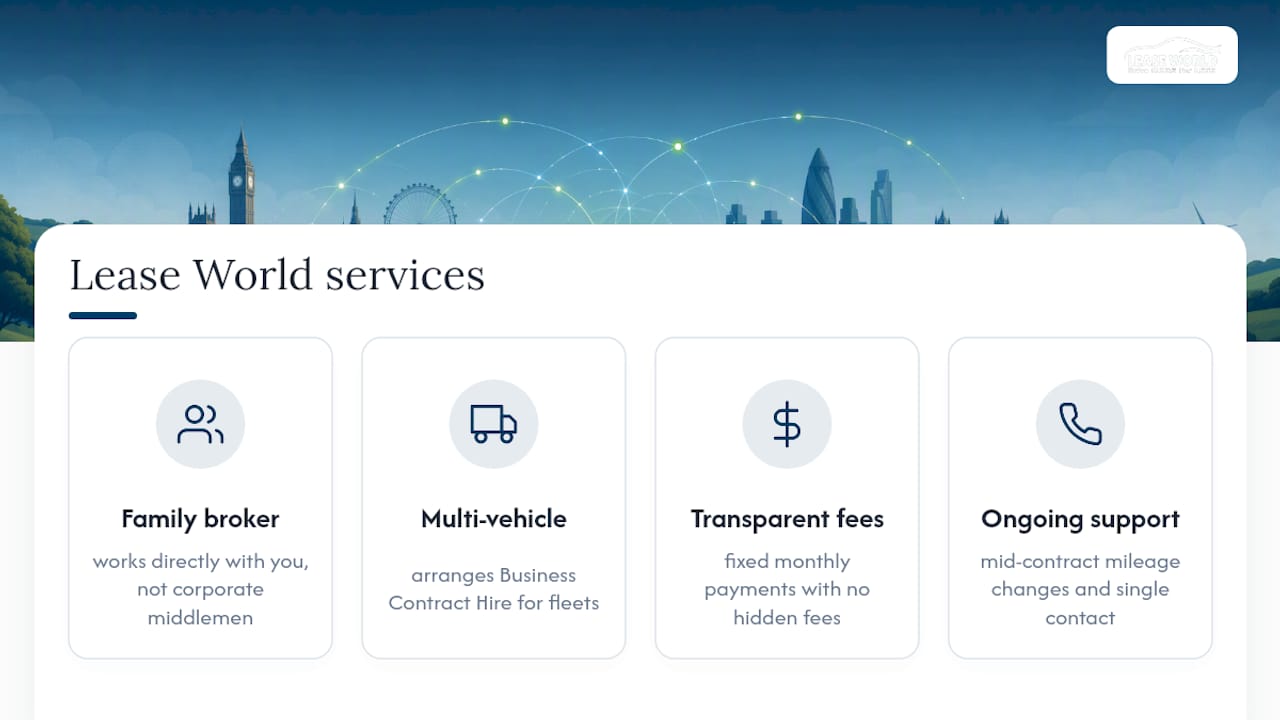
Lease World is the practical alternative to negotiating pooled mileage clauses alone against a funder's standard paperwork. As a family-run broker rather than a corporate intermediary, Lease World works through multi-vehicle Business Contract Hire options with you directly, explains what the cap-and-collar terms actually mean before you sign, and helps arrange fixed monthly payments with no hidden fees across the whole fleet.
Beyond arranging the initial contract, Lease World supports mid-contract mileage changes when usage patterns shift, provides UK-wide delivery on eligible new vehicles, and gives fleet managers a single point of contact instead of a call centre queue when a reconciliation query comes up. Lease World's leasing guides cover the detail behind high-mileage and multi-vehicle contracts if you want to read further before committing.
If your fleet is growing past single-vehicle contracts and pooled mileage looks worth exploring, request a tailored quote and speak to Lease World's team about the funders currently offering the most transparent pooled terms.
Sources
Before assuming pooled mileage and HMRC's "pooled car" rules are the same thing, check the source directly. HMRC's own guidance on pooled cars and vans covers the tax treatment of shared company vehicles, a completely separate concept from leasing mileage pools.
For industry mechanics, Fleet News's reporting on Lombard's pooled mileage terms and Gateway2Lease's pooled mileage explainer are worth reading in full. Fleets weighing alternatives can also look at mileage-management platforms as a way to control usage without a pooled clause at all.
FAQ
Is pooled mileage the same as HMRC's pooled car rules?
No. HMRC's pooled car concept is a company car tax rule for vehicles shared by multiple employees with only incidental private use. Fleet mileage pooling is a leasing contract feature that shares mileage allowance across vehicles, and the two are unrelated.
Does pooled mileage mean unlimited miles for my fleet?
No. Pooled mileage redistributes one agreed total allowance across your vehicles. If the whole fleet exceeds that combined total, excess mileage charges still apply.
How many vehicles do I need to qualify for pooled mileage?
Most funders set a minimum fleet size, often starting around four or five vehicles, and typically require them to sit on Business Contract Hire with the same funder.
Can I change pooled mileage terms mid-contract?
Some funders allow mid-contract mileage reviews or amendments, particularly if usage patterns shift significantly. Ask before signing whether this right is written into the pooled mileage clause.
Can Lease World help set up pooled mileage for my fleet?
Yes. Lease World helps fleet managers compare multi-vehicle Business Contract Hire options, understand pooled mileage clauses before signing, and manage mid-contract mileage changes once the contract is live.