
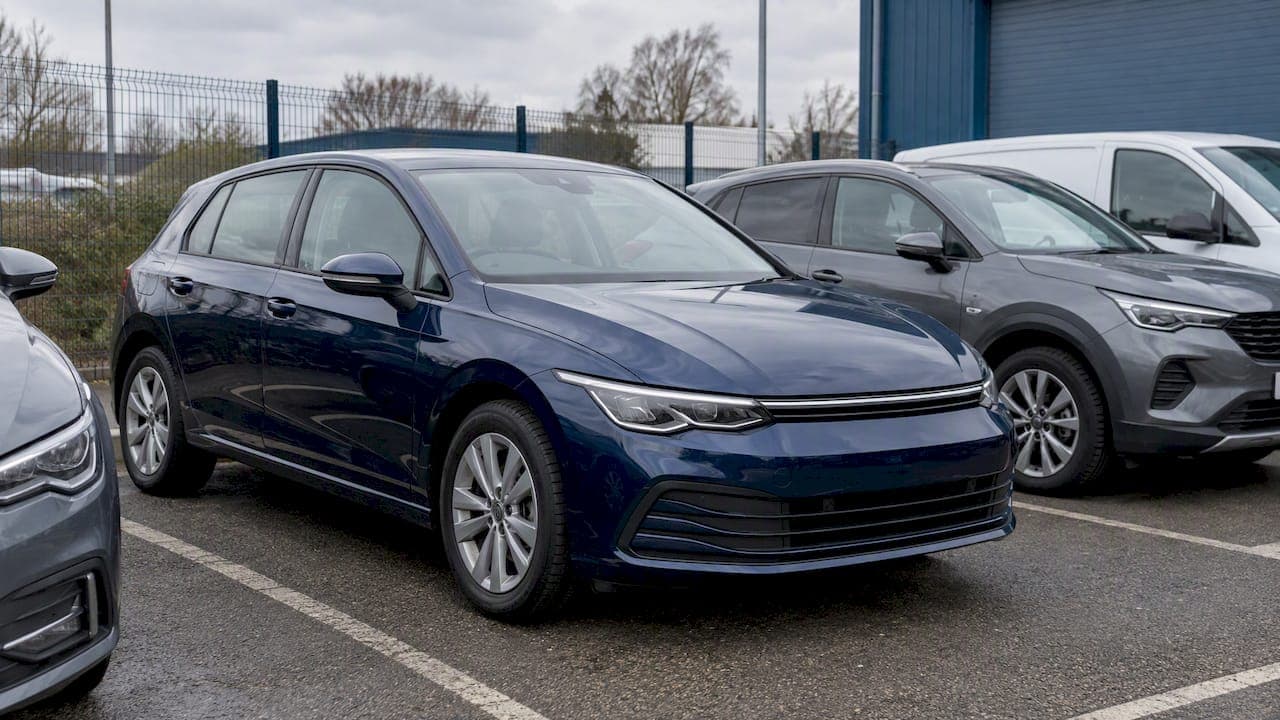
A business pool car is a vehicle that employees share for work journeys and that HMRC does not treat as a company car benefit. To qualify, it must be used by more than one employee, never be used mainly by one person, have only incidental private use, and not normally be kept overnight at or near an employee's home. Miss any one of these and the car is taxed as a company car. This guide explains each condition, how HMRC's 60% rule of thumb works, which records protect you, and how to set up a pool car policy that stands up to a check.
TL;DR
- A pool car is not treated as available for private use, so no company car benefit arises, but only if every condition is met throughout the tax year.
- The car must be used by more than one employee, must not ordinarily be used by one person to the exclusion of others, and any private use must be merely incidental.
- It must not normally be kept overnight at or near an employee's home. HMRC accepts this where the car is taken home on no more than 60% of occasions in the year.
- Keep mileage records and a central booking system showing who used the car, when and why. The burden is on you to show the conditions are met.
- A leased vehicle can be a pool car, as long as how you run it meets the same tests.
Table of Contents
- The five conditions a pool car must meet
- Shared use: more than one driver, genuinely
- The overnight rule and HMRC's 60% rule of thumb
- What counts as merely incidental private use
- Records that prove the car is a pool car
- What happens if a pool car fails the test
- Can two employers share a pool car?
- Leasing a pool car
- Looking for a pool car on lease?
- Perspective
- Setting up a pool car policy in six steps
- FAQ
- Sources
The five conditions a pool car must meet
HMRC's guidance on company pooled cars and vans (Employer's Booklet 480, chapter 15) sets out the tests. The legislation behind them is section 167 of the Income Tax (Earnings and Pensions) Act 2003. In plain terms, a car counts as pooled when all of the following are true:
- It is made available to, and actually used by, more than one employee. A car that sits on the drive of a single person but is nominally open to others does not pass.
- It is made available by reason of employment. It is a work vehicle provided because of the job, not a favour or a family arrangement.
- It is not ordinarily used by one employee to the exclusion of the others. If one person is the car's usual driver, it is not a pool car in practice, whatever the policy document says.
- Any private use is merely incidental to business use.
- It is not normally kept overnight at or near an employee's home. It should normally stay at business premises or a depot.
These are tested against what really happens, not what the policy says. HMRC does not assume pooled status, so it is the employer who has to be able to show that the conditions hold. Put another way: a pool car is a matter of how the vehicle is run day to day, and a one-page policy only helps if the logbook and the booking system agree with it.
Why "pool" is not a label you can choose
Calling a vehicle "the pool car" on the office calendar does nothing for tax. If the finance director takes it home every night and uses it at weekends, it is a company car for that director, with a benefit in kind charge and Class 1A National Insurance for the employer. The label only matters if the facts underneath it are right.
Shared use: more than one driver, genuinely
The first and third conditions work together. The car must be available to several employees and really driven by several, and it must not be the regular vehicle of one of them.
What this looks like in practice:
- A small sales team books one hatchback for client visits. Each person takes it for a few days at a time, and the booking sheet shows a spread of drivers across the year.
- A site-based business keeps a van at the yard for any of eight staff who need to visit other sites.
- An office keeps a car for short-notice errands, such as bank runs, meetings and deliveries, with no individual holding the keys by default.
What tends to fail: one employee books the car most weeks and is effectively the owner of it. The test is whether the car is ordinarily used by one person to the exclusion of others. A central booking system helps here, because it can show that other drivers had access and used the car. Car consultants quoted on the subject stress that the administration of bookings is what lets a business demonstrate to HMRC that the vehicle was not monopolised.
The overnight rule and HMRC's 60% rule of thumb
The condition most employers trip over is the one about where the car sleeps. A pool car must not normally be kept overnight at or near an employee's home. A car that goes home with a driver every evening is, for tax purposes, that driver's car.
HMRC applies a practical measure. Its guidance says a car is accepted as not normally kept at an employee's home if it is taken home on no more than 60% of the occasions in the year when it is kept overnight. Put simply, the car should spend the majority of its nights at your premises.
Three points to keep in mind:
- It is a rule of thumb. It describes how HMRC reads the condition, but each overnight stay at home must still fit the incidental-use test. Taking the car home is not automatically acceptable just because you are under 60%.
- It applies across the year. A single busy month with the car at an employee's house does not sink the arrangement, but a pattern does. Track nights, not just miles.
- "Near" counts. Parking the car on a street round the corner from a manager's house does not get around the rule.
A simple way to stay clear of the threshold is to make the default parking place the office or depot, and to require a reason in the booking system whenever the car is taken home overnight. Typical valid reasons are an early start the next morning at a distant site or a late return after a long journey.
What counts as merely incidental private use
Pool cars are for business. Some private element is allowed, but only if it is merely incidental to business use. HMRC describes the test as qualitative, not quantitative: it is not about hitting a percentage of private miles, but about whether the private journey is subordinate to, and furthers, a primarily business journey.
HMRC's own example is taking the car home before a long business journey so the employee can make an early start the next morning. The private element (the overnight stay at home) exists only because of the business trip.
HMRC's Statement of Practice 2/96 confirms the same direction of travel: private use that is independent of business use is generally not considered incidental. In practice:
| Journey | Likely treatment |
|---|---|
| Collecting the car from home for a 6am client visit 200 miles away | Incidental: it supports a business journey |
| Stopping for fuel and a sandwich on a business trip | Incidental: part of the business journey |
| Using the car for a weekend away | Not incidental: private use independent of business |
| Taking the car home every Friday for the school run on Monday | Not incidental: the private purpose is the point |
| Regular commuting in the car | Not incidental on its own: ordinary commuting is private travel |
HMRC's internal manual also recognises that very small, infrequent private use, typically not more than 5% of annual mileage, may be disregarded when deciding pooled status in specific cases, such as compassionate circumstances. Treat that as a narrow exception, not a licence for regular personal use. If you think a situation falls within it, take advice from an accountant before relying on it.
Records that prove the car is a pool car
The burden of proof rests with the employer. HMRC's guidance expects you to be able to demonstrate that the conditions are met, for example by keeping mileage records showing when the car was used, by whom and for what journeys.
A workable record set looks like this:
- A central booking system. A shared calendar, fleet app or even a controlled spreadsheet. Every use is booked in advance with the name of the driver and the purpose.
- A journey log. Start and end odometer readings, date, driver, destination and business reason for every trip.
- An overnight log. Where the car was kept each night, and a reason whenever it was not at your premises.
- Key control. Keys kept at reception or in a lockbox, not carried permanently by one person.
- A written pool car policy. Who is eligible, how to book, where the car is parked, what counts as acceptable incidental use, and what happens if the rules are broken.
Keep the records for the full tax year and for as long as you keep other payroll and tax documents. When an enquiry comes, a clean log is far more persuasive than a recollection.
What happens if a pool car fails the test
The conditions are all-or-nothing. If the car fails any one, it is not a pool car, and it is treated as a company car made available to the employee or employees who used it. That brings the usual consequences: a benefit in kind charge on the employees, reported on a P11D, and Class 1A National Insurance contributions for the employer. Reporting the car incorrectly can also lead to penalties, so it is sensible to raise a doubtful arrangement with your accountant before the year ends rather than after.

If you want to see how the charge itself is worked out, our guide to company car tax covers the mechanics, and the page on electric car benefit in kind explains why the figure can be much lower for zero-emission vehicles.
Can two employers share a pool car?
Yes, in the right circumstances. The legislation refers to a car pool for the use of employees of one or more employers, so a shared arrangement between related businesses is possible. A recent tribunal decision dealing with this point confirmed that section 167 applies the same conditions to a pool used by the employees of more than one employer.
The practical message: the five conditions still apply in full, and you need records that show use by more than one person across the arrangement. If two companies are sharing, agree who books, who logs mileage, who pays the running costs and where the car is kept, and put it in writing. Group companies and businesses sharing a yard are the most common cases. Take professional advice before setting one up, because the facts of each arrangement decide the outcome.
Leasing a pool car
Most pool cars are not bought outright. Leasing gives you a fixed monthly payment, a known term and the option of adding maintenance, which makes running costs easy to budget for a shared vehicle. The tax status of a pool car does not depend on whether it is owned or leased: HMRC looks at how the car is used, so the pool conditions apply the same way either way.
A few things are worth thinking about before you sign a lease for a pool vehicle:
- Mileage allowance. Shared cars are often driven more than a single employee's car. Estimate annual mileage across all drivers, not just the main user, so you avoid excess mileage charges.
- Driver eligibility. Check the funder's and insurer's requirements for named drivers or fleet cover, and make sure your policy covers everyone who may book the car.
- Term and body type. A compact hatchback suits short urban trips. A van suits a team moving tools or stock. An electric car may suit a pool that rarely does long journeys, with charging at the depot.
- Paperwork. Funders will ask for company details and documents. Our list of five documents to prepare for a company car lease helps you get ready.
If you are still working out whether leasing is a sensible route for business use, our answer on leasing a car for business use covers the basics, and the guide on whether a car lease is tax deductible looks at the cost side.
Looking for a pool car on lease?
We arrange business car and van leases with fixed monthly payments, and we compare contracts across funders so you can see the options side by side. If you are putting together a shared vehicle for your team, start with business car leasing or, for a work vehicle that carries tools or stock, van leasing.
Tell us how many drivers will share the vehicle, the likely annual mileage and where it will be parked, and we can match you to suitable deals. You can send those details through our quote form. Electric options are on our electric car leasing page.
Perspective
We speak to a lot of business owners who want one shared vehicle for the team and assume that calling it a pool car settles the tax. It does not. The facts of daily use decide it, and the businesses that stay out of trouble are the ones that treat the booking sheet and the keys as seriously as the lease agreement.
Our advice is to design the lease around the pool, not the other way round. Work out how many people will drive it, how far it will really go and where it will be parked overnight, then choose a vehicle and a mileage allowance to match. A fixed monthly payment and a clear term make a shared vehicle far easier to budget for, and we compare contracts so that you are not guessing at which one fits.
As a family-run broker we would rather spend the time upfront talking through how your team will actually use the car. That conversation costs you nothing, and it tends to prevent both the wrong vehicle and the wrong paperwork. For the tax treatment itself, your accountant has the final word, and we are happy to work alongside them.
Jason
Setting up a pool car policy in six steps
- Decide who is eligible. Name the roles or departments that can book the car, and confirm that they hold a valid licence.
- Choose the home base. A specific car park, depot or yard that the car returns to by default.
- Set up central booking. One system, one owner, and no informal handovers outside it.
- Define incidental use. Write down the few situations where taking the car home is acceptable, such as an early start or a late return from a long journey, and require a reason each time.
- Log everything. Mileage, drivers, purposes and overnight locations, reviewed monthly by someone who is not a regular driver.
- Review at year end. Look at the spread of drivers and the proportion of nights at home. If one person dominates or the overnight figure creeps up, change the arrangement before it becomes a tax problem.
If you also reimburse employees who use their own or a leased vehicle for business, our explainer on claiming mileage on a leased car shows where those rules differ from pool car rules, and fleet mileage pooling covers a different use of the word pooling that is easy to confuse with this one.
FAQ
Can a pool car be assigned to one employee?
No. A pool car must be available to and actually used by more than one employee, and it must not ordinarily be used by one person to the exclusion of others. If a single employee is effectively the regular driver, HMRC will see a company car, not a pool car.
Can employees take a pool car home?
Only occasionally, and only when it fits the rules. The car must not normally be kept overnight at or near an employee's home. HMRC accepts this where the car goes home on no more than 60% of the occasions in the year, and each home-to-work journey must still be merely incidental to business use, such as an early start for a long business trip.
Can I use a pool car for private journeys?
Only if the private element is merely incidental to a business journey. The test looks at the purpose of the journey, not a mileage percentage. Weekend trips, holidays and regular commuting are private use that is independent of business, so they do not qualify.
What records do I need for a pool car?
Keep mileage records showing when the car was used, by whom and for what journeys, plus a booking system, an overnight parking log and a written policy. HMRC expects the employer to show that the conditions are met, so keep them for the whole tax year at least.
Can a leased car be a pool car?
Yes. HMRC looks at how the vehicle is used, not at whether it is bought or leased. A leased car or van that meets all the conditions is treated as a pool vehicle, so the lease terms, mileage allowance and insurance should be set up for several drivers.
Sources
- Use of company pooled cars or vans (480: Chapter 15), GOV.UK
- EIM23460: Car and van benefit, pooled cars and vans, HMRC Employment Income Manual
- Statement of Practice 2 (1996), GOV.UK
- Jump into the pool, Business Car
- MWL International Ltd and Maywal Ltd v HMRC, final decision