
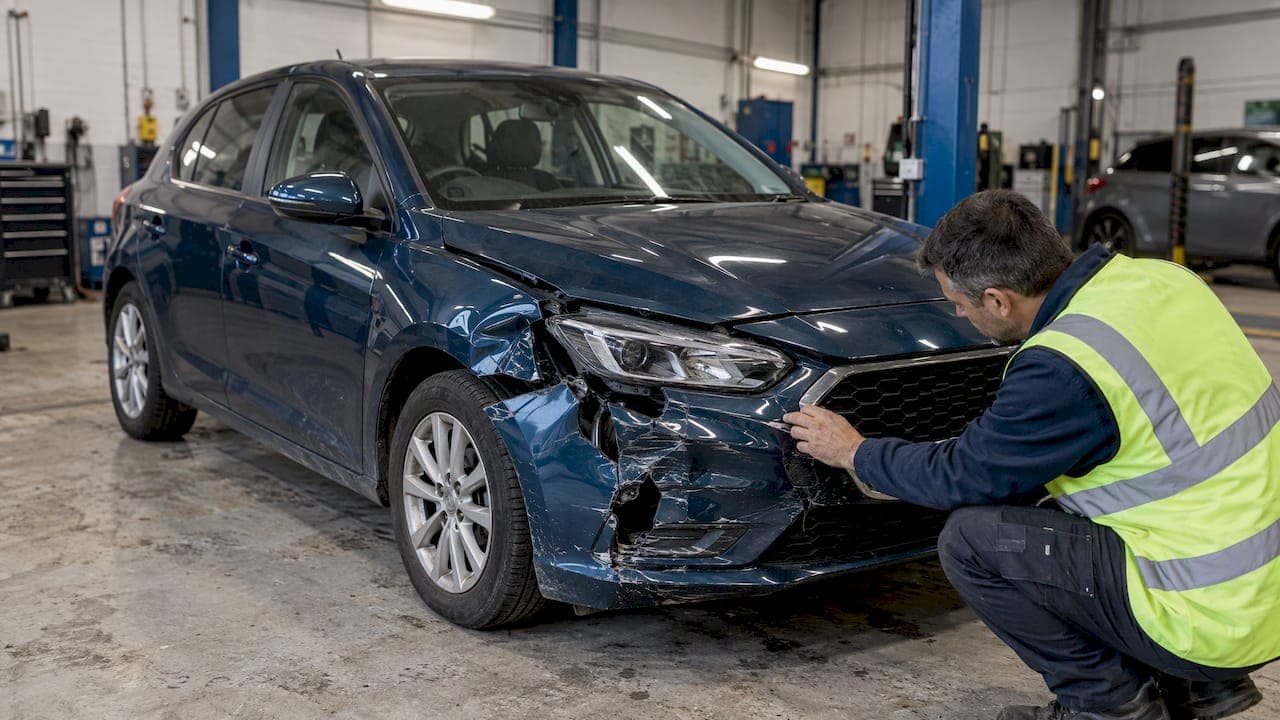
If your leased car is written off, your motor insurer pays out the car's market value just before the loss. That money normally goes to the leasing company, not to you. If the lease still has more to run than the car was worth, you are responsible for the difference unless you have GAP insurance. The steps below show how to check the numbers, challenge a low valuation and plan your next car.
TL;DR
- A write-off (or "total loss") is usually declared when repairing the car would cost more than it was worth, or when it was stolen and not recovered.
- Your insurer pays market value to the funder. You can still owe the gap between that figure and your lease settlement figure.
- GAP insurance exists to cover that gap, and it is far easier to arrange before a claim than after.
- Ask your leasing company for a written settlement figure and compare it with the insurer's offer before you accept anything.
- If you think the valuation is too low, you can challenge it and, if necessary, go to the Financial Ombudsman Service.
Table of Contents
- What counts as a write-off
- Why a leased car is different from one you own
- What to do in the first days after a total loss
- Challenging a low valuation
- GAP insurance: the cover that closes the gap
- Electric and hybrid leases
- If you lease through a business
- Our view: what we tell customers
- Replacing the car after a write-off
- FAQ
- Sources
What counts as a write-off
The ABI explains that a vehicle is generally treated as a total loss when the cost of repair is higher than its actual cash value. The Financial Ombudsman Service adds a second case: a vehicle stolen and never found. In both, the insurer usually pays the market value, meaning what the car was worth just before the damage or theft.
A car can also be written off for safety reasons, or for economic ones. An insurer may add up repair costs, a courtesy car and other claim costs, and decide a payout is cheaper than a repair.
Insurers categorise salvage using the ABI Salvage Code of Practice, which sorts vehicles into categories A (scrap), B (break), S (repairable structural) and N (repairable non-structural). The code is a voluntary industry standard rather than law. That is one reason valuation disputes are common. Our own guide covers the basics too: what happens if a leased car is written off.

Why a leased car is different from one you own
With a contract hire or lease agreement, you never own the car. The funder does. So when the insurer settles, the money is owed first to the owner of the vehicle. If you want to understand that arrangement properly, see who owns a leased car in the UK.
The settlement usually involves two separate figures:
- The insurer's valuation: the market value of the car at the time of loss, less your policy excess.
- The leasing company's settlement figure: what the funder says it needs to close the agreement, which can include remaining rentals and early termination charges set out in your contract.
The two numbers rarely match. Cars lose value fastest in the early years, and lease payments are spread evenly, so early in a contract the settlement figure often sits above market value. The gap is yours to pay, as the Financial Ombudsman Service explains for GAP cover: the motor insurer settles on market value, and GAP covers the difference.
We look at why cover for leased cars differs from ordinary motor policies in our guide to insurance on leased cars.
A simple worked example
These figures are illustrative, not a quote or a typical case.
| Item | Amount |
|---|---|
| Insurer's market value offer | £14,000 |
| Policy excess | £250 |
| Paid by insurer to funder | £13,750 |
| Leasing company settlement figure | £17,500 |
| Shortfall you owe without GAP | £3,750 |
With suitable GAP cover, that £3,750 is the part the policy is designed to meet, subject to its terms and limits. Your excess is also something to check: some GAP policies cover it, others do not.
What to do in the first days after a total loss
- Tell your insurer and your leasing company. Both need to know. Do not stop your monthly payments until the funder confirms in writing that the agreement is closed, because the finance agreement does not end by itself.
- Ask the funder for a settlement figure in writing. Ask what it includes and the date it is valid to.
- Get the insurer's valuation in writing, with its evidence. Ask which valuation guides it used.
- Compare the two. The government's guidance on vehicle write-offs describes how insurers weigh repair cost against pre-accident value, which helps you see how they reached their decision.
- Check for GAP cover. Look at your lease paperwork, your insurance documents and any policy sold alongside the lease.
- Do not accept the first offer on the day. Take time to check the valuation before you agree.
Challenging a low valuation
Most motor disputes the Ombudsman sees are about value. The Financial Ombudsman Service says it looks at specialist motor valuation guides and any other evidence provided when deciding if an insurer's valuation is fair. You can help your case with:
- adverts for like-for-like cars (same make, model, trim, age and similar mileage) near you;
- service history and MOT records;
- photographs showing the car's condition and optional extras;
- the lease paperwork showing the specification.
One published decision, DRN8607381, concerned a leased car that was written off and a dispute over the amount offered. It is a useful read to see what the Ombudsman weighs up. As a rule, if your policy promises market value, that should reflect what it would cost to replace the car, not a lower trade price. Check your policy wording before you reply.
Start with your insurer's complaints process. If it does not resolve the matter, the Ombudsman is free to use. If the problem is a settlement figure from the funder rather than the valuation, raise it with the funder first.
GAP insurance: the cover that closes the gap
Guaranteed Asset Protection pays the difference between the market value paid by your motor insurer and what you owe or paid. Not all policies are the same, so check:
- whether it covers the lease settlement figure or only the purchase price;
- whether it includes your insurance excess;
- the maximum payout and the claim limits;
- how long the policy runs, and whether it matches your lease term;
- whether it was sold separately or through the lease.
Tax matters too. HMRC's manual says insurance on cars and light vans is generally liable to the higher rate of Insurance Premium Tax in the circumstances it describes, and policies are treated differently depending on how flexible the payout is: see IPT04910. It is one more reason to read the terms rather than assume.
Our guide to avoiding a shortfall with GAP insurance on UK leased cars goes through this in more detail.
Electric and hybrid leases
The ABI updated its Salvage Code of Practice in May 2025, with modern vehicle technology, including electric and hybrid battery safety, in mind. If you lease an EV, damage near a high-voltage battery can make assessment more complex, and repair economics may differ from a petrol car's. Do not assume the outcome, but do ask your insurer how it assessed the battery.
Condition counts when a valuation is argued. Keeping the bodywork in good order, for example by looking at how to protect your car from road salt, helps you evidence a well-kept car if you ever need to. If you are weighing up an EV lease, our electric car leasing page shows what is available.
If you lease through a business
A write-off affects a company differently, mainly through VAT and the tax treatment of rentals.
- VAT: HMRC's motoring expenses notice explains that, for most business-leased cars, there is a block on recovering input VAT. Exceptions apply, including cars used mainly for driving instruction or hire with a driver. If your VAT position matters to the claim, read our VAT guide for lease cars and speak to your accountant.
- Tax on rentals: restrictions on deductible lease rentals depend on the car's CO2 emissions. Our CO2 emissions guide explains the principle, and your accountant can confirm how it applies to a replacement car.
- Replacement: a van or car off the road costs a business money every day. Consider cover that includes a replacement vehicle.
If you drive for work, for example as a driving instructor, or use a van for trade, check that your policy matches how the vehicle is really used. A claim can be complicated if the use declared does not match the use at the time of the accident.
Our view: what we tell customers
We are a family-run broker, and the question we hear most is not "what happens in a write-off?" but "why didn't anyone tell me about the gap?" Our advice is simple.
Decide on GAP when you sign, not after a crash. The shortfall is largest early in a lease, which is exactly when many people have not thought about it. We would rather you compare the options calmly at the quote stage.
Read the early termination terms. Two leases with similar monthly payments can have very different settlement terms. That is why we compare contracts in detail rather than just headline rentals.
Keep your paperwork together. Specification, service history, photos and the agreement are what win a valuation argument.

Do not stop paying until the funder confirms the closure. It is a common and costly assumption.
We are FCA authorised and members of the BVRLA, and we have more than 30 years of experience in this market. If something does go wrong with a car we arranged, speak to us, and we will help you understand the paperwork.
— Jason
Replacing the car after a write-off
Once the claim is settled and the agreement closed, you can think about a replacement. You may choose a different type of lease, or a shorter term while you decide. We arrange personal car leasing, business car leasing and van leasing, with fixed monthly payments and no-deposit options, and free UK delivery on eligible vehicles. Tell us what happened and what you owe, and we will compare deals so you can see the full cost before you commit. You can start with a quick enquiry.
FAQ
Do I get my money back if my lease car is written off?
No. You do not own the car, so the insurer's payout goes to the leasing company. Your monthly payments were for using the car. You may even owe a shortfall if the settlement figure is above the car's market value.
Who pays the shortfall on a written-off lease car?
You do, unless you have GAP insurance or other cover that pays it. The motor insurer pays the market value, and the funder asks for the balance from you. Ask for the settlement figure in writing so you know the exact amount.
Can I dispute the insurer's valuation of my leased car?
Yes. Gather adverts for similar cars, service records and photos, and put your case to the insurer. If you are still unhappy after its complaints process, the Financial Ombudsman Service can review the valuation for free.
What if my leased car is stolen and not recovered?
The process is similar, because the insurer treats it as a total loss. You will need to report the theft to the police and your insurer, and keep paying until the funder confirms closure. See our guide on what happens if a leased car is stolen.
Sources
- ABI: motor insurance and total loss
- ABI: Salvage Code of Practice update, May 2025
- Financial Ombudsman Service: motor valuations and write-offs
- Financial Ombudsman Service: GAP insurance
- Financial Ombudsman Service: decision DRN8607381
- GOV.UK: vehicle write-offs
- HMRC: IPT04910
- GOV.UK: VAT on motoring expenses (Notice 700/64)