

Lease GAP insurance tops up your motor insurer's payout to cover any outstanding balance if your leased car is written off or stolen. It suits drivers with a small deposit, a new or nearly-new vehicle, and a long or high-mileage contract, where depreciation can outpace what an insurer will pay. Cover typically stretches to outstanding rentals, the initial rental you paid upfront, and your insurer's excess.
TL;DR:
- Lease GAP insurance is most beneficial for drivers with small deposits, new or nearly-new vehicles, long-term leases, or high mileage, where depreciation can cause large payout gaps.
- The typical coverage includes the shortfall between insurer payout and lease balance, initial rental payments, and a contribution to the insurer's excess, with exclusions for modifications or undisclosed vehicle use.
- Choosing the right GAP depends on matching the product to your lease details and timing the purchase within specific windows after vehicle delivery, ideally via standalone providers rather than dealer offers.
- Understanding claim processes and limits, as well as how early lease termination or transfer affects coverage, is essential to avoid surprises if your car is written off or you end the lease early.
- Premiums are generally in the low hundreds of pounds, and buying upfront usually costs less than rolling payments, with policy details like claim caps and underwriters critical for reliable payout.
Table of Contents
- What is lease GAP insurance and how does it differ from other types?
- What does lease GAP insurance actually cover?
- Do I need gap insurance for my leased car?
- When and where should you buy lease GAP insurance?
- How does a GAP claim work after a total loss?
- What does a shortfall actually look like in numbers?
- How do you compare GAP policies properly?
- What happens to GAP if you end your lease early or transfer it?
- Are there tax or financial considerations with GAP insurance?
- Lease World's perspective on GAP insurance
- Sources
- FAQ
What is lease GAP insurance and how does it differ from other types?
Contract hire GAP is built specifically for lease agreements. If your leased car is stolen or written off, your motor insurer pays out its current market value, which is almost always less than what you still owe your leasing company. Lease GAP bridges that shortfall, paying the difference between the insurer's settlement and the amount required to close your contract hire agreement.
This is not the same product as finance GAP, which is designed around PCP or hire purchase agreements where you're working towards ownership. Return-to-invoice GAP, another common variant, pays back the original invoice price rather than covering a lease settlement figure, so it's aimed at buyers rather than lessees. Confusing the two can leave you underinsured.
Eligibility for lease GAP typically depends on:
- Vehicle age at the point of purchase (commonly capped around 10 years)
- A minimum amount of remaining lease term
- Purchase timing, often within a set window after delivery, such as 365 days
Always match the GAP type to your actual agreement rather than picking whichever product a dealer offers by default, since a mismatched policy may not pay out when you need it most, according to GapInsurance.co.uk.
What does lease GAP insurance actually cover?
A contract hire GAP policy is built around closing the gap between what your insurer pays and what your lease agreement demands. Most policies also reimburse costs you've already paid, which is where the real value often sits for lease customers.
Typical inclusions are:
- The shortfall between the insurer's market-value payout and your outstanding lease settlement
- Some or all of your initial rental payment, often up to a stated cap
- A contribution towards your motor insurer's excess, again subject to a limit
Some contract hire GAP policies reimburse up to several thousand pounds of the initial rental and some hundreds of pounds towards the insurer's excess, though these figures vary by provider and policy tier.
Exclusions matter just as much as inclusions. Most policies won't pay out on vehicles that have been modified, used for private hire or courier work without disclosure, or that already had unrepaired damage before the policy started. Claims are also usually capped at a maximum monetary limit, so a heavily specced car on a long contract could still leave a residual shortfall even with GAP in place. Read the policy wording, not just the sales page, before assuming full coverage.
Do I need gap insurance for my leased car?
Not every lessee needs it, and treating GAP as automatic is a mistake. The decision comes down to how exposed you are if your car is written off tomorrow, and how well you could absorb that exposure without cover.
GAP tends to earn its cost when:
- Your deposit is small. Little or no upfront payment means the lease balance stays high relative to the car's value for longer.
- The car is new or nearly new. Depreciation bites hardest in the first year or two, which is exactly when a shortfall is largest.
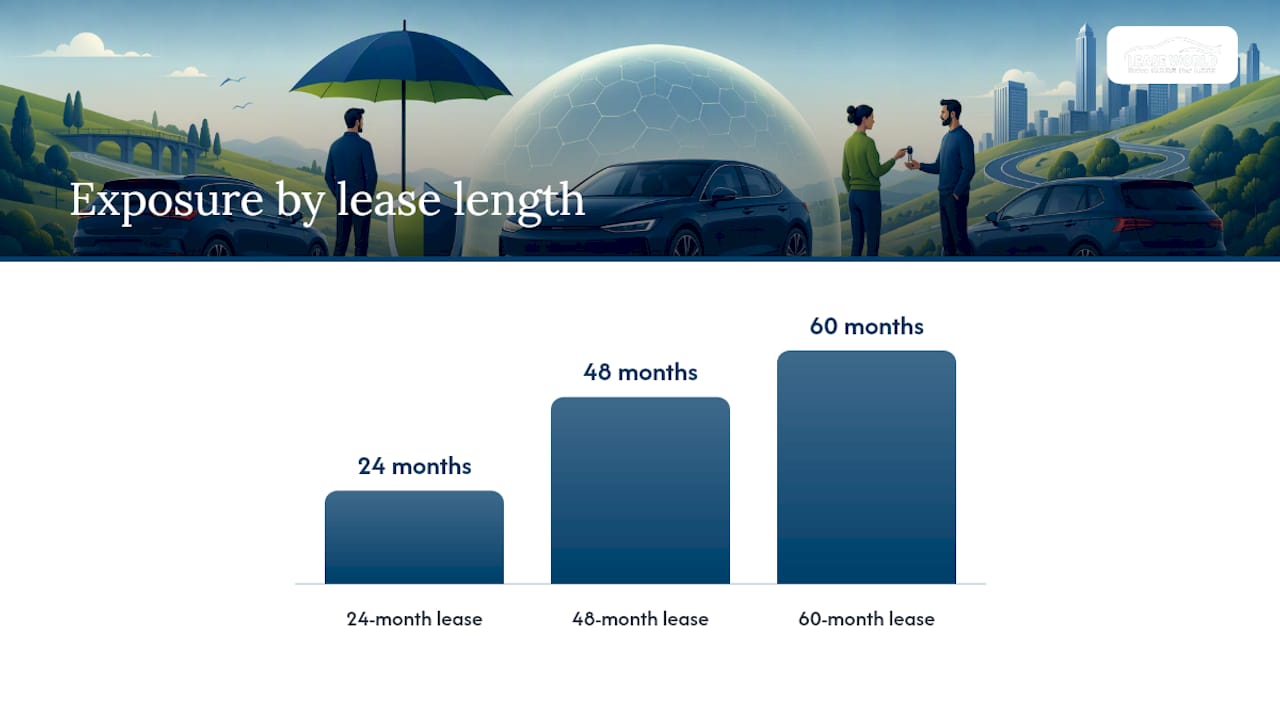
- You've taken a long contract. A 48 or 60 month lease keeps you exposed to the depreciation curve far longer than a 24-month deal.
- Your mileage is high. Heavier mileage accelerates the drop in market value, widening the potential gap.
Skipping GAP is more defensible when you've paid a substantial deposit, chosen a shorter term, or you're leasing a car whose insurer valuation is likely to track closely with your settlement figure. If you could comfortably cover a four-figure shortfall from savings without disrupting your finances, GAP becomes a convenience rather than a necessity, a point echoed in Motoring Mojo's guidance on who should skip GAP altogether.
Before deciding, ask your leasing company directly what your total loss liability would be under your specific contract. Which? recommends this step precisely because liability depends on your agreement's own wording, not a generic rule of thumb.
When and where should you buy lease GAP insurance?
Timing matters more than most buyers realise. Many contract hire GAP policies only allow purchase within a fixed window after delivery, commonly up to 365 days, and require a minimum amount of term left on your agreement to qualify. Buy too late and you may find yourself ineligible altogether.
Where you buy matters just as much as when. Dealer-sold GAP has historically carried heavier commission loading than standalone policies, which can mean paying more for the same level of cover. It's worth comparing:
- At least two or three standalone GAP quotes against the dealer's offer
- The maximum claim limit on each policy, not just the headline price
- Whether initial rental and excess reimbursement are included or sold as extras
Before you commit, ask for the Insurance Product Information Document (IPID), the full policy wording, and the underwriter's name. These three documents tell you far more than a sales page ever will.
Pro Tip: Set a reminder for the week your car is delivered. Comparing GAP quotes before the dealer follow-up call means you're negotiating from a position of knowledge, not pressure.
Standalone comparison sites make this easier than it used to be, and the exercise takes a fraction of the time it takes to arrange the lease itself; for detailed insights, see our GAP insurance Ireland: best providers compared. Guides like Motoring Mojo's breakdown of dealer versus standalone value are worth reading before you sign anything.
How does a GAP claim work after a total loss?
The process runs in a fixed sequence, and understanding it in advance saves confusion at a stressful moment.
- Your motor insurer confirms total loss and issues its own settlement based on the car's market value immediately before the incident.
- You submit a GAP claim to your GAP provider, supplying your lease agreement, the insurer's settlement letter, and proof of your initial rental payment.
- The GAP insurer calculates the shortfall between the insurer's payout and your lease settlement figure, then pays out up to the policy's maximum limit.
- Funds are usually paid directly to settle the lease balance, though timing varies by provider and can take several weeks once documentation is complete.
Two things commonly reduce or delay payment. First, market-value clauses mean the GAP insurer may dispute the motor insurer's valuation if it looks inflated or under-market. Second, missing paperwork, particularly proof of the initial rental, is one of the most common reasons claims stall. Keep your lease agreement and payment confirmations somewhere accessible for the life of the contract, not just at signing.
What does a shortfall actually look like in numbers?
Depreciation is the mechanism behind every GAP claim, and it moves faster than most lessees expect.
A new car can lose as much as 60% of its value within the first three years, according to Motorway's depreciation research. Applied to a leased vehicle, that curve is exactly what creates a shortfall between insurer payout and lease settlement.
Take a car with an on-the-road price of £32,000 on a 48-month lease. If it's written off after 18 months, the insurer might value it at £19,000 based on current market conditions. Your lease settlement figure, however, could sit closer to £23,000 once you factor in the rentals still owed under the agreement. That leaves a £4,000 shortfall, plus your insurer's excess, all of which GAP is designed to cover up to its policy limit.
Premiums for contract hire GAP typically run in the low hundreds of pounds for the length of a standard lease, depending on the vehicle's value, the term, and the level of cover chosen. Claim caps vary by provider, so check the maximum payout figure against your own lease balance rather than assuming unlimited cover.
How do you compare GAP policies properly?
Price alone tells you almost nothing about whether a GAP policy will actually pay out when you need it. The real comparison happens in the wording.
Ask each provider directly:
- What is the maximum claim limit, and does it cover 100% of outstanding rentals?
- Is initial rental reimbursement included, and up to what amount?
- Who is the underwriter, and are they FCA regulated?
- What is the cooling-off period if you change your mind?
Watch for red flags in the policy document itself. A market-value clause that lets the GAP insurer substitute its own valuation for your motor insurer's is one of the most common causes of disputed claims. A cooling-off period shorter than 14 days is unusual and worth questioning. And if a provider won't name its underwriter upfront, treat that as a reason to look elsewhere.
Pro Tip: Request a sample claim calculation from any provider before buying. A policy that can't explain its own payout in plain figures usually can't be trusted to pay out cleanly either.
Requesting the IPID and full policy wording before you buy is the single most effective way to avoid an unpleasant surprise at claim time.
What happens to GAP if you end your lease early or transfer it?
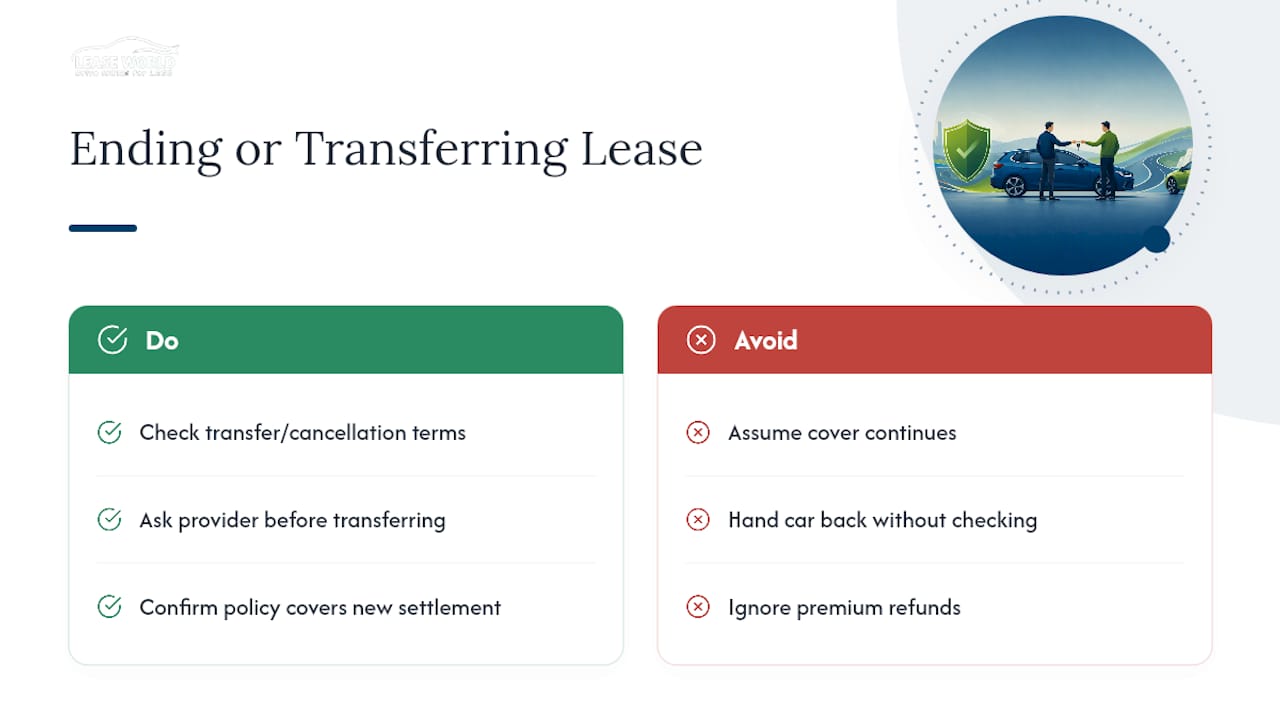
Ending a lease early complicates GAP cover in ways that catch many drivers out. Most contract hire GAP policies are written against your original lease term and settlement schedule, so terminating the agreement ahead of schedule can change the outstanding balance the policy is designed to cover.
If you settle early through a lease transfer, where another individual or business takes over your remaining payments, the GAP policy typically needs updating or reissuing to reflect the new arrangement. Some providers will transfer the unused portion of your premium to the new lessee or refund it on a pro-rata basis; others treat early termination as grounds to cancel the policy outright. This is exactly the kind of detail buried in policy wording rather than marketing copy, which is why checking the transfer and cancellation terms before you buy matters as much as checking the claim limit.
Voluntary early termination, separate from a lease transfer, carries its own risk. If you hand the car back before your contract ends, your outstanding settlement figure is recalculated by the leasing company, and that figure may no longer align neatly with what your GAP policy was originally priced to cover. Understanding what happens to a leased vehicle at total loss or termination before you sign either the lease or the GAP policy avoids nasty surprises later. If you're planning to transfer or end a lease early, contact your GAP provider first rather than assuming continuous cover.
Are there tax or financial considerations with GAP insurance?
GAP insurance is subject to Insurance Premium Tax (IPT) at the standard rate, which is already factored into the premium you're quoted, so there's no separate tax bill to budget for beyond the price shown. For business lessees, GAP premiums may be treated differently for tax purposes depending on whether the vehicle is used for business or personal purposes, and how your accountant classifies the leasing arrangement. It's worth raising this specifically with whoever handles your business accounts rather than assuming treatment mirrors your core lease payments.
The bigger financial consideration is opportunity cost. A GAP premium paid upfront, often in the £100 to £300 range depending on the policy, is money you won't get back unless you claim. Weigh that fixed, certain cost against the size and likelihood of a shortfall you'd otherwise have to fund from savings or borrowing. For most lessees with a small deposit and a new car, the maths favours paying the premium. For those with more financial cushion or lower depreciation risk, it's a more marginal call.
One practical point often missed: paying for GAP as a single upfront premium is usually cheaper over the life of the policy than rolling the cost into monthly instalments, since instalment options frequently carry an added interest charge. If cash flow allows, paying once at the start of the lease tends to be the better financial decision.
Lease World's perspective on GAP insurance
We spend a lot of our time helping customers work out whether a lease deal genuinely fits their budget and their driving pattern, and GAP is one of the questions we get asked most often once a contract's been agreed. The view is that it depends on your deposit, your mileage, and how long you're committing to the car.
What we'd rather see is customers making that call with the full picture, not a rushed decision at the dealer's finance desk. Our leasing guides cover the contract terms that actually determine your GAP exposure, and our glossary of lease terminology is worth a read before you compare any quotes. If you'd rather talk it through, get in touch for a personalised lease comparison and we'll walk you through where GAP genuinely adds value for your specific agreement.
— Jason
Sources
- Car depreciation guide | Motorway
- Gapinsurance
- GAP insurance in 2026: who it suits, who should skip it and why dealer cover is rarely the best buy - Motoring Mojo
FAQ
Do I need gap insurance on a lease car in the UK?
Not always, but it's worth serious consideration if you've put down a small deposit, chosen a new or nearly-new car, or signed a long or high-mileage contract, since these factors widen the potential shortfall between insurer payout and lease settlement.
Does gap insurance cover leased vehicles?
Yes, contract hire GAP is specifically designed for leased vehicles and pays the difference between your motor insurer's valuation and the outstanding balance on your lease agreement, subject to policy limits.
Is it worth buying gap insurance in the UK?
For lessees with small deposits, new cars, or long contracts, GAP is often worth the cost because depreciation can create a shortfall running into thousands of pounds; for those with larger deposits or shorter terms, it's a more marginal decision.
Is it more expensive to insure a leased car in the UK?
Motor insurance premiums for leased cars aren't inherently higher because of the leasing arrangement itself, though the requirement to hold comprehensive cover and keep the vehicle to the leasing company's condition standards can influence your policy choice and cost.