
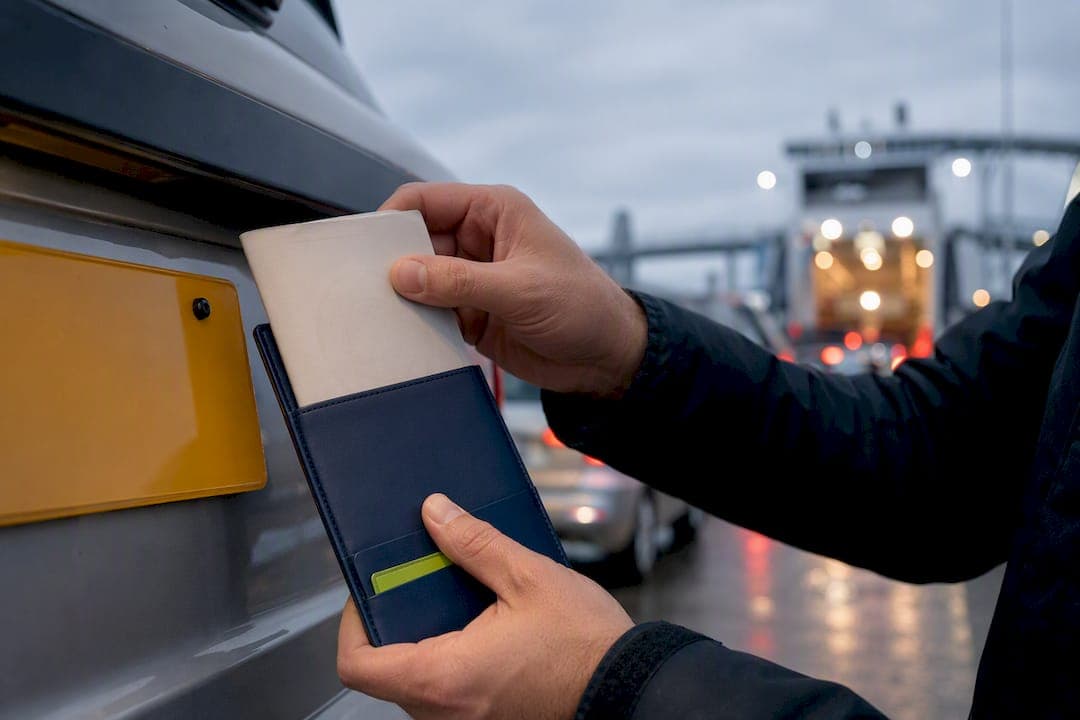
Yes, you can take a leased car abroad, but only with written permission from your leasing company and a valid VE103 vehicle-on-hire certificate in the car. Without both, you risk fines, delays at the border, or having the vehicle impounded. The first thing to do, well before you book the ferry or check in for your flight, is call your funder and ask them to arrange the VE103.
TL;DR:
- The VE103 must be issued by your leasing company and in hand before crossing borders, as photocopies or letters are not acceptable to foreign officials.
- Standard processing of a VE103 can take several weeks, so requesting it early and exploring expedited options is crucial for timely travel plans.
- Confirm your insurance includes cross-border coverage and keep copies of all relevant documents, such as your licence, passport, and proof of insurance, to avoid legal issues abroad.
- Check specific country requirements like ID stickers, vignettes, tolls, and low-emission zones along your route, since rules vary significantly outside the EU and familiar zones.
- Failing to have the correct documents can result in fines, vehicle impoundment, and costly delays, so preparation and early request are essential for smooth travel.
Table of Contents
- What is a VE103 and why do you need one to take a leased car abroad?
- How do you get a VE103, and how long does it take?
- What other documents and insurance checks matter?
- Do you need an international driving permit, and what about number plates?
- What happens if you don't have the right documents?
- Your pre-trip checklist for taking a leased car abroad
- A note from Lease World on the questions we hear most
- Need help arranging a lease that works for your travel plans?
- Sources
- FAQ
What is a VE103 and why do you need one to take a leased car abroad?
The VE103 (sometimes issued as a VE103B) is the internationally recognised vehicle-on-hire certificate. It exists because leased and rented vehicles don't travel with their V5C registration document. The finance company or leasing provider keeps that on file, so the VE103 stands in for it whenever the car crosses a border.
Officials outside the UK have no easy way to check who legally owns a car that isn't registered to the person driving it. The VE103 closes that gap, and Gov it is the accepted substitute for hired or leased vehicles travelling for less than 12 months. The certificate traces back to an international agreement designed to stop the movement of stolen vehicles across borders, according to BVRLA's explanatory guidance, which is part of why enforcement is strict.
A few points worth knowing before you travel:
- The certificate is usually valid for up to 12 months, matching the typical short-term travel window.
- It's issued by the leasing company or funder, not by DVLA.
- BVRLA is explicit that a photocopy of the V5C or a letter of authority from the lease company will not do. Border and roadside checks abroad expect the actual VE103.
How do you get a VE103, and how long does it take?
Getting the certificate is straightforward, but it isn't instant, so timing matters more than most drivers expect.
- Contact your leasing company or funder first. They're the ones authorised to issue the VE103 or VE103B, and some BVRLA member companies can issue it directly to you.
- Ask specifically for a VE103B if you want it sent straight to you rather than routed through a third party.
- Get written confirmation of the request date and expected delivery, so you have a paper trail if anything goes wrong.
- Ask about fast-track options. Standard processing can take several weeks, but GOV.UK notes that authorised bodies sometimes offer a paid expedited service for drivers travelling at short notice.
- Escalate through BVRLA if your funder delays or refuses without good reason, and keep a record of every call and email.
Fees vary between leasing companies, so ask for a figure when you make the initial request rather than assuming it's free.
What other documents and insurance checks matter?
The VE103 is the headline requirement, but border staff, insurers, and breakdown providers will expect a fuller pack of paperwork. Before you leave, gather:
- Your full UK driving licence (plus the paper counterpart if you hold a Northern Ireland licence).
- A valid passport with enough remaining validity for your destination's entry rules.
- The VE103 or VE103B itself, ideally with a photocopy kept separately.
- Your insurer's cover note or green card, if the insurer requires one for cross-border travel.
Insurance is where a lot of leaseholders come unstuck. Some personal-use policies exclude business trips, restrict named drivers, or cap cover in certain countries, so call your insurer and confirm what's covered before you go. GOV.UK's guidance on driving abroad also recommends checking this alongside your tax and MOT status. Ask whether your breakdown provider includes cross-border recovery too, since standard UK-only cover won't help if you break down outside the country. Pack hi-viz jackets, a warning triangle, headlamp adaptors if you're taking a right-hand-drive car onto the continent, and clear GB or UK identification if your number plate doesn't already display it.
Do you need an international driving permit, and what about number plates?
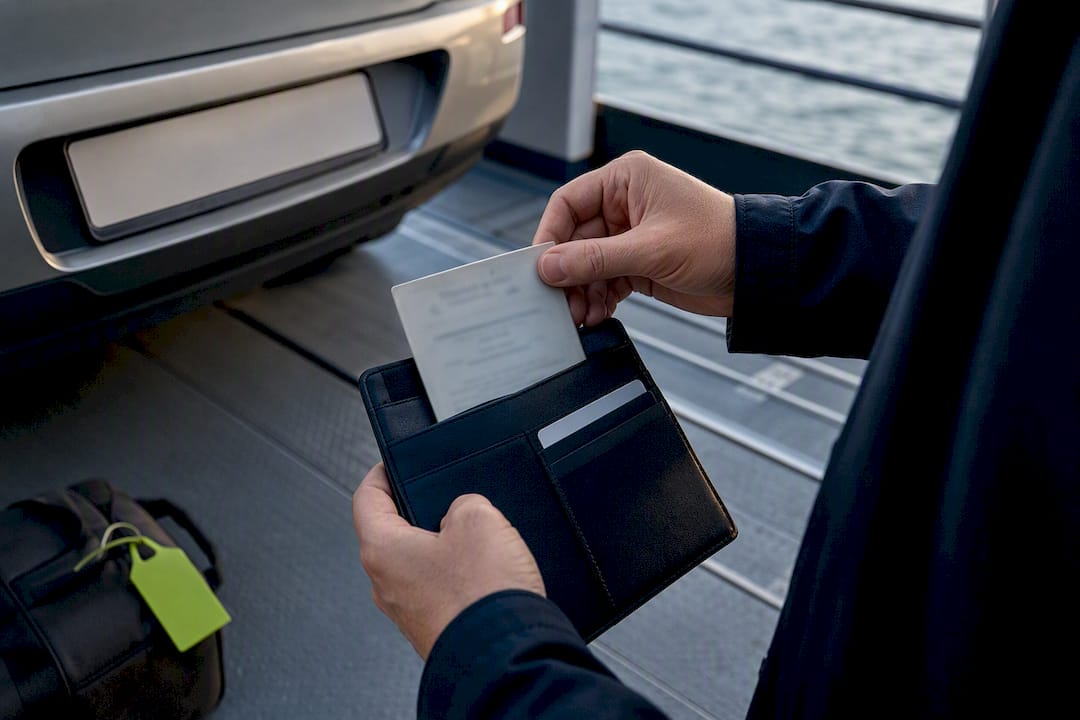
You don't need an international driving permit to drive in the EU, Switzerland, Iceland, or Liechtenstein. Outside that zone, requirements vary by country, so check before you travel rather than assume your UK licence is enough everywhere.
Beyond the IDP question, a few other checks are worth building into your route planning:
- Confirm whether your destination requires a UK identifier sticker or plate marking, since rules differ from the old GB sticker era.
- Check for vignettes (Austria and Switzerland both require them), congestion charges, and low-emission zone stickers, particularly in French and German cities.
- Look up toll systems on your route, some are automatic barrier tolls, others use electronic tags you'll need to arrange in advance.
- Check GOV.UK's foreign travel advice for each country on your itinerary, since these pages are updated as rules change.
What happens if you don't have the right documents?
The consequences of turning up without a VE103 or the right insurance paperwork range from irritating to genuinely costly. On-the-spot fines are common, and in more serious cases the vehicle can be impounded until proof of ownership or permission is produced, which usually means a delayed holiday and a recovery bill.
The mistakes that cause this are almost always avoidable:
- Assuming a letter of authority or a scanned copy of the V5C will satisfy border checks. BVRLA is clear that neither is acceptable.
- Letting road tax or the MOT lapse while the car is away, which invalidates the trip even if the VE103 is in order.
- Assuming personal insurance automatically covers business use or unlimited European travel without checking the policy wording.
Your pre-trip checklist for taking a leased car abroad
Work through this in order, starting several weeks before departure rather than the week before, including preparing your vehicle properly with the best car pre wash for UK owners.
- Request the VE103 from your leasing company as early as possible. Standard turnaround can run to several weeks.
- Confirm insurance cover in writing, including any cross-border restrictions and breakdown recovery.
- Check tax and MOT status are current for the entire period you'll be away.
- Check IDP and number-plate rules for every country on your route, not just your final destination.
- Pack the accessories and paperwork, including hi-viz jackets, a warning triangle, and photocopies of every document.
Pro Tip: Keep a digital photo or scan of your VE103, licence, and insurance documents on your phone as a backup, and save your leasing company's emergency contact number alongside your insurer's and breakdown provider's. If you're stopped or something goes wrong, having contacts to hand saves precious time.
A note from Lease World on the questions we hear most
The question we get asked most often isn't about the rules themselves, it's the waiting. Customers ring us anxious because a VE103 hasn't arrived and their ferry is booked. Insurance wording confuses people too. Our guide on driving abroad with a leased car goes into more depth on preparation if you want it.
— Jason
Need help arranging a lease that works for your travel plans?
If you're leasing a new vehicle and know you'll want to take it abroad regularly, it's worth raising that with your broker before you sign anything, not after. Professional vehicle leasing brokers work with customers across personal and business leasing, often including no deposit options and free mainland UK delivery on eligible vehicles, and can help you understand what to ask your chosen funder about VE103 support and cross-border terms before you commit.
We also know the leasing process itself can feel like a maze of paperwork the first time round, which is why our step-by-step leasing guide walks through who to contact at each stage, including the funder conversations that matter most once you're ready to travel. If your current lease is coming to an end and you're weighing up your next vehicle with overseas trips in mind, get in touch through our car leasing enquiry page and we'll talk you through the options.
FAQ
Can I take my finance car abroad?
Yes, provided your finance or leasing company gives written permission and issues a VE103 vehicle-on-hire certificate, which is the accepted substitute for the V5C on hired and leased vehicles.
What is the 1.5 rule when leasing a car?
There's no official rule recognised by GOV.UK or BVRLA for taking a leased car abroad. Definitions of this vary and don't appear in official leasing or travel guidance, so treat any version you encounter with caution and stick to the documented VE103 requirement instead.
How long can I keep my UK car in Europe?
The VE103 typically covers travel for up to 12 months, but you should confirm the exact validity period with your leasing company since it depends on the certificate they issue.
Is leasing a car 100% tax deductible?
Tax treatment depends on your business structure and how the vehicle is used, so this isn't something a general guide can answer definitively. Speak to your accountant or check current HMRC guidance for your specific situation.
What if my leasing company refuses to issue a VE103?
Ask for written reasons and escalate through BVRLA if you're not satisfied, keeping records of every request you've made in case you need to show proof of your attempts.