
In most cases you can't SORN a lease car on your own. On a standard personal or business contract hire agreement the funder is the legal owner and usually the registered keeper, so only they can declare a SORN with the DVLA. Before you take any step, contact your leasing company, because the agreement almost certainly requires the car to stay taxed and insured. This guide explains who does what, how a SORN works, and what to do instead if you simply aren't driving for a while.
TL;DR
- A SORN (Statutory Off Road Notification) tells the DVLA a vehicle is off the road and not taxed or insured. GOV.UK says that without one you must tax and insure the vehicle or face an automatic £80 fine.
- Only the registered keeper can declare a SORN online or by phone. On most lease cars that is the funder, not you.
- Lease agreements usually oblige you to keep the car taxed, insured and available. Ask your leasing company before you do anything.
- A SORN car must stay off public roads. The only exception is driving it to or from a pre-booked MOT or testing appointment.
- Rentals keep running while a car is SORN. If you only need a break, ask about alternatives such as a short-term lease or a contract adjustment.
Table of Contents
- Who can SORN a lease car?
- Do you need your leasing company's permission?
- What a SORN actually does
- How to declare a SORN
- What happens to road tax and insurance?
- Quick reference: who does what
- Why SORN is rarely the right tool for a lease car
- What if your lease ends or you return the car?
- Putting a SORN car back on the road
- Our view
- Choosing a lease that fits how you drive
- FAQ
- Sources
Who can SORN a lease car?
The person who can make a SORN is the registered keeper of the vehicle. GOV.UK explains that you can apply online if the vehicle is registered in your name. If it is not, a different route applies, which we cover below.
On a typical personal contract hire (PCH) or business contract hire (BCH) deal, you are the user of the car. The finance company or funder buys the vehicle, owns it for the length of the contract and usually appears on the V5C logbook as the registered keeper. You are the person in the driving seat, not the person the DVLA writes to. Finance leases are the exception: they are more common on vans, and the funder stays the legal owner while you may be named as the keeper. Your paperwork will tell you which applies.
The distinction matters because the registered keeper is the one the law holds responsible. According to the DVLA's enforcement policy, the registered keeper is legally responsible for taxing the vehicle or making a SORN until the DVLA is told it has been sold, transferred, scrapped or exported. If that is the funder, the funder decides whether a SORN happens at all.

Check your V5C and your agreement
Two documents answer the question in minutes:
- The V5C logbook, or the keeper details your funder holds. If your name is not in the registered keeper box, you cannot make the declaration yourself online.
- Your lease agreement. Look for the clauses on road tax, insurance, storage and the vehicle being "in use". These set what you must do while you hold the car.
If you are unsure which kind of agreement you have, our guide to road tax on leased cars explains how tax is handled on typical UK deals.
Do you need your leasing company's permission?
Yes, in practice. A lease is a rental of an asset someone else owns. Even when the DVLA rules would technically allow a SORN, your contract sets conditions about taxing, insuring and using the car, and the funder must also be able to find and collect the vehicle at the end of the term.
Funders vary in how they treat a request, so we won't pretend there is one rule. What is common across the market is that the funder wants the car:
- legally taxed, or properly declared by them as off the road,
- insured throughout the agreement, and
- kept in a secure, known location.
Other finance providers say the same thing in their own terms. One UK vehicle-finance lender states that its agreement requires customers to keep paying tax and insurance until the vehicle is collected, and advises contacting the DVLA to declare SORN only where that is not possible. Industry commentary points the same way: providers may require a vehicle to stay fully insured while declared SORN, and failing to meet their requirements could breach the agreement and lead to recall or extra charges.
The safest sequence is simple. Phone or email the funder first, explain why you want the car off the road and for how long, and get their answer in writing before anyone touches the DVLA record.
What a SORN actually does
A SORN is not a pause button on your agreement. It is a notice to the DVLA that a vehicle is not taxed, not insured and not being used on public roads. GOV.UK states the key points:
- If a vehicle is not taxed or insured, you must make a SORN.
- Without one, you must tax and insure it or you are automatically fined £80.
- A SORN is free to make.
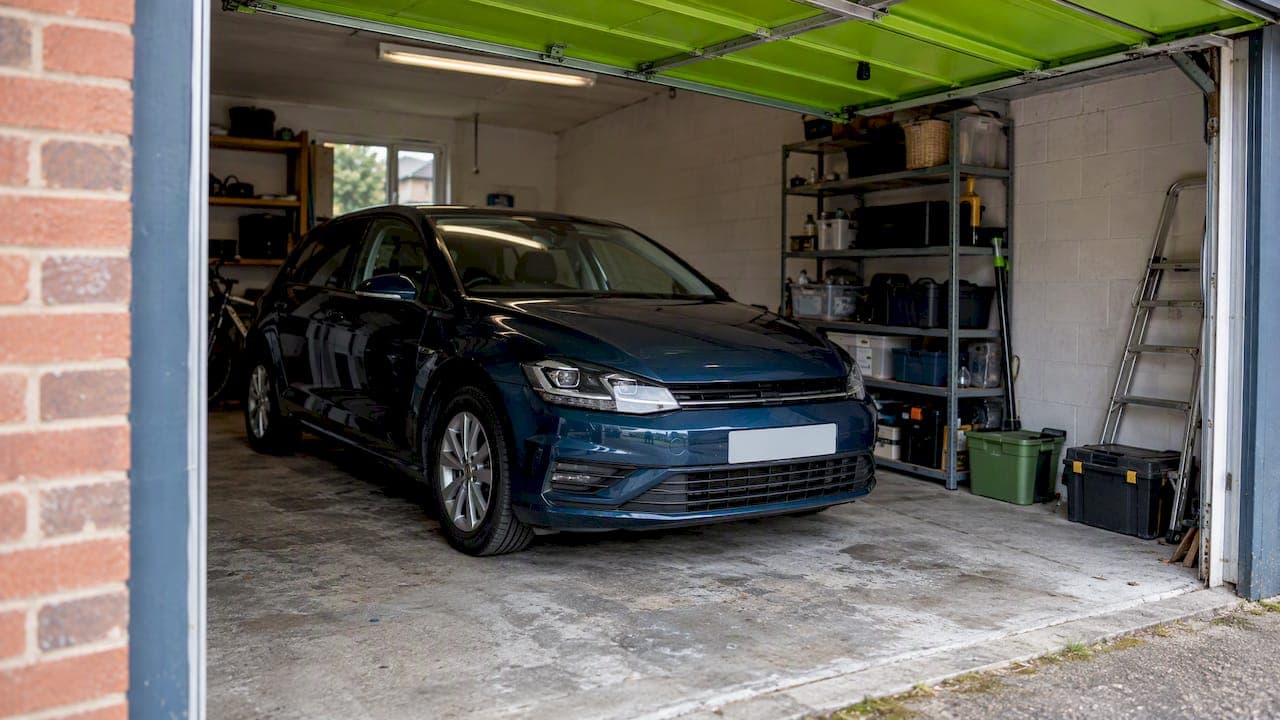
- A SORN vehicle must be kept off public roads, for example in a garage, on a drive or on private land.
- You can only drive it on a public road to or from a pre-booked MOT or other testing appointment.
- A SORN is cancelled automatically when you tax the vehicle again.
The practical consequence for a lease customer is that a SORN stops road tax and insurance obligations on the DVLA side, but it does not stop your monthly rental. The funder still expects its payments, and the mileage allowance, condition standards and end-of-term obligations all continue unless the funder agrees otherwise.
Where can you keep a SORN car?
Anywhere that is not a public road. A locked garage is ideal. A private driveway or private land also qualifies under the official rules. A car parked on the street outside your house is on a public road, so it must be taxed and insured. If you rent a garage or a parking space on private land, tell the funder where the car will be, as many agreements require them to know its location.
How to declare a SORN
The route depends on who is the registered keeper.
If the funder is the registered keeper
You ask them to do it. Some funders will handle it through their own DVLA account, others will decline. Ask for confirmation of the SORN once it has been made, and for their instructions on how to tax the car again when you want it back on the road.
If you are the registered keeper
Then you can make the declaration yourself. Per the official V890 guidance, you can make a SORN online or by phone if you're registered as the vehicle's keeper.
If you are not yet the keeper, you apply by post using form V890. If you do not have the V5C, you send a V62 with the V890. The V62 is the application for a vehicle registration certificate, so this is the route for someone who has not been issued a logbook in their name.
GOV.UK also describes the alternative for a vehicle that is not registered in your name: fill in the appropriate part of the log book and send it with a completed V890 to the DVLA. You will need to have the paperwork to hand, so ask your funder early rather than the day you want the car off the road.

Declaring a SORN without a V5C
The answer to the frequent question "how do I declare SORN without a V5C?" is the V890 and V62 combination above, by post. For lease customers this is rare, because the funder normally keeps the logbook. If you need a copy for any reason, ask the funder.
What happens to road tax and insurance?
Road tax
On most contract hire deals, vehicle excise duty is built into the rental, and the funder arranges and pays it. That is why many lessees never see a tax reminder. Check your agreement to confirm, and read our explainer on road tax on a leased vehicle for how it is usually handled.
If the funder SORNs the car, the tax stops, but your rental normally does not drop. Don't assume you will get a refund or a credit unless the funder tells you so in writing.
Insurance
A lease car is normally required to be insured from the first day you take it. Many funders also expect cover to stay in place while the car is stored, to protect against fire, theft and damage to an asset they own. Dropping your insurance because the car is in a garage can put you in breach.
Our guides explain why insurance differs for leased cars and the day one rule that brokers explain to new lessees. For wider background, see our lease car insurance guide.
If you reduce cover while the car is stored, check with both your insurer and your funder first. Some policies cover a stored car for fire and theft only, but whether that satisfies your agreement is the funder's call, not the insurer's.
Quick reference: who does what
| Situation | Who can declare SORN | What you should do first |
|---|---|---|
| Personal or business contract hire, funder is keeper | The funder | Ask the funder in writing; keep paying rentals and insurance unless told otherwise |
| Finance lease, you are the registered keeper | You, online or by phone | Read your agreement, tell the funder, keep the car stored securely |
| You are not yet the keeper | You, by post with form V890 | Get the logbook details, or send a V62 with the V890 if there is no V5C |
| Car being returned at end of term | Usually the funder after collection | Follow the funder's collection process, do not SORN to avoid obligations |
Why SORN is rarely the right tool for a lease car
A SORN makes sense when you own a car you don't intend to use or insure for a long period. A lease car is different: you pay monthly to have a working vehicle available. If you are going abroad for several months, recovering from illness, or working from home, the cost is the rental, not the tax disc. SORN does nothing to that cost.
There are better questions to ask the funder:
- Can the agreement be adjusted? Some funders will consider changes to term or mileage, though they are not obliged to.
- Is there a break or early termination option? Early termination usually carries charges, often a large share of the remaining rentals, so get the figure in writing first.
- Can the car be transferred? Some agreements allow a transfer to another driver, subject to the funder's checks.
- Would a different type of lease have been better? If you only need a car for a limited window, a short-term vehicle lease of 3, 6 or 12 months can fit the need without a long commitment.
What if your lease ends or you return the car?
You don't need to SORN a car you are about to hand back. When the funder collects it, they remain responsible for the record with the DVLA. Don't SORN a car early on the hope it will reduce what you owe, as the funder may treat it as a breach and the car must still be roadworthy and insured for collection.
What matters at the end is the condition of the car, the mileage and the paperwork. Our guide on how to return a leased car correctly walks through the inspection and collection process so you can avoid avoidable charges.
Putting a SORN car back on the road
When the car is needed again, it must be taxed. The government states that a SORN is automatically cancelled when you tax the vehicle again. In practice:
- Confirm with the funder that the car is ready to return to use, and who will pay the tax.
- Reinstate insurance before the car moves.
- Check the MOT. A SORN car can be driven to a pre-booked MOT appointment, but not to anywhere else.
- Tax the vehicle (the funder normally does this on a lease) and confirm the date it starts.
- Check tyres, battery, brakes and fluids after any long storage, as a stored car can develop faults.
Our view
Most people who ask us about a SORN on a lease car are really asking how to stop paying for a car they aren't using. We understand why, but a SORN doesn't answer that question. The funder owns the car, the rental keeps running, and the agreement sets the rules.
That is why we compare contracts carefully with every customer before they sign. We look at the term, mileage, break options and how road tax and insurance are handled, so there are no surprises later. As a family-run broker with fixed monthly payments and no deposit options, we'd rather you pick a deal that fits your next two or three years than one that looks cheap on day one.
If your circumstances might change, tell us early. A shorter term, or a short-term lease, can be a far better answer than trying to park a long agreement.
Jason
Choosing a lease that fits how you drive
If you are reading this because your lease no longer suits you, the next agreement is the chance to fix it. We broker personal, business, van and electric leases with fixed monthly payments, and our team compares contracts to match the term and mileage to how you really drive. Whether you are a driving instructor, NHS staff or a business owner, we can talk through the options and the tax and insurance arrangements before you sign.
See our personal car leasing options or request a quote and we will build a comparison for you.

FAQ
Can you SORN a lease car?
Only the registered keeper can declare a SORN, and on most contract hire agreements that is the funder rather than you. You should ask the funder before doing anything, because your agreement is likely to require the car to stay taxed and insured. If you are the keeper, for example on some finance leases, you can declare it online or by phone.
Do I still pay my monthly lease payments if the car is SORN?
Yes, unless your funder agrees otherwise in writing. A SORN only tells the DVLA the car is off the road. It does not change the rental, mileage allowance or end-of-term conditions in your agreement.
Where can I park a SORN lease car?
On private land only, such as a garage or your own driveway. GOV.UK says a SORN vehicle must be kept off public roads, and the only time it can be driven on one is to or from a pre-booked MOT or other testing appointment. Tell your funder where the car will be stored.
What happens if I don't SORN or tax a car that is off the road?
The DVLA can fine you automatically. GOV.UK gives the figure as £80 if a vehicle is neither taxed nor SORN. On a lease car, the funder can also treat a failure to keep the car taxed and insured as a breach of the agreement.
How do I declare SORN without a V5C?
If you are not yet the keeper, apply by post with a V890 and send a V62 as well to get a logbook issued. On a lease car the funder normally holds the V5C, so ask them for a copy or ask them to make the declaration.
Sources
- When you need to make a SORN: Overview, GOV.UK
- Register your vehicle as off the road (SORN), GOV.UK
- Make a statutory off road notification (SORN), form V890, GOV.UK
- Vehicle enforcement policy, GOV.UK
- Should I tax and insure a vehicle being collected?, Moneybarn
- What is SORN: everything you need to know, Resolvo