
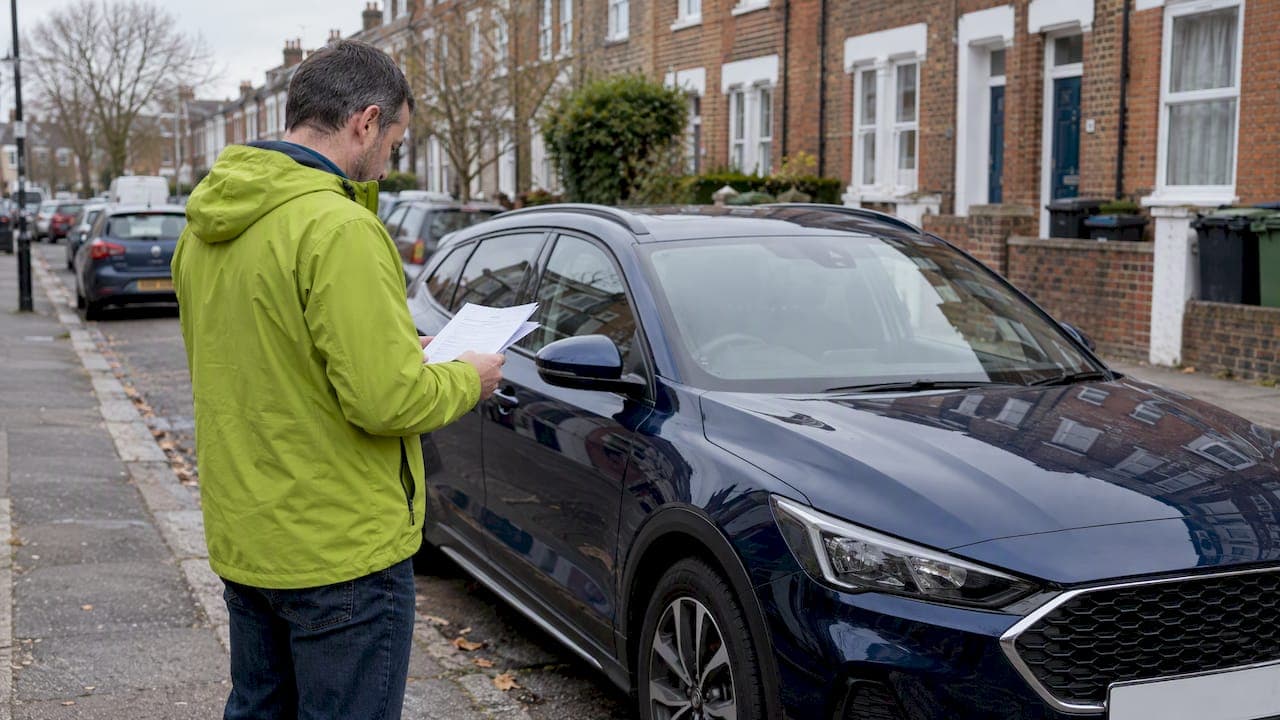
Insurance on a leased car must be in place from the very first day of the contract, and the legal minimum under the Road Traffic Act is third-party cover. In practice, almost every lease agreement requires fully comprehensive insurance to protect the finance company's asset. You can verify any vehicle's insurance status through the Motor Insurance Database.
TL;DR:
- Before signing, check the lease’s required excess, permitted drivers, accident notice rules, and loss payee wording, then ensure your policy schedule matches.
- Declare the car’s actual use, including business driving beyond commuting; undeclared work use can invalidate cover and leave you personally liable for claims.
- A total loss settlement usually goes to the finance company and may fall below the lease balance; choose GAP that explicitly covers contract hire shortfalls.
- GAP responds only after the main insurer declares a total loss; check its claim deadline and whether payment goes to the finance company or you.
- Insurer approved garages may use repairs that breach lease return standards; confirm parts requirements beforehand and keep photographs and invoices for every repair.
Table of Contents
- Legal minimum and common policy types for leased cars
- What lease companies typically require and contract clauses to check
- Class of use, registered keeper vs owner, and how these affect claims
- GAP insurance explained: why lease drivers often need it
- How to arrange insurance for a leased car (step-by-step)
- What happens if the leased car is written off or stolen
- Typical insurance policy excess amounts and options to reduce excess
- How to handle insurance when leasing electric or specialized vehicles
- Impact of insurer approved garages and repairs on lease agreements
- Differences in insurance requirements for personal versus business lease agreements
- Practical tips from a UK leasing broker (lease-focused checklist)
- How Lease World can help
- FAQ
- Sources
Legal minimum and common policy types for leased cars
Under the Road Traffic Act 1988, third-party cover is the absolute legal floor for using any vehicle on a public road in the UK. That minimum pays for injury or damage you cause to other people or their property, but nothing for your own car.
Third-party, fire and theft adds protection if your vehicle is stolen or damaged by fire. Comprehensive cover also includes third-party protections and may cover damage to your own car, depending on the policy terms.

Lease finance providers almost universally require comprehensive cover as a contractual condition, because the vehicle is their asset, not yours. A third-party only policy leaves the finance company exposed if you damage the car and cannot pay for repairs yourself, so contract hire agreements close that gap by mandating the higher level of cover from day one rather than leaving it to choice.
What lease companies typically require and contract clauses to check
Lease and contract hire agreements almost always demand fully comprehensive insurance from the day the vehicle is delivered, not from whenever you get round to arranging it. Reading the small print before you sign saves disputes later.
Before you commit to a lease, check the contract for:
- The minimum excess level the lessor expects you to carry on your policy.
- Any restrictions on named drivers or who is permitted to drive the vehicle.
- Notification requirements if you are involved in an accident or the car is damaged.
- Clauses specifying that any insurance payout for a total loss goes to the finance company as payee, not to you directly.
Match the wording on your insurance schedule to the lease contract itself: if the lease says "comprehensive cover with the finance company named as loss payee," your policy documents should say the same thing. Keep a copy of your policy schedule and your signed lease agreement together, since you may need to produce both if a dispute arises over cover or a claim.
Class of use, registered keeper vs owner, and how these affect claims
In a UK lease, you are usually registered as the keeper of the vehicle, but the finance provider remains the legal owner throughout the contract. That distinction matters most when something goes wrong, because insurers typically settle claims with the legal owner rather than the keeper.
You must also declare the correct class of use on your policy, whether that is personal use, business use, or hire and reward. Using a leased car for work purposes without declaring business use can invalidate your policy entirely, leaving you personally liable for any claim.
Financial Ombudsman Service decisions show how this plays out in practice: insurers pay settlements to the legal owner, the lease company, which can leave the driver facing a shortfall or a dispute over what was actually owed. Getting the class of use and the payee details right from the outset avoids most of these disagreements.
GAP insurance explained: why lease drivers often need it
When a leased car is written off, your comprehensive insurer typically pays out the market value of the vehicle at the time of loss, or the finance balance if lower. Market value is often below what you still owe on the lease, and GAP insurance is designed to cover that shortfall.
GAP policies come in several forms:
- Return to Invoice GAP, which covers the difference between settlement and the original invoice price.
- Finance GAP, aimed at hire purchase and similar finance agreements.
- Lease GAP, built specifically for contract hire and personal contract hire, where title never transfers to you.
The ABI's guidance on GAP insurance recommends checking that a policy explicitly covers lease shortfalls before you buy, since not every GAP product is written with contract hire in mind. A GAP claim only triggers once your main insurer has declared a total loss, so it is a separate claim you make afterwards, not an automatic payment.
Pro Tip: Ask whether the GAP policy pays the finance company directly or reimburses you, and check the claim deadline before you need it.
How to arrange insurance for a leased car (step-by-step)
Arranging cover for a leased vehicle follows a similar path to insuring any car, with a few extra checks that matter because the asset belongs to someone else.
- Confirm the lease start date and the name of the legal owner shown on your contract, since this is usually the payee your insurer will need to record.
- Tell your insurer or broker that the vehicle is leased under a contract hire agreement, declare the correct class of use, and request comprehensive quotes rather than lower tiers.
- Check named-driver rules, any compulsory excess, telematics or black box requirements, and confirm the insurer is comfortable covering a leased rather than owned vehicle.
- Check whether the vehicle is listed on the Motor Insurance Database via askMID, and keep copies of your policy, schedule and lease agreement together.
Doing this before the delivery date means you are covered the moment the car arrives, rather than scrambling to arrange insurance while the vehicle sits on your drive uninsured.
What happens if the leased car is written off or stolen
When a leased car is declared a total loss, your insurer typically pays the legal owner, the finance company, rather than you. If the settlement is lower than the amount still owed under the lease, you remain liable for the difference unless GAP insurance covers it.
Financial Ombudsman decisions illustrate how these disputes unfold: disagreements often centre on whether the insurer's settlement reflected genuine market value or whether the finance company's early termination figure was fair, and the ombudsman has had to weigh both sides when the numbers do not match.
If your leased car is written off or stolen, notify the lessor immediately, contact any GAP insurance provider you hold separately, and keep every document, including the insurer's settlement letter and the lease company's termination statement. Where the numbers do not add up, a leasing broker can help you understand what each side is claiming and whether you have grounds to query it.
Typical insurance policy excess amounts and options to reduce excess
Excess on a comprehensive policy for a leased car usually has two parts: a compulsory excess set by the insurer based on the car, your driving history and the cover level, and a voluntary excess you choose to lower your premium. Lease contracts sometimes specify a minimum excess level the insurer must apply, so check this against your quote before signing.
A higher voluntary excess may reduce your premium, but it increases what you pay out of pocket if you make a claim. For a leased vehicle, this trade-off deserves more thought than usual, since you are also contractually bound to keep the car maintained to the lessor's standard, and a cheap policy with a very high excess can leave you short when repair costs come in.
Some insurers offer excess protection add-ons that reimburse some or all of your excess after a successful claim. These sit alongside your main policy and are worth comparing against the cost of simply choosing a lower voluntary excess in the first place. Whichever route you take, confirm the final excess figure in writing matches what the lease contract expects, since a mismatch here is one of the more common reasons lessees fall foul of their agreement without realising it.

How to handle insurance when leasing electric or specialized vehicles
Electric vehicles generally need the same comprehensive cover and legal minimums as petrol or diesel cars, but a few details are worth checking when you insure one. Battery replacement and repair costs can differ from conventional parts, so confirm your insurer has experience covering electric vehicles and understands how the lease agreement treats the battery, whether it is owned outright or leased separately from the car.
Specialist vehicles, such as those adapted for driving instruction or used for business and hire purposes, usually need a policy written specifically for that use. A standard personal car policy may not cover dual controls or pupil drivers. Check with your insurer that the policy covers driving tuition.
Whatever the vehicle type, tell your insurer exactly how the car is used and leased, and ask them to confirm in writing that the policy recognises it as a leased asset with the finance company as loss payee. This avoids any ambiguity if you ever need to make a claim on a vehicle that falls outside the most common petrol family hatchback profile insurers are used to quoting for.
Impact of insurer approved garages and repairs on lease agreements
Many comprehensive policies steer repairs through an insurer's approved garage network, which usually means faster claims handling and guaranteed workmanship, but it can create friction with lease return conditions. Check whether your lease agreement requires repairs to meet a particular standard or use original parts, and confirm that the approved garage network can meet those requirements.
If your insurer's approved garage uses parts or a repair method that falls short of what the lease contract specifies, you could face additional charges when the vehicle goes back at the end of the agreement. Ask your insurer directly whether their approved network uses manufacturer-approved parts for the make and model you are leasing.
Keeping records of every repair, including photographs and invoices, protects you if the lessor's inspection at handback raises a query about repair quality. This is a small habit that costs nothing and can save a dispute over damage charges when the car is eventually returned.
Differences in insurance requirements for personal versus business lease agreements
A personal lease, usually structured as a personal contract hire agreement, typically needs standard comprehensive cover with personal use declared, much like insuring a car you own outright. Insurers may consider factors such as your driving history, the vehicle and where you keep it overnight.
A business lease changes the picture because the class of use must reflect how the vehicle is actually driven. If employees use the car for client visits, deliveries or any work-related driving beyond commuting, the policy needs business use cover, and in some cases, named-driver business policies covering multiple staff. Fleet or multi-vehicle policies are common for companies leasing several vehicles, and these often carry different excess structures and renewal terms than a single personal policy.
Whichever route you take, the lease company's requirement for comprehensive cover from day one and correctly declared use does not change, only the shape of the policy you need to meet it.
Practical tips from a UK leasing broker (lease-focused checklist)
Customers most often forget to check who the insurer names as loss payee, or assume their existing personal policy covers business mileage. We flag both when reviewing lease paperwork, and we suggest getting a GAP quote early rather than after delivery, since prices and terms vary more than people expect.
— Jason
How Lease World can help
Working out exactly what cover a lease contract demands, and checking whether a quote actually matches that wording, is one of the more fiddly parts of taking out a lease. We offer personal car leasing and business car leasing across the UK, and as part of arranging your agreement we can talk you through the insurance clauses in your contract so you know what your policy needs to state before you sign.
If you are comparing lease deals or want someone to check the insurance wording on an agreement you have already been offered, get a tailored quotation and we will talk you through what cover you need and how to arrange it.
FAQ
Do UK car leases include insurance?
No, insurance is arranged separately by you, the lessee, and is not bundled into the monthly lease payment. Your lease contract will specify the level of cover required, almost always fully comprehensive, but you take out the policy yourself with an insurer of your choice.
What is the minimum car insurance required in the UK?
The legal minimum under the Road Traffic Act 1988 is third-party cover, which pays for injury or damage you cause to others. For a leased car, your contract will almost certainly require comprehensive cover instead, regardless of the legal minimum.
Can I lease a car with a 500 credit score?
Credit scoring thresholds vary between finance providers and are not something a lease broker sets independently, so the honest answer is that it depends on the specific lender's criteria at the time you apply. Speaking with a broker about your circumstances can help you find out what options may be available to you.
What happens at the end of a car lease?
At the end of a lease, you return the vehicle to the finance company, who inspect it against the agreed fair wear and tear standard before closing the contract. Any damage beyond that standard, including repairs that fall short of what the lease specified, can result in additional charges at handback.