
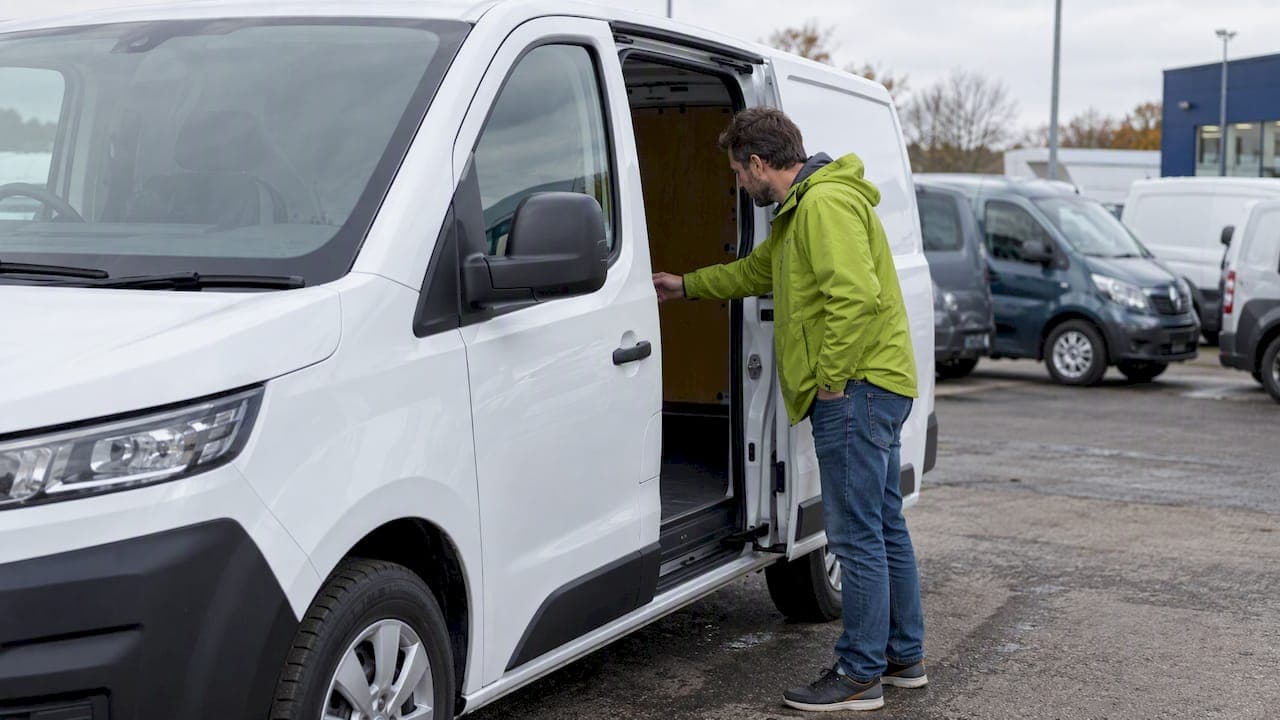
The plug-in van grant takes up to £2,500 off an eligible small electric van and up to £5,000 off a large one. You don't apply for it. The dealer or funder deducts it from the price at the point of sale, and that lower price feeds through to your monthly lease rental. The government has extended the scheme beyond its original end date, so if you are planning a van this financial year, it is still available. The detail that trips people up is not the amount. It is making sure the van is on the eligible list and that your name is on the order as the end customer.
This guide explains how the grant works, what it does to a lease quote, and the checks to make before you sign.
TL;DR
- The grant is up to £2,500 off small vans (up to 2,500kg) and up to £5,000 off large vans (2,500kg to 4,250kg), and only on vans on the official eligible list.
- It is a point-of-sale discount, not a cash payment. The dealer or funder handles the paperwork, so you do not claim it yourself.
- Leased vans qualify, but you must be named as the end customer: the person or business that will actually use the van, not the leasing company.
- Annual limits apply per customer, and the lease company has to check them before the order goes in.
- Always confirm eligibility for the exact model and specification before ordering, because an incorrect order can lead to the claim being cancelled.
Table of Contents
- What the plug-in van grant is, and what it is called now
- How much you can save
- Does the grant work with a lease?
- The end customer rule
- Annual limits on how many grants you can claim
- Which vans qualify
- A worked example of how the grant shows up
- Beyond the grant: other costs that decide the lease
- Our view: what we tell customers about the grant
- Ready to price an eligible van?
- Checklist before you order
- FAQ
- Sources
What the plug-in van grant is, and what it is called now
You will see the scheme described in several ways: the plug-in van grant, the plug-in van and truck grant, and in current government guidance the Zero Emission Van Grant (ZEVG). They are the same scheme for vans. Its job is to narrow the price gap between a new electric van and its diesel equivalent.
The government confirmed in August 2025 that the discounts would continue, and trade coverage reports the grant running into the 2026/2027 financial year. Government funding can change with little notice, so treat the end date as a reason to order in good time, not as a guarantee. The GOV.UK vans page is the place to check the current position before you commit.
One point of confusion is the car grant. The Electric Car Grant is a separate scheme with its own eligible list and its own rules. Nothing in this article applies to cars. If you want to know how a car grant affects a lease, our news piece on which brands qualify for the new UK EV grant covers it.
How much you can save
The discount depends on the weight class of the van.
| Van size | Gross vehicle weight | Maximum grant |
|---|---|---|
| Small van | Up to 2,500kg | £2,500 |
| Large van | Between 2,500kg and 4,250kg | £5,000 |
These figures are the maximums, per GOV.UK. The same page describes the discount as being applied by the seller within the purchase price, and sets it at up to 35% of the price, which is why the cash cap matters: on a very expensive van, the cap, not the percentage, is what limits your saving.
The weight bands have a practical consequence. Some models come in versions that straddle the two categories, so a more heavily rated version of the same van can attract the larger discount. When you compare quotes, compare the grant-adjusted figure for each specification rather than assuming the same grant applies across a model range.
What the discount is calculated on
According to the grant portal guidance, the grant comes off a price that includes VAT, number plates and vehicle excise duty, and excludes optional extras, delivery charges and first registration fees. Any other manufacturer or dealer discount is applied first, and the grant is deducted afterwards.
So a racking package, a tow bar or a paid-for colour will not increase your grant, and a manufacturer discount will not be stacked on top of it in a way that lets you exceed the cap.
Does the grant work with a lease?
Yes. The grant is open to private individuals and businesses, including those leasing, as long as the van is on the official list of eligible models. In a lease, the funder buys the van and you pay to use it. The grant reduces what the funder pays, and a lower purchase price means a lower depreciation figure to recover over your term. That is how it reaches you: through a lower fixed monthly rental, not through a cheque.
This matters for how you read a quote. A lease price that looks too good against another may simply have the grant built in, while the other has not. Ask every time whether the quoted rental is after the grant, and keep that question in your comparison.
You do not apply for it yourself
The grant is not paid to you. It is a discount deducted from the vehicle price by the dealer, who handles the portal administration. If a seller asks you to pay full price and claim money back later, that is not how this scheme works, and you should ask them to explain.
The end customer rule
This is the part most worth understanding if you are leasing.
The grant guidance defines the end customer as the person or business using the vehicle, not the leasing company. The dealer has to enter the end customer's details accurately when the order is created in the portal. The guidance says those details cannot be changed once entered, and that incorrect data leads to the claim being cancelled.
What that means for you:
- Check the name on the order. For a limited company, that is the company name as registered, not a director's name or a trading name, unless that is who will operate the van.
- Check the contract. Your lease paperwork should identify you as the end customer for grant purposes.
- Do not rush the order. A mistake caught after submission cannot be corrected in the portal, so the order may need to be restarted.
This applies to sole traders, limited companies and, where a private individual is eligible, to them too. It also applies to employees whose organisation arranges the lease: decide who the user is before the order is placed, not after.
Annual limits on how many grants you can claim
There is a cap on how many grants one customer can claim each financial year (1 April to 31 March): up to 1,500 for vans and 100 for trucks. For lease customers, the lease company is responsible for verifying these limits with the end customer before it processes the order.
A single van driver or a small business will never get near 1,500. Large fleets might, and for them the practical point is timing: if you are replacing a large number of vans, spread across the year rather than placing everything in March.
Which vans qualify
Eligibility is tied to specific vehicles. Manufacturers apply to have a model approved, and the guidance for manufacturers sets the technical criteria. The vehicle must be zero emission with a range of at least 60 miles (96km). Both factory-built models and conversions can qualify, but only if they appear on the approved list.
The consequences for a buyer are simple:
- A van being electric is not enough. It has to be on the list.
- A model can be listed in one specification and not in another.
- A plug-in hybrid will generally not meet a zero emission requirement, so do not assume it gets the grant because it plugs in.
- The list can change, so check at the time of order, not when you first start looking.
Our electric van leasing page shows the electric vans we can arrange, and our guide to the best electric vans to lease in 2026 compares the main models on range, payload and cost. If you want to see the numbers a fleet would work through, including tax, the electric van leasing guide for UK fleets goes into the grant and the 2026 benefit-in-kind position.
A worked example of how the grant shows up
The figures below are illustrative, not a quote, and are not Lease World prices. They show the mechanism only.
Suppose a large electric van is listed by the funder at £45,000 including VAT, plates and VED, and the manufacturer is not offering any other discount. At the £5,000 cap the grant takes it to £40,000. The funder now has £5,000 less to recover from the van's depreciation over your term, so your monthly rental falls. Over a 48-month term, £5,000 of reduced cost works out to a little over £100 a month before interest and funder margins, which changes the number slightly. The exact effect depends on the funder's residual value assumptions and finance rate, which is why only a real quote tells you the figure.

Now suppose you add £2,000 of optional extras. They sit outside the grant calculation, so the grant is still £5,000 and the extras are priced in full.
Beyond the grant: other costs that decide the lease
The grant is one line in a bigger picture. Before you decide, look at:
- Term and mileage. Electric vans have real-world range limits that depend on load, weather and speed. Pick a mileage that reflects your routes, not the best figure on the brochure.
- Charging. Overnight charging at your depot or home is usually where the running cost advantage comes from. If you will charge at a business address, there is a separate workplace charging grant; our guide to securing the charger grant with the right lease wording explains the paperwork, and the home charger grant guide covers the domestic route. Our electric car charger grants page has an overview of eligibility.
- Maintenance. Many customers add a maintenance package to make the monthly cost fixed. Ask what it covers on an electric van, particularly tyres.
- Driver training. The government has removed the extra training requirement that applied only to electric vans, aiming to cut red tape and running costs.
- Tax. Company vans are taxed differently from company cars, and your accountant should confirm how it applies to your drivers.
Our view: what we tell customers about the grant
We are a family-run broker, and the grant questions we get are rarely about the headline figure. People assume it is a form to complete or that it affects their eligibility for a lease. Neither is true. What we focus on is the order itself.
Three habits protect you. First, ask for the grant to be shown on the quote, so you can compare like with like across vans and terms. Second, confirm the end customer name before anything is submitted, because the portal does not let it be edited later. Third, do not let the grant steer you into the wrong van. A £5,000 saving on a van that is too small for your loads, or short of range for your longest day, is not a saving.
The best lease is the one that fits how you work, with fixed monthly payments and no surprises. Where a grant helps, we want it reflected honestly in the number you see. Where it does not apply, we say so.
— Jason
Ready to price an eligible van?
If you are comparing electric vans, we can set out the options side by side, with the grant reflected in the quote where the model qualifies. Start with our electric van leasing range, browse van leasing more broadly, or send us an enquiry with your van size, mileage and term. If you need a van quickly while you decide, we also offer short-term vehicle leasing.
Checklist before you order
- Confirm the exact model and specification is on the eligible list.
- Check whether it falls in the small (up to 2,500kg) or large (2,500kg to 4,250kg) band.
- Ask whether the quoted rental already includes the grant.
- Confirm the end customer name and details exactly as they should appear.
- If you are a large fleet, check your position against the annual limits.
- Compare the term, mileage and maintenance across quotes, not just the monthly figure.
FAQ
Can I claim the plug-in van grant on a leased van?
Yes. The grant is open to individuals and businesses, including those leasing, provided the van is on the official eligible list. The funder or dealer applies it at the point of sale, and you benefit through a lower rental.
Do I have to apply for the grant myself?
No. It is a discount taken off the price by the seller, who handles the grant portal. Your job is to make sure the van is eligible and that your details as end customer are correct on the order.
How much is the plug-in van grant?
Up to £2,500 for small vans up to 2,500kg and up to £5,000 for large vans between 2,500kg and 4,250kg. The exact amount depends on the model, and the cap is never exceeded. Check the GOV.UK vans page for current figures.
Is the grant still available?
The government has extended it, and reports put it running into the 2026/2027 financial year. Funding decisions can change, so confirm availability when you order rather than relying on an older article.
Does it apply to electric cars as well?
No. Cars come under the separate Electric Car Grant, with its own eligibility list. The van grant covers vans, and the same family of schemes covers trucks and wheelchair accessible vehicles.
Sources
- Vans: zero emission vehicle grants, GOV.UK
- Using the zero emission vehicle grant portal, GOV.UK
- Government discounts for electric vans and trucks extended, GOV.UK
- £120 million to roll out more electric vans, taxis and motorbikes, GOV.UK
- Zero emission van and truck grant: eligibility and applications, GOV.UK
- Plug-in Van Grant for electric vans: the latest extension, Parkers