
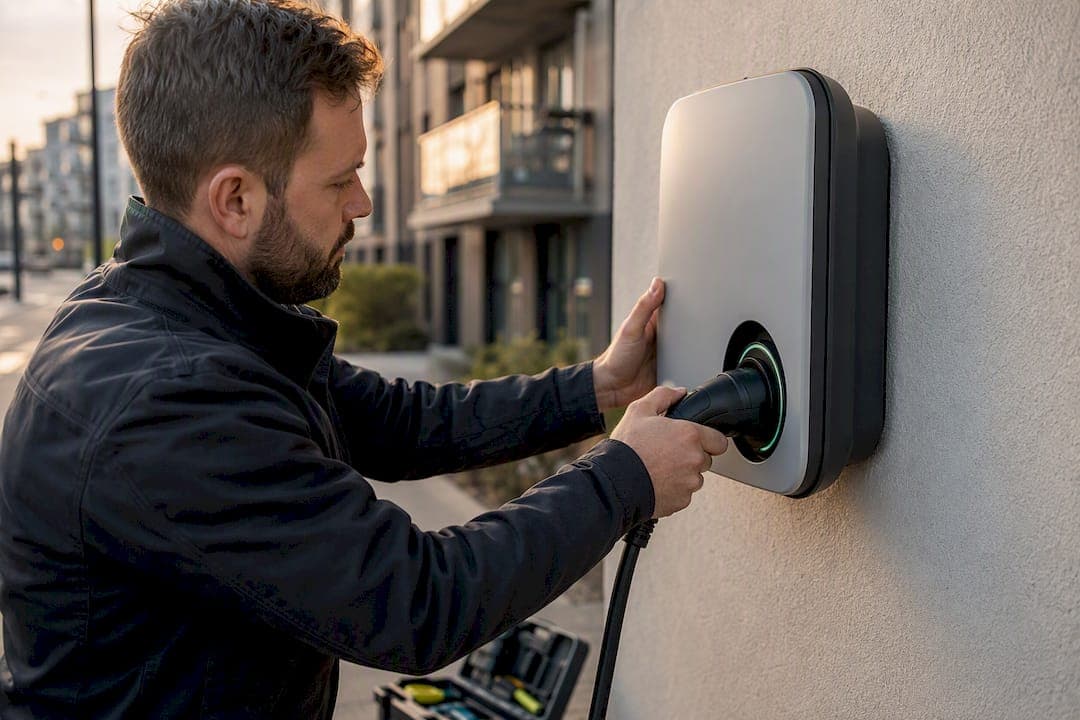
Yes. Certain UK households can claim up to £500 towards a home EV charger, but only if you fall into one of three groups: renters and flat owners, households with on-street parking, and residential landlords. Owner-occupiers with a private driveway no longer qualify. Whichever scheme applies, the same rule governs everything: never let an installer start work before OZEV confirms your eligibility.
TL;DR:
- Eligibility is limited to renters and flat owners with allocated parking, households with lawful on-street parking, and residential landlords installing chargepoints, excluding owner-occupiers with private driveways.
- The grant covers up to 75% of installation costs, with a maximum of £500 per socket, applicable for applications from April 1, 2026, onward.
- Applicants must secure written permission from landlords or freeholders and provide proof of parking and vehicle eligibility before applying.
- Installation claims require four photos of the charger, property, and invoice, with voucher references clearly shown to avoid claim rejection.
- Costs for pavement work, legal permissions, and upgrades are outside the grant, so applicants should request detailed quotes showing post-grant charges beforehand.
Table of Contents
- Which EV home charger grant UK schemes actually exist?
- Am I eligible? A checklist and the traps to avoid
- How to apply for the EV grant UK: the voucher and installer-claim process
- What installers must submit as evidence
- What does the grant actually cover, and where do costs creep in?
- Lease World's take: get grant-ready before your EV arrives
- Ready to lease an EV and sort your charging in one go?
- Official pages to check before applying
- Sources
- FAQ
Which EV home charger grant UK schemes actually exist?
Three residential schemes are live, all run through the government's Office for Zero Emission Vehicles (OZEV). They share the same headline rate but target different living situations, so picking the right one matters more than the amount you'll receive.
- Renters and flat owners – for people who don't own a driveway outright but have a private, allocated parking space, such as a flat with a designated bay or a rented house with off-street parking.
- Households with on-street parking – for homes with no private parking at all, where a permanent cross-pavement charging channel is installed with local highways authority consent.
- Residential landlords – for landlords installing chargepoints across rental properties they own, with a cap of 200 sockets across their portfolio.
All three pay 75% of the combined chargepoint and installation cost, up to £500 per socket, for applications made on or after 1 April 2026. That's a jump from the previous £350 ceiling, and it's a deliberate policy move: the government has said the uplift is meant to cover almost half the typical installation cost for households that don't have the luxury of a driveway.
If you own your home outright and park on your own drive, you're excluded from all three schemes. That's the single biggest source of confusion we see, because older guidance (much of it still floating around online quoting the £350 figure) blurred the line between owner-occupiers and everyone else.
Am I eligible? A checklist and the traps to avoid
Before you contact an installer, gather the paperwork. You'll typically need a recent utility bill, evidence of tenancy or ownership, and details of the vehicle you're charging (OZEV-approved electric or plug-in hybrid models only).
- Proof of a private, allocated parking space (for the renters and flat owners route), or evidence of lawful on-street parking plus local-authority permission for cross-pavement work.
- Written permission from your landlord, freeholder, or managing agent if you don't own the property or the parking area outright.
- Confirmation you haven't already claimed under an earlier scheme, including the old EVHS home charging scheme, since only one grant is allowed per person.
- Vehicle registration details showing an eligible plug-in vehicle.
The most common mistake is applying without freeholder or landlord sign-off already in hand, which stalls the whole process at the voucher stage. Get that permission in writing before you touch the Find a grant portal.
Pro Tip: If you live in a block of flats, ask your managing agent for written parking-space confirmation now, even before you've picked an installer. It's the single document that most often holds up flat owner applications.
How to apply for the EV grant UK: the voucher and installer-claim process
The process runs through your installer as much as through you. Here's the sequence:
- Get a quote from an OZEV-authorised installer. Ask them directly to confirm their OZEV authorisation in writing before agreeing to anything.
- Apply via Find a grant for your eligibility voucher. Submit your evidence (parking proof, permissions, vehicle details) and wait for OZEV to confirm eligibility. Do not schedule installation until that confirmation lands. Installing early, even by a day, can void your claim.
- The installer fits the chargepoint, takes the required photos, and submits the claim. They deduct the grant from your final invoice, so you pay the reduced amount rather than claiming money back yourself.
If you applied before 1 April 2026 and were quoted the old £350 rate but haven't had your chargepoint installed yet, you can reapply at the new £500 rate. You'll need to cancel the earlier application with your installer first, so don't let two live vouchers sit against the same address.
What installers must submit as evidence
"OZEV-authorised installer" isn't a badge you take on trust. Ask for their authorisation reference and check it rather than relying on a logo on their van. Installers who submit claims without valid authorisation get rejected outright, and that rejection lands on you, not them.
Four photos are mandatory for every claim: a close-up of the chargepoint's model and serial number, a shot of the unit installed near the parking space, a wider shot showing the property context, and the final invoice clearly showing the post-grant price.
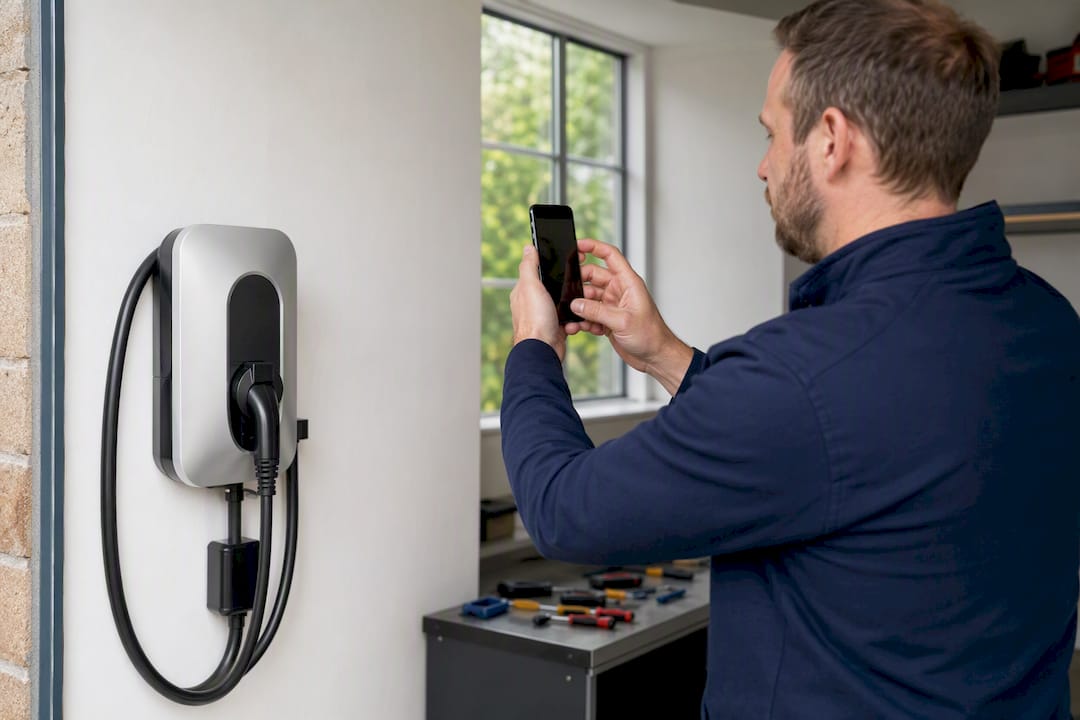
The most frequent reason claims fail isn't fraud or ineligibility; it's incomplete photo evidence or installers submitting before the voucher reference exists. Insist your voucher reference number appears on the final invoice. That one line item resolves most disputes before they start.
What does the grant actually cover, and where do costs creep in?
The grant doesn't automatically cover everything on the invoice:
- Cross-pavement channelling for on-street installs can add cost beyond the socket and standard fitting.
- Local-authority permissions and highways fees for pavement work sit outside the grant.
- Bespoke trenching, extended cabling runs, or upgraded consumer units are often quoted separately.
Ask your installer to show the post-grant line on your quote before you sign anything, not after. Some quotes list the pre-grant price prominently and bury the real balance you'll owe.
Lease World's take: get grant-ready before your EV arrives
At Lease World, we spend most of our days matching drivers to the right electric vehicle lease, and one pattern comes up constantly: people sort the car first and the charger second, when it should really happen the other way round. Confirming your parking situation and gathering landlord or freeholder permission before your lease delivery date means you're not waiting weeks for a voucher after the car's already sat on your drive doing nothing.
We help customers understand which vehicles qualify under OZEV rules and point them towards our own electric car charger grant guidance so the leasing and charging pieces line up. If you're weighing up an EV lease, get in touch early. It's the difference between charging from day one and improvising with a three-pin plug for a month.
— Jason
Ready to lease an EV and sort your charging in one go?
Lease World is a family-run broker, not a call centre, so when you ask us about electric vehicle leasing, you get a straight answer about which models suit your driving pattern and your home charging situation, not whatever's easiest to sell that week.

We've built our electric car leasing options around fixed monthly payments and no hidden fees, with no-deposit deals available if you'd rather keep your cash for the charger install. Every enquiry gets a tailored comparison of contracts rather than a single push towards whatever's in stock. If you're ready to see what an EV lease would cost you, request a personalised quote and we'll talk you through vehicle eligibility, delivery timing, and how it fits alongside your grant application.
Official pages to check before applying
Verify eligibility and the current rate directly on GOV.UK's chargepoint grants guidance and the Find a grant portal. Funding runs to 31 March 2027, and cross-pavement work needs separate local highways authority sign-off.
Sources
FAQ
Can I get a grant for an electric car charger in the UK?
Yes, if you're a renter or flat owner with a private parking space, a household relying on on-street parking, or a residential landlord. Owner-occupiers with a private driveway are no longer eligible.
Is the £500 home EV charger grant still available?
Yes. The rate rose from £350 to £500 per socket on 1 April 2026, and funding is confirmed until 31 March 2027.
Who is eligible for the EV grant in the UK?
Renters and flat owners with a designated parking space, households with lawful on-street parking installing a permanent cross-pavement solution, and residential landlords installing across their properties (up to 200 sockets) all qualify.
How do I get free EV charging in the UK?
The home charger grant reduces installation cost rather than making charging free, though it can cover most of a modest quote. Some employers also offer workplace charging schemes, which run under a separate grant worth checking if it's available to you.
Do I need Distribution Network Operator approval before installing?
Some installations, particularly higher-power units or properties with older electrical supplies, need DNO approval before work starts, so ask your installer to check this alongside your grant voucher.