

True month-to-month leasing barely exists in the UK. What you'll actually find is one-month rental, a short-term lease running 3 to 12 months, or a rolling car subscription, and each carries a different cost and contract shape. For most drivers who need flexibility longer than a few weeks, a short-term lease is the better balance of price and commitment. The sections below break down the trade-offs and the contract terms worth checking before you sign.
TL;DR:
- Short-term leasing typically costs more per month than long-term contracts due to the bundled services and shorter depreciation period.
- Check whether the minimum contract duration is truly fixed or if a notice period effectively extends the commitment beyond the headline term.
- Excess mileage charges can add hundreds of pounds if your mileage estimate is underestimated, so choose an allowance that matches your actual driving needs.
- Confirm if insurance, servicing, and breakdown cover are included, and verify the provider's membership with BVRLA for fair contract standards.
- Short-term leasing suits drivers with temporary needs, such as secondments or testing electric vehicles, but is inefficient for predictable two-year durations.
Table of Contents
- What are the flexible motoring options in the UK?
- Why does flexibility cost more, and when is it worth it?
- What contract terms and hidden costs should you check?
- How do you choose between rental, subscription and a short-term lease?
- What UK-specific rules and guidance affect short-term leasing?
- Where to find genuine short-term lease deals with no long-term catch
- Sources
- FAQ
What are the flexible motoring options in the UK?
Three products get lumped together under "month-to-month leasing," and they're not interchangeable. Sorting out which one you actually need saves both money and frustration.
**One-month rental (car hire) is the shortest and most expensive per day. You typically pay a daily or weekly rate through a standard hire company, insurance is usually included, and you hand the car back with no notice period beyond the booking end date. It suits a fortnight abroad or a temporary gap while your own car is off the road, not sustained use.
Short-term leasing, usually structured over 3, 6 or 12 months, sits between hire and a standard lease. You get a specific car for a fixed monthly payment, often with a set mileage allowance, and the term is agreed upfront rather than rolling indefinitely. Guidance on short-term car leasing benefits notes that vehicles on these deals usually stay within the manufacturer's warranty period, which cuts your repair exposure to close to nothing.
Car subscriptions bundle insurance, road tax, servicing and breakdown cover into one monthly fee, and providers commonly set minimum terms from one to three months, according to Carslink. You pay a premium for that convenience, but you also avoid separate insurance shopping and MOT admin.
A few things worth checking regardless of which route you pick:
- Whether the provider is a member of the British Vehicle Rental and Leasing Association (BVRLA), which sets a code of conduct for fair contract terms.
- What's actually bundled in the price: insurance, servicing, breakdown cover, and road tax vary by provider even within the same product category.
- Whether the minimum term is genuinely fixed or "rolling" with a notice period buried in the small print.
- How clearly excess-mileage charges are stated before you sign anything.
Skipping that last check is where most short-term leasing regret comes from, and it's covered in more detail further down.
Why does flexibility cost more, and when is it worth it?
Short-term products almost always cost more per month than a standard 24 to 48 month lease on the same car. MoneyHelper's guidance on personal contract hire describes this gap as a flexibility premium: providers spread the vehicle's depreciation over a shorter window and bundle in services that a long-term lease often charges for separately, so the monthly figure absorbs both.
The flexibility premium in plain terms: paying more each month buys you the right to walk away sooner, plus services (insurance, servicing, breakdown cover) already folded into the price rather than billed separately.
The maths shifts depending on how long you actually need the car. Industry analysis from Steer Drive places short-term leasing as the more cost-effective choice once you're past roughly 28 days of use, compared with daily hire rates that add up fast on a rolling basis. Push the other direction, though, and a 3 to 6 month lease will almost always cost more per month than committing to 36 or 48 months on the same model, because the depreciation and the provider's margin are compressed into a much shorter payment window.
Where the premium tends to pay for itself:
- You're covering a temporary work assignment or secondment and don't know your next address in six months' time.
- You're waiting on delivery of a new lease car and need a bridge vehicle in the meantime.
- You want to trial an electric vehicle before committing to a longer contract.
- Your existing car is off the road for repairs and you need cover for weeks rather than days.
Where it usually doesn't: if you already know you'll want the car for two years or more, a standard lease will beat a subscription or rolling short-term deal on price every time, sometimes by a significant margin once you total the term. Steer Drive's research frames subscriptions and short leases as tools for people in transition, not a permanent substitute for a standard contract hire agreement. If your mileage and duration are predictable, long-term leasing wins on cost almost every time.
What contract terms and hidden costs should you check?
The headline monthly figure rarely tells the whole story. Five things determine whether a short-term deal is genuinely good value or a costly mistake.
- Minimum term and notice period. A "1 month rolling" contract might actually require 30 days' written notice to end, which effectively locks you in for two months minimum. Read the cancellation clause before the price.
- Mileage allowance and excess charges. Providers typically set allowances between 5,000 and 10,000 miles a year for short-term deals, and excess-mileage charges commonly fall anywhere from a few pence to around 15 pence per mile depending on the vehicle and contract. Underestimate your mileage by 3,000 miles and that difference alone can run into hundreds of pounds.
- Wear-and-tear standards. Most providers use BVRLA-aligned fair wear and tear guidelines at the end of the term, but ask exactly what counts as chargeable damage before you return the keys; for practical tips on protecting your vehicle condition consider the best car pre wash for UK owners.
- Insurance responsibilities. Some short-term deals include insurance in the price, others expect you to arrange your own policy, and mixing this up is the single most common misunderstanding drivers report.
- Deposits and early termination. No-deposit options exist, but check what happens if you need to end the contract early. Fees vary and can be steep on subscription-style products, so reading available guidance on early termination costs is recommended before you assume you can simply hand the car back.
Pro Tip: Photograph the car from all four angles, plus the wheels and interior, on the day it arrives. It takes two minutes and settles most wear-and-tear disputes before they start.
For a wider grounding in leasing terminology generally, Lease World's guide to lease agreement terms is worth a read if any of the clauses above feel unfamiliar.
How do you choose between rental, subscription and a short-term lease?
Run through four questions before you commit to anything, and the right product usually becomes obvious.
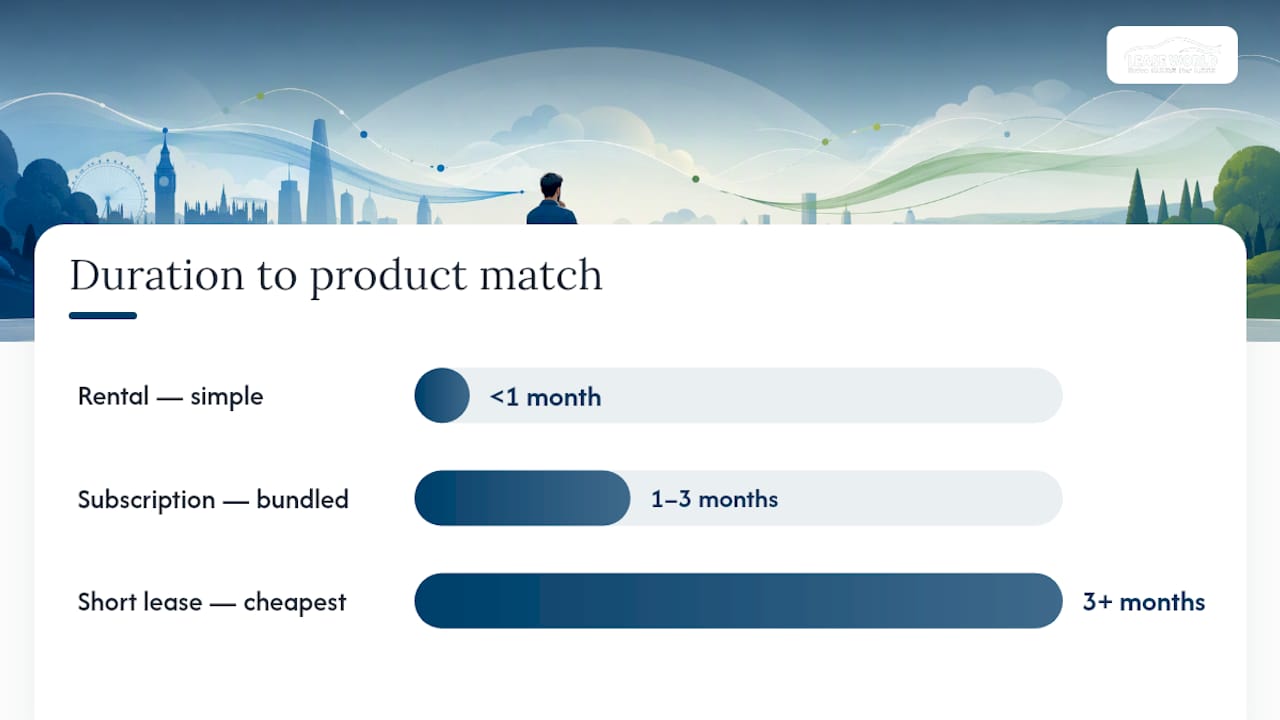
How long do you actually need the car? Under a month, hire wins on simplicity. One to three months, a subscription's bundled cover often makes sense. Three months or longer, a short-term lease usually beats both on price.
How predictable is your mileage? If you know roughly how many miles you'll cover, checking the annual mileage allowance against a realistic estimate avoids the excess charges covered above. If your mileage is genuinely unpredictable, favour a provider with a lower per-mile excess rate rather than a bigger upfront allowance you might not use.
Do you want everything bundled, or are you happy to arrange your own insurance? Bundled costs more but removes admin. Arranging cover yourself can be cheaper if you already have a strong no-claims record.
Might you need to swap vehicles mid-term? Some subscriptions allow a vehicle swap after a set period; standard short-term leases generally don't.
Questions worth putting directly to any supplier:
- What's the true minimum term, and what notice period applies if I want to end early?
- Exactly what's included in the monthly price, and what costs extra?
- What's the excess-mileage rate, in pence per mile?
- Are you a BVRLA member, and can you show me your fair wear and tear policy?
- What's the vehicle inspection process at handover and return?
Treat vague answers to any of those as a red flag, along with undisclosed admin fees or contract terms that change between the quote and the paperwork.
| Priority | What to check | Why it matters |
|---|---|---|
| High | Minimum term and notice period | Determines your real flexibility, not the advertised one |
| High | Excess-mileage rate per mile | Can add hundreds of pounds if underestimated |
| Medium | What's bundled (insurance, servicing) | Changes the effective monthly cost significantly |
| Medium | BVRLA membership | Signals adherence to fair contract standards |
| Low | Vehicle swap options | Only relevant if your needs might change mid-term |
What UK-specific rules and guidance affect short-term leasing?
Two structural facts explain most of the pricing and paperwork questions readers ask about short-term leasing.
The first fact is the flexibility premium already covered above: MoneyHelper's PCH guidance explains why shorter commitments and bundled services push the monthly price up. It's a structural feature of how depreciation gets spread, not a sign you're being overcharged.
The second matters if you're planning to take a leased vehicle abroad, even briefly. Gov sets out rules that can affect your insurance and tax position, and these apply whether the car is owned outright or leased. Always check with your provider before assuming a short-term lease vehicle can simply cross a border on your holiday.
Practically, this means comparing offers properly requires looking past the advertised monthly figure:
- Ask whether the quoted price is fully bundled or has extras (delivery, admin fees, optional maintenance) added on top.
- Compare the total cost over your expected term, not just the monthly rate, especially against long-term leasing alternatives.
- Check the typical cost drivers behind UK lease pricing so you can spot when a "flexible" deal is genuinely competitive or just priced to look that way.
Where to find genuine short-term lease deals with no long-term catch
Most of the frustration with short-term motoring in the UK comes down to unclear terms, not lack of choice. Lease World runs flexible lease deals across 3, 6 and 12 month terms, with fixed monthly payments agreed upfront and no-deposit options on eligible vehicles, so the figure you're quoted is the figure you pay each month.
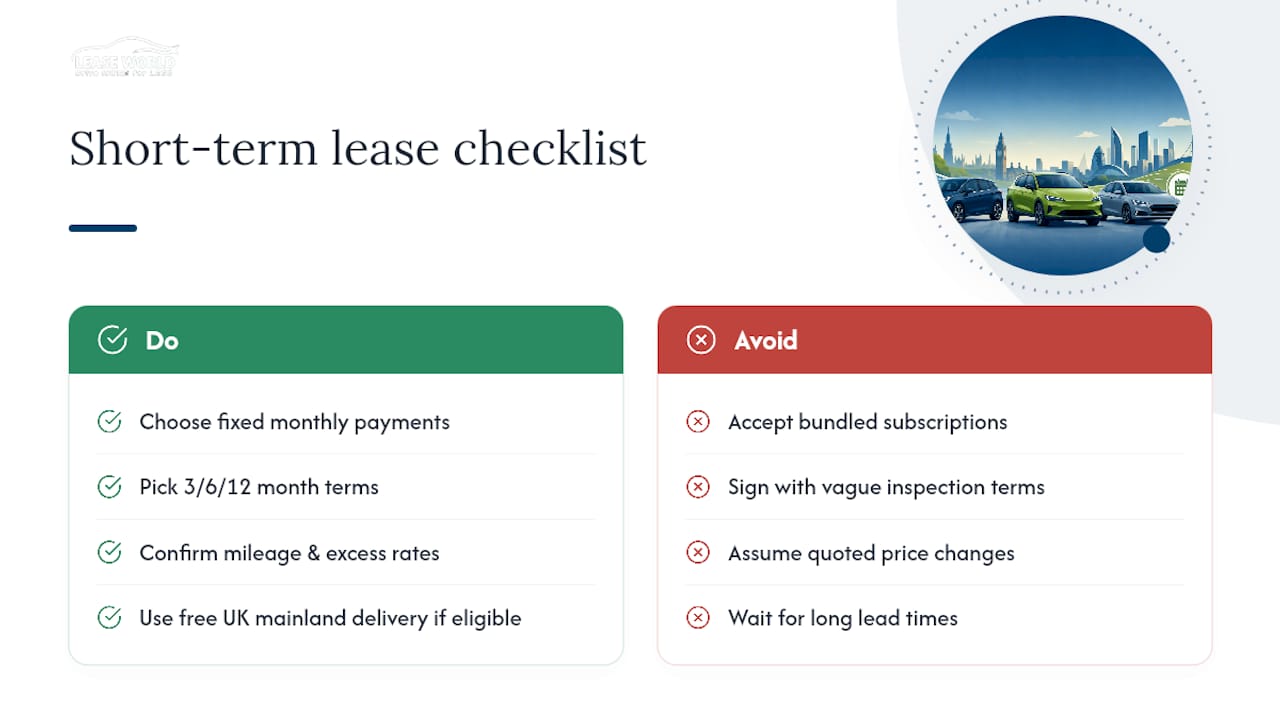
Free UK mainland delivery is included on eligible vehicles, which matters if you need a car on the road quickly rather than waiting on a long lead time. Mileage allowances and excess-mileage rates are set out clearly before you sign, and end-of-term inspections follow standard fair wear and tear practice rather than vague or shifting criteria. Compared with the common market pattern of bundled subscriptions that obscure what you're actually paying for, Lease World lays out each cost separately so you can see exactly where your money goes.
If a short lease sounds like the right fit, browse current short-term lease deals running 3, 6 and 12 months, or go straight to request a tailored quote and a member of the team will talk you through the options against your mileage and duration needs. Business users covering a temporary need can also check window van leasing options for short-term commercial cover.
A practical view on who short-term leasing actually suits
Short-term leasing works best for drivers in genuine transition: a secondment, a wait on new car delivery, or someone testing electric ownership before committing longer. It's a poor fit for anyone chasing the cheapest possible monthly figure with a predictable two-year need, where standard leasing wins on price every time.
If your situation matches the first group, the sensible next step is getting a tailored quote rather than guessing at headline rates online, since short-term pricing varies more by mileage and term length than most advertised figures suggest. Check current short-term stock, ask the direct questions covered above, and compare the full monthly figure, not just the headline number.
— Jason
Sources
For the regulatory and consumer guidance behind this article, see MoneyHelper's PCH leasing guide and GOV.UK's rules on taking vehicles abroad. For UK-specific short-term leasing detail, Lease World's guide to leasing terminology and its collection of leasing guides cover the contract mechanics in more depth than space allows here.
- MoneyHelper — Leasing a car with personal contract hire (PCH)
- Gov
- Steer Drive — Car subscription vs leasing vs buying: Which makes the most sense in 2026?
FAQ
Can you lease a car for one month in the UK?
A genuine one-month lease is rare; most providers require a minimum of three months for a lease product, so one-month needs are usually met by car hire or a subscription instead.
Is it possible to lease a car month to month?
Not in the strict sense of rolling month-to-month with no fixed term. Subscriptions offer the closest equivalent, often with one to three month minimum terms, while short-term leases fix a specific period of 3 to 12 months upfront.
What is the cheapest monthly car lease in the UK?
The lowest monthly figures come from long-term Personal Contract Hire deals of 24 to 48 months, since spreading depreciation over a longer term reduces the flexibility premium attached to short-term products.
What is the average monthly car lease payment in the UK?
Monthly payments vary widely by vehicle, term length and mileage allowance, so there's no single average figure that applies across the market; checking how leasing costs are calculated against your specific requirements gives a far more useful answer than any headline number.
How does month-to-month leasing actually work in the UK?
In practice, it works through short-term leases (3 to 12 months) or subscriptions with rolling short minimum terms, both requiring a credit check and both carrying higher monthly costs than a standard multi-year lease in exchange for shorter commitment.