
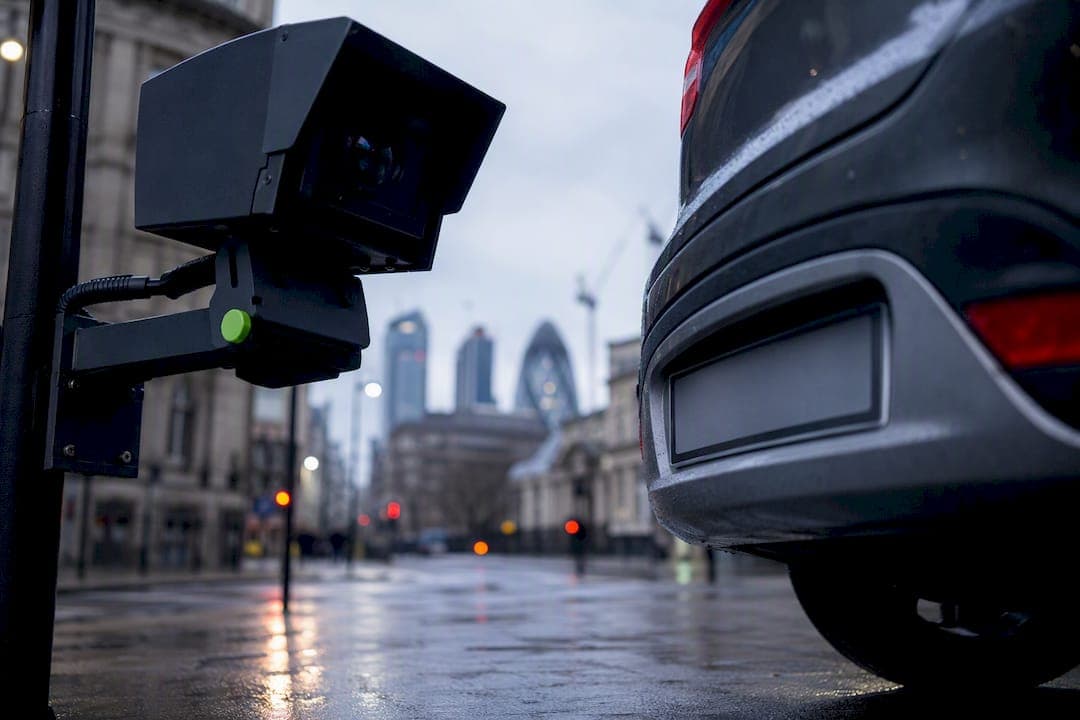
Yes. A leased car is treated exactly like any privately owned vehicle under the Ultra Low Emission Zone, and if it doesn't meet the emissions standard, the daily £12.50 charge applies regardless of who owns the logbook. Penalty Charge Notices go to the registered keeper, which for a lease is the finance company, and that cost almost always lands back on you with an admin fee attached, which can vary by provider. Get the registration number before you sign, run it through Transport for London's checker, and read the fines clause in your contract.
TL;DR:
- Leased vehicles are treated the same as privately owned cars under ULEZ, and non-compliance can lead to £12.50 daily charges plus costly admin fees from leasing companies.
- Penalty charges for non-compliance start at £180, reduced to £90 if paid within 14 days, and crossing midnight during a trip can result in double charges.
- Before signing a lease, verify the vehicle's compliance by checking the registration number through TfL and request written confirmation of the declared emissions standard.
- To minimize risks, choose compliant or electric vehicles, set up Auto Pay, and continuously monitor both London and other UK cities' Clean Air Zones for evolving standards.
Table of Contents
- What is ULEZ and how does it apply to leased cars?
- What Euro standard does a leased car need to avoid ULEZ charges?
- How much does the ULEZ charge cost and what are the penalties?
- How do ULEZ rules affect leased cars specifically?
- How do you check a leased vehicle's ULEZ status?
- What should you check in your lease agreement about ULEZ liability?
- How can you reduce ULEZ risk while leasing a car?
- What other clean air zones and future changes should you watch for?
- Lease World's perspective on cutting through ULEZ confusion
- Get a ULEZ-checked lease sorted with Lease World
- Sources
- FAQ
What is ULEZ and how does it apply to leased cars?
The Ultra Low Emission Zone covers every London borough and runs 24 hours a day, every day of the year except Christmas Day. There's no morning-only window and no weekend exemption. If your leased car doesn't meet the standard and you drive into the zone at 2am on a Sunday in January, you're paying the same charge as someone crossing at rush hour on a Tuesday.
Ownership status makes no difference to how the zone treats a vehicle. Whether you bought it outright, financed it on PCP, or lease it through a broker, ULEZ enforcement cameras read the number plate and check it against the TfL database. The system doesn't know or care that you don't hold the V5C in your own name.
Where people often get caught out is assuming ULEZ is the only charge that applies inside the zone. It isn't. Central London also carries the Congestion Charge, and these two schemes stack. Drive a non-compliant leased car through central London on a weekday and you could be liable for both charges on the same journey, which is an expensive mistake to make twice before you notice.
A few practical points worth flagging before you drive a leased vehicle into London:
- ULEZ boundaries match the whole of Greater London, not just the centre, so outer-borough postcodes are included too.
- The Congestion Charge zone is smaller and separate, covering central London on weekdays between set hours.
- Non-UK registered vehicles are still subject to ULEZ and need to register with TfL to pay, since the charge doesn't stop at the border.
- Other UK cities run their own Clean Air Zones with different boundaries and rules, covered later in this guide.
If you're leasing a car mainly for a job that takes you through London regularly, it's worth mapping your actual route against the zone before you commit to a contract, not after the first PCN arrives.
What Euro standard does a leased car need to avoid ULEZ charges?
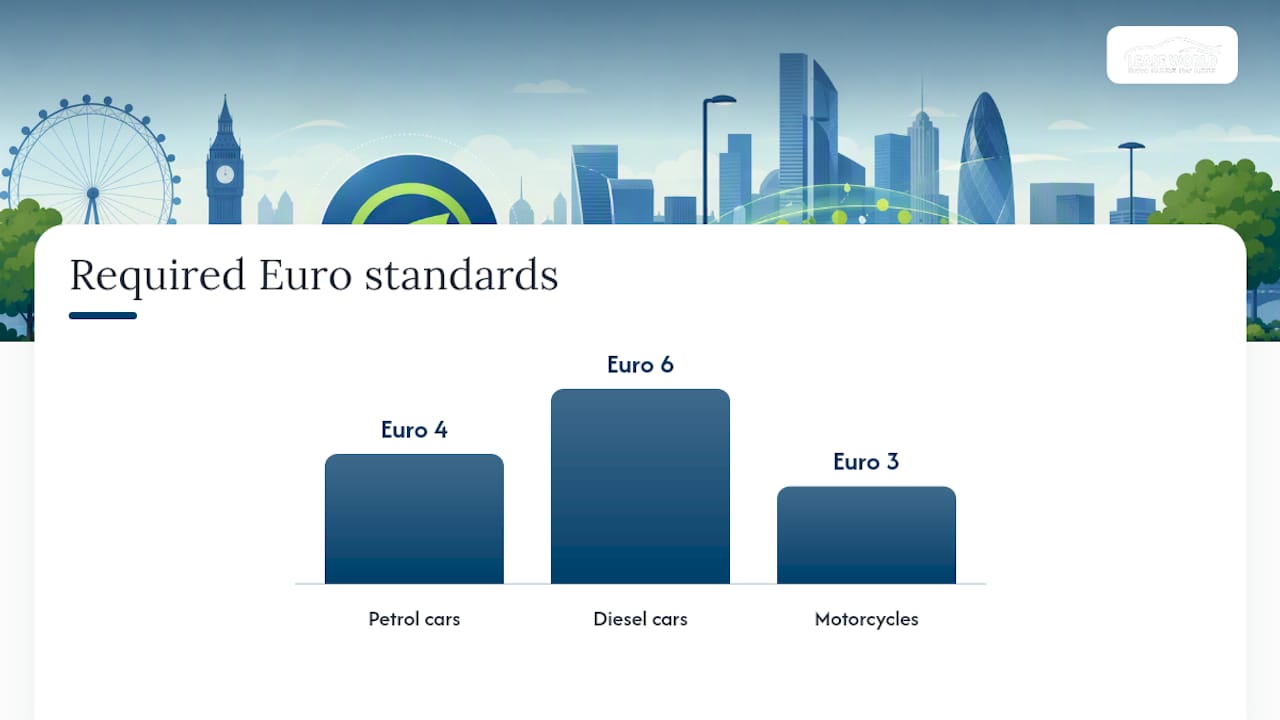
Petrol cars need to meet Euro 4 emissions standards, and diesel cars need Euro 6. Motorcycles need Euro 3. Those are the numbers that matter, and they're worth memorising because sales staff and lease adverts throw around "ULEZ compliant" as a marketing line without always specifying which standard a vehicle actually meets.
Age is a useful rough guide but not a reliable one. Petrol cars registered after 2005 generally meet Euro 4, and diesels registered after September 2015 generally meet Euro 6. The word "generally" is doing real work in both those sentences.
Some manufacturers rolled out Euro 6 diesel engines earlier than the general market shift, and others were slower. A handful of models registered either side of these dates don't follow the pattern, which is exactly why TfL doesn't enforce ULEZ by registration date at all.
TfL checks the vehicle's declared emissions data, not its age. That figure sits in your V5C logbook at section D.2, and it's what the enforcement cameras cross-reference against the TfL database when they read your plate.
A few situations where the age shortcut breaks down completely:
- Grey imports and personal imports, where the UK registration date doesn't reflect when the engine was actually built or certified.
- Hybrids and unusual variants, where the petrol and diesel elements of a powertrain can carry different emissions classifications.
- Modified or re-registered vehicles, where a change of use or engine swap can alter the declared emissions figure on file.
- Older vehicles that were retrofitted with emissions-reduction technology and later reclassified.
Pro Tip: Never take a salesperson's or lease broker's word for "it's ULEZ compliant" as the final answer. Ask for the registration number in writing and check it yourself on the TfL vehicle checker before you sign anything. It takes thirty seconds and it's the only version of "compliant" that actually matters.
How much does the ULEZ charge cost and what are the penalties?
The daily charge for a non-compliant car is £12.50, and it runs on a strict midnight-to-midnight basis rather than a rolling 24-hour clock. That distinction catches out more leased drivers than almost anything else in the scheme.
If you drive into the zone at 11pm and drive back out again at 1am, you've technically been inside during two separate charging days. TfL's own guidance on where and when ULEZ applies confirms that crossing midnight inside the zone can trigger two separate daily charges rather than one.
Miss the payment window and the next step is a Penalty Charge Notice. TfL sets that at £180, reduced to £90 if paid within 14 days of the notice date. Leave it longer than that and the full amount stands, with further escalation possible if it goes unpaid altogether.
| Scenario | Cost |
|---|---|
| Compliant leased car, any journey | £0 |
| Non-compliant car, single day inside zone | £12.50 |
| Non-compliant car, trip crossing midnight | £25.00 |
| PCN paid within 14 days | £90 |
| PCN paid after 14 days | £180 |
Run the numbers on a regular commute and the scale becomes obvious. A non-compliant leased car driven into the zone five days a week racks up £62.50 in ULEZ charges alone, before fuel, parking, or anything else. Forget to pay on even a handful of those days and a single unpaid week can turn into several hundred pounds in penalties once admin fees from the leasing company get added on top.
Pro Tip: If you know you'll be driving a non-compliant vehicle into the zone regularly, even briefly during a lease changeover, set a calendar reminder for payment rather than relying on memory. A missed £12.50 charge becomes a £90 penalty within days.
How do ULEZ rules affect leased cars specifically?
Here's the part most lease customers only discover after their first PCN. The registered keeper on a leased vehicle's V5C is the finance company, not you, which means TfL sends the penalty notice straight to the lessor. The leasing company then has to decide what to do with a bill that isn't theirs to have caused.
In practice, almost every lessor pays the PCN to avoid it escalating, then invoices the driver for the full amount plus an administrative charge for handling it. That admin fee is where the real cost creep happens, and it varies from one provider to another rather than following any fixed industry figure.
This is the sequence that plays out on most leased vehicles that pick up a ULEZ penalty, as explained in detail by OperatorCompliance's taxi and private hire fleet compliance:
- The non-compliant car is detected by a camera inside the zone on a day it wasn't paid for.
- TfL issues the PCN to the registered keeper, which is the leasing company, using the address on file.
- The leasing company pays the penalty within the reduced window to secure the lower £90 rate where possible.
- The lessor invoices the driver for the penalty amount plus its own administration fee for processing the recharge.
- The driver settles the invoice under the terms set out in the original lease agreement.
That admin fee is contractual, not statutory, which means it's negotiable in principle even if most drivers never think to ask about it before signing. Some agreements cap it at a fixed amount; others leave it open, and a driver who picks up several PCNs across a lease term can end up paying meaningfully more in fees than in actual penalties.
Pro Tip: If a PCN lands on your leased car and you believe it's wrong, whether the vehicle was actually compliant, the camera misread the plate, or you'd already paid, contest it through the leasing company's process rather than ignoring it. Ask for the evidence pack TfL sent them and check the date, time, and plate details match your own records before assuming it's a genuine error.
How do you check a leased vehicle's ULEZ status?
Insist on the exact registration number before you sign anything, not a description of the model or an assurance that "it's the newer version." A vehicle handover identity check takes a minute and can save you months of unexpected charges.
Run through this sequence for any car you're considering leasing:
- Ask the dealer or broker for the specific registration number of the exact vehicle you'll receive, not a sample or a similar model.
- Enter that registration into the TfL vehicle checker and screenshot or save the result with a timestamp.
- If you'll also drive through other UK cities, run the same registration through the GOV.UK clean air zone checker, since London's ULEZ and other cities' Clean Air Zones are separate systems with separate checks.
- Ask to see the V5C logbook, specifically section D.2, which lists the declared emissions standard TfL actually enforces against.
- If the online checker result contradicts what the lessor claims, request documentary evidence before proceeding, and be prepared to walk away if they can't or won't provide it.
A few extra things worth keeping on file throughout the lease, not just before signing:
- Save every TfL and GOV.UK check result you run, with dates, in case a dispute arises later in the contract.
- Recheck compliance if you're offered a mid-contract vehicle swap, since the replacement car may carry a different Euro standard.
- Keep a copy of the V5C D.2 section or ask the lessor for written confirmation of the declared emissions class.
- Note that a refusal to supply the registration number ahead of signing is a genuine red flag about how transparent a provider is being.
Refusal to hand over a registration number before you commit to a contract should tell you something. There's no legitimate reason a lessor would withhold it, and the ones that do are usually hoping you won't check.
What should you check in your lease agreement about ULEZ liability?
Read the fines and charges clause before you read almost anything else in the contract, because that's the section that determines what happens the day a PCN arrives. Most lease agreements name the leasing company as the registered keeper, which they have to for legal reasons, but they vary enormously in how they describe what happens next.
Look specifically for language covering who pays the penalty initially, whether there's a fixed administration fee or a variable one, and how quickly you'll be invoiced after the leasing company settles with TfL. Vague wording like "reasonable administrative costs" without a number attached is worth pushing back on before you sign, not after the first bill arrives.
Points to raise directly with a broker or lessor before committing to a lease:
- Ask whether the admin fee for handling a PCN is a fixed amount or a percentage, and get the figure in writing.
- Ask whether the lessor will contest a PCN on your behalf if you believe it was issued in error, and what that process involves.
- Confirm the registration number of your specific vehicle will be supplied and verifiable before the contract is signed, not on delivery day.
- Check the invoicing timeline: some lessors bill within days of paying TfL, others batch charges monthly, which affects whether you catch errors early.
- Ask if there's a cap on the total admin fees chargeable across the lease term, particularly relevant if you expect to drive through the zone often.
Our guide to understanding lease agreement terms goes into more depth on the clauses worth negotiating before you commit, and it's worth reading alongside the specific ULEZ points above rather than in isolation.
If a provider doesn't confirm these terms clearly or hedges when you ask direct questions about fee structures, that's information in itself. A transparent lessor should be able to answer every one of these points without hesitation.
How can you reduce ULEZ risk while leasing a car?
The simplest fix is choosing a compliant vehicle from the outset, which sidesteps the whole issue rather than managing it after the fact. Petrol cars meeting Euro 4 and diesels meeting Euro 6 never trigger the charge, and fully electric vehicles are automatically exempt regardless of registration date. Our guide to EV leasing covers what to expect if you're weighing that route, and it's worth comparing running costs properly rather than assuming an EV lease costs more across the term.
If you're leasing a car that isn't compliant, perhaps because it's the right vehicle for your job or budget in every other respect, set up Auto Pay through TfL so charges are collected automatically rather than relying on you to remember each time. That single step removes the risk of a forgotten £12.50 charge escalating into a £90 penalty, and it's a genuinely low-effort fix for a common problem.
Practical measures worth adopting if ULEZ exposure is a real factor in your leasing decision:
- Prioritise Euro 4 petrol or Euro 6 diesel models, or go fully electric, when comparing lease options.
- Set up Auto Pay on TfL's system if you'll drive a non-compliant vehicle into the zone regularly.
- Keep payment records and confirmation emails for every ULEZ charge you pay, in case a dispute arises.
- Plan routes to avoid unnecessary zone crossings, particularly ones that straddle midnight and risk a double charge.
- Consider a short-term hire or a different vehicle for occasional London trips rather than running a non-compliant leased car through the zone repeatedly.
Pro Tip: If your commute only occasionally takes you through the zone, compare the annual cost of the daily charge against choosing a compliant model at lease renewal. For frequent drivers, a compliant vehicle usually pays for itself in avoided charges within the first year.
What other clean air zones and future changes should you watch for?
London isn't the only city running one of these schemes, and it won't be the last to expand or tighten its rules either. Several other UK cities operate their own Clean Air Zones with different boundaries, vehicle categories, and charges, all checked through a separate Gov rather than TfL's own tool.
Local authorities can and do revise their Clean Air Zone rules, boundaries, and charge structures over time as air quality targets shift. A vehicle that's exempt in one city under today's rules isn't guaranteed to stay exempt if that authority tightens its standard next year.
For anyone leasing a vehicle over a two, three, or four-year term, that has a real bearing on the decision. A car that's comfortably compliant today could face a stricter standard in a city you regularly visit by the time your contract runs its course, and that's worth factoring into a longer lease rather than just checking compliance on day one.
Steps worth building into how you manage a lease over its full term:
- Recheck your vehicle's status on the relevant checker before renewing or extending any lease, not just at the start.
- Sign up for update alerts from TfL and any local authority whose Clean Air Zone affects your regular routes.
- Factor potential zone changes into resale or return value if you're near the end of a lease and considering another.
- Treat "compliant" as a snapshot in time rather than a permanent status, particularly for vehicles near a Euro standard boundary.
Lease World's perspective on cutting through ULEZ confusion
Most of the confusion around ULEZ and leased cars isn't really about the rules themselves, which are actually quite clear once you've read them properly. It's about the gap between what a lease advert promises and what a contract's small print actually says. "ULEZ friendly" on a listing means nothing legally binding; a Euro standard on a V5C does.
This family-run approach shapes how compliance questions are handled, focusing on personalised service rather than managing thousands of anonymous accounts through a call centre script. The service includes personalised leasing arrangements, fixed monthly payments, no-deposit options on eligible agreements, and UK delivery, all depending on getting accurate vehicle information before signing.
Where a broker earns its keep on this specific issue is in the verification step most private buyers skip. Checking a registration against TfL's database, confirming the Euro standard actually matches what's advertised, and flagging fines or admin fee clauses in the paperwork before someone commits to a term, that's the practical work that prevents a £12.50 daily charge turning into a running dispute eighteen months into a lease.
None of this requires special expertise, just discipline about checking the specific vehicle rather than trusting a category label. The rules are public, the checkers are free, and the V5C tells the truth even when a sales pitch doesn't. What varies enormously is whether the person selling you the lease actually does that checking before you sign, or leaves you to discover the gap when a PCN lands on your doormat.
— Jason
Get a ULEZ-checked lease sorted with Lease World
This service exists for those seeking clear answers on ULEZ compliance before committing to a vehicle lease. Registrations are verified against TfL's checker during quoting, fees are disclosed upfront, and eligible vehicles may include UK delivery.
If you're comparing options, browse our range of personal car leasing deals with fixed monthly payments and no hidden extras, or head straight to our enquiry page and ask for explicit ULEZ compliance confirmation on the specific vehicle you're considering, registration number included. For a wider view of how leasing works end to end, our leasing guides hub covers everything from contract terms to delivery timelines. Get in touch and ask us to check a registration before you sign; it costs nothing and it's the single most useful question you can ask any lessor.
Sources
FAQ
What cars are exempt from paying ULEZ?
Fully electric vehicles are exempt, along with petrol cars meeting Euro 4 emissions standards and diesel cars meeting Euro 6. Certain registered disabled and disabled passenger vehicles also qualify for exemptions or grace periods under specific TfL criteria.
What is the 1.5 rule when leasing a car?
There's no official rule tied to ULEZ or standard UK lease agreements involving a numeric threshold like that; if you've seen a figure referenced, it likely relates to a specific finance product's mileage or excess calculation rather than any emissions or Clean Air Zone standard, so check the exact term with your provider directly.
What are the disadvantages of a lease car?
Leased cars come with mileage limits, potential end-of-contract wear charges, and no equity build-up since you never own the vehicle. On the ULEZ front specifically, the registered keeper is the leasing company, so any penalty charge notice is typically recharged to you with an added administration fee.
How do I know if my vehicle is exempt from ULEZ?
Enter the exact registration number into the TfL vehicle checker, which confirms compliance based on the vehicle's declared emissions rather than its age or model name. For other UK cities, use the separate GOV.UK clean air zone checker, since London's ULEZ and other Clean Air Zones run independent systems.