
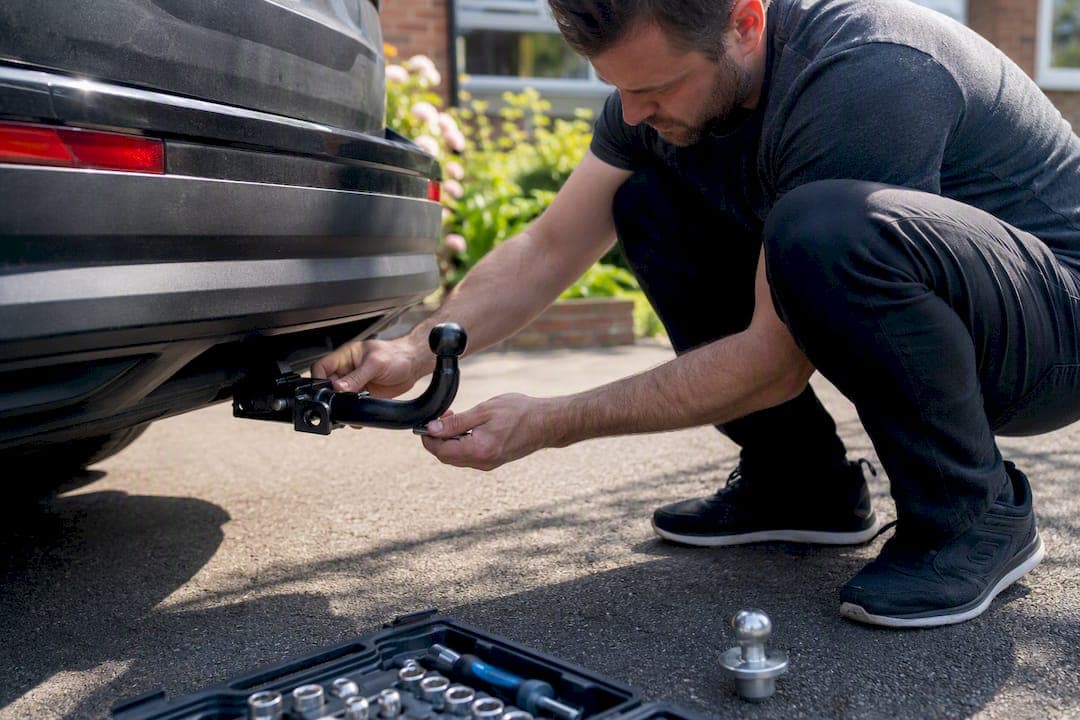
Yes, you can usually tow with a leased car in the UK, provided the vehicle's rated for it and you get written permission from your finance provider first. Two things decide whether you're in the clear: the manufacturer towing figures for your exact model, and written permission from the finance provider that owns the car on paper. Skip either one and you're gambling with your lease.
- Fitting a tow bar without asking is a breach of most lease agreements, even if the car can physically tow the weight you need.
- Parts must be type-approved for your model, wired specifically for that vehicle, and fitted by a professional, insured installer.
- No permission slip or the wrong wiring loom can mean removal charges, a voided warranty, or an insurance headache down the line.
Key Takeaways
Towing with a leased car in the UK works reliably when you secure written permission before fitting, use type-approved parts, and keep every certificate until the car goes back.
| Point | Details |
|---|---|
| Get permission first | Contact your finance provider in writing before booking any tow bar installation. |
| Match the correct capacity | Check braked and unbraked figures for your exact model and drivetrain, not the range in general. |
| Use vehicle-specific wiring | Avoid universal bypass kits, which risk voiding your manufacturer warranty. |
| Keep all paperwork | Store the VAT invoice, parts certificate, and fitter's guarantee until lease return. |
| Ask Lease World early | Request towing permission checks at the quote stage to avoid rework once the vehicle's delivered. |
Where to check the rules and plan your lease
Consult GOV.UK's towing guidance for legal weight limits, and browse Lease World's leasing guides for contract and modification advice.
Table of Contents
- Lease permissions and contract risks: towing with a lease car explained
- Approved tow bars and vehicle-specific wiring: the fitment standard
- How do you check your lease car's towing capacity?
- Insurance, warranty and what happens at lease return
- Step-by-step: securing towing permission on your lease car
- How Lease World helps you get a tow-capable lease from the outset
- Sources
- FAQ
Lease permissions and contract risks: towing with a lease car explained
Every lease agreement has a modifications clause, and towing equipment falls squarely inside it. Most contracts word it something like "no alterations to the vehicle without prior written consent from the lessor" — vague enough to cover everything from a tow bar to a roof box. The clause you really need to find is the one about return condition, because that's where the financial risk sits at the end of the contract.
Fitting a tow bar to a leased vehicle is entirely possible, but it hinges on getting that permission in writing before any work starts. A phone call isn't enough. You need an email or letter you can produce later, because it becomes your evidence for both the insurer and the lease company when the car goes back.
Pro Tip: Screenshot or print the permission email the day you receive it. Lease providers change staff and systems more often than you'd think, and a verbal "that should be fine" from someone who's since left the company won't help you at return inspection.
Requesting permission properly usually means:
- Contacting the finance provider directly, not just the broker, and naming the exact tow bar and installer.
- Asking whether they require a specific type-approved part number or fitter accreditation.
- Getting the confirmation in writing, ideally referencing your agreement number.
Providers rarely refuse a well-planned request. Refusal tends to happen when someone's already had work done and is asking retrospectively, which understandably makes lease companies nervous about undocumented modifications.
Approved tow bars and vehicle-specific wiring: the fitment standard
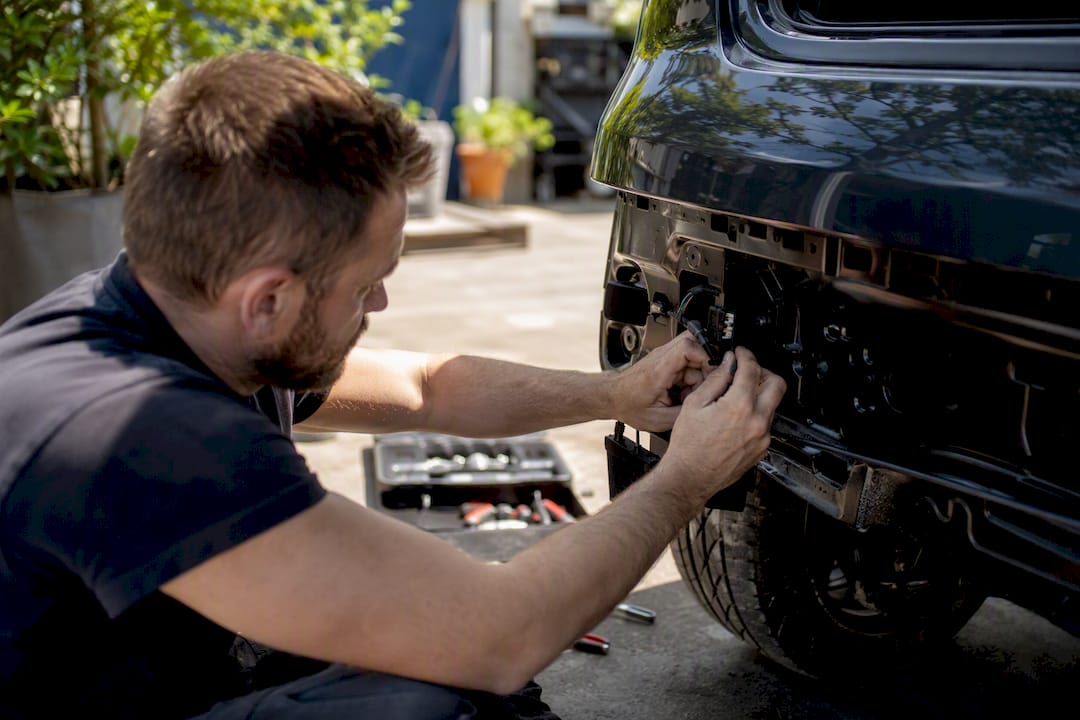
A tow bar for a leased vehicle needs to be type-approved for that exact model, not a generic universal fit. Manufacturer fitment lists specify which part numbers are certified for your car's chassis and mounting points, and a fitter working from that list, rather than guesswork, is the difference between a compliant installation and a costly one.
Wiring matters just as much as the bar itself. Vehicle-specific looms integrate with the car's electronic control unit so safety systems, trailer stability control among them, recognise a trailer is attached and respond correctly. Universal bypass kits skip that integration entirely.
- Ask for the manufacturer's official fitment list before booking, not after.
- Confirm the fitter uses vehicle-specific wiring, not a universal bypass kit.
- Request ECU coding as part of the job so onboard sensors register the trailer properly.
You'll want three documents from the installer once the work's done: a VAT invoice, a parts certificate confirming type approval, and a written guarantee. Lease companies commonly ask for exactly this paperwork at return, and turning up without it is the single most avoidable dispute in this whole process.
How do you check your lease car's towing capacity?
Every model has two figures that matter: braked towing capacity (with the trailer's own brakes engaged) and unbraked capacity (without). You'll find both on the vehicle's manufacturer plate, in the handbook, or on official spec pages, and checking these against your actual trailer weight is non-negotiable before you hitch anything up.
Where drivers trip up is assuming one figure applies across an entire model range. It doesn't. The same badge can carry wildly different limits depending on engine, gearbox, or drivetrain, and this gap becomes most dramatic once you look at electric and hybrid variants.
- EVs and hybrids frequently carry lower towing limits than their petrol or diesel equivalents in the same range, sometimes considerably so.
- An automatic gearbox variant can have a different rated capacity to the manual version of the identical model.
- Battery weight and cooling requirements on some EVs mean manufacturers cap towing capacity more conservatively than you'd expect from the car's overall size.
If you're specifying a lease vehicle with towing in mind, ask the question before you sign, not after delivery. Check the exact trim and drivetrain combination you're ordering against the manufacturer's published figures, and if you're leaning towards an electric or hybrid model for a business fleet, our hybrid and electric van leasing page is a sensible place to compare towing-relevant specs before committing.
Insurance, warranty and what happens at lease return
Fitting a tow bar counts as a modification in the eyes of most insurers, and failing to notify them can put your cover at risk exactly when you need it most, mid-tow, with a trailer attached. Tell your insurer and your lease provider before you tow anything, not after an incident forces the conversation.

Warranty risk runs alongside this. Non-approved parts or incorrect wiring, particularly universal bypass wiring rather than a vehicle-specific harness, can void manufacturer cover on unrelated components if a fault's ever traced back to the installation.
At return inspection, expect the assessor to check for:
- Correctly fitted, type-approved tow bar with no visible damage to the bodywork around the mounting point.
- Original written permission and installer paperwork on file.
- No unauthorised wiring modifications beyond the tow bar loom itself.
Pro Tip: A properly fitted, documented tow bar left in place is often preferred by lease providers over removal, since taking it off can leave bracket marks or paint damage that costs more to fix than the bar was worth.
Step-by-step: securing towing permission on your lease car
Getting this right is mostly about sequencing. Do these steps in order and you'll avoid nearly every dispute drivers run into.
- Contact your finance provider directly. Ask specifically whether tow bars are permitted, whether they require a named accredited fitter, and get the answer in writing referencing your agreement number.
- Confirm insurance cover and get a written fitter's quote. Notify your insurer of the planned modification, then request a quote that includes the VAT invoice, parts certificate, and installation guarantee upfront.
- Complete the fit and log everything. Once installed, email the lease company confirming the work's done, attach the paperwork, and photograph the tow bar and surrounding bodywork for your own records.
Keep every document together, ideally in one folder, from that first permission email through to the fitter's guarantee. It's the single habit that turns lease-end inspection from a stressful guessing game into a five-minute formality.
How Lease World helps you get a tow-capable lease from the outset
Sorting towing permission after the car's already on your drive is the hard way to do this. Lease World builds it into the conversation at the quote stage instead, checking manufacturer towing figures against your intended trailer weight and flagging any provider restrictions before you sign anything.
If you need serious payload alongside towing capability, our window van leasing range covers vehicles built for exactly that combination. For a standard passenger car with a tow bar in mind, personal car leasing gives you a fixed monthly payment with no deposit required on eligible vehicles, and our team can flag towing permissions as part of that quote rather than leaving you to chase it later. Ask about towing requirements the moment you enquire, and get a tailored quote that accounts for it from day one.
A few honest observations on where this goes wrong
The mistakes are almost always the same three: asking for permission after the tow bar's already fitted, using a cheaper universal wiring kit instead of a vehicle-specific loom, and losing the paperwork somewhere between installation and lease return. None of these are complicated to avoid. Sorting towing needs before the vehicle's even ordered removes nearly all the friction that shows up later.
— Jason
Sources
FAQ
Can you tow with a leased car in the UK?
Yes, provided the vehicle's manufacturer towing capacity covers your trailer weight and you've obtained written permission from your finance provider before fitting any equipment.
What is the 1.5 rule when leasing a car?
This isn't a recognised leasing rule; if you've seen it referenced elsewhere, it likely relates to towing weight ratios rather than lease terms, and it isn't something UK lease providers apply as standard policy.
What is the 85% towing rule?
It's a widely used guideline suggesting a trailer's loaded weight should stay within a safe proportion of the towing vehicle's kerb weight for stable handling, though your legal limit is always the manufacturer's stated towing capacity rather than any general ratio.
What are the rules on towing a car in the UK?
You must stay within your vehicle's braked or unbraked towing limit, hold the correct driving licence category for the combined weight, and, for leased vehicles, get written authorisation before fitting a tow bar.
Is leasing a car a good idea in the UK?
Leasing suits drivers who want fixed monthly payments and a new vehicle without a large upfront cost; Lease World's no-deposit options and free UK delivery make it straightforward to arrange a contract that includes towing needs from the start.