
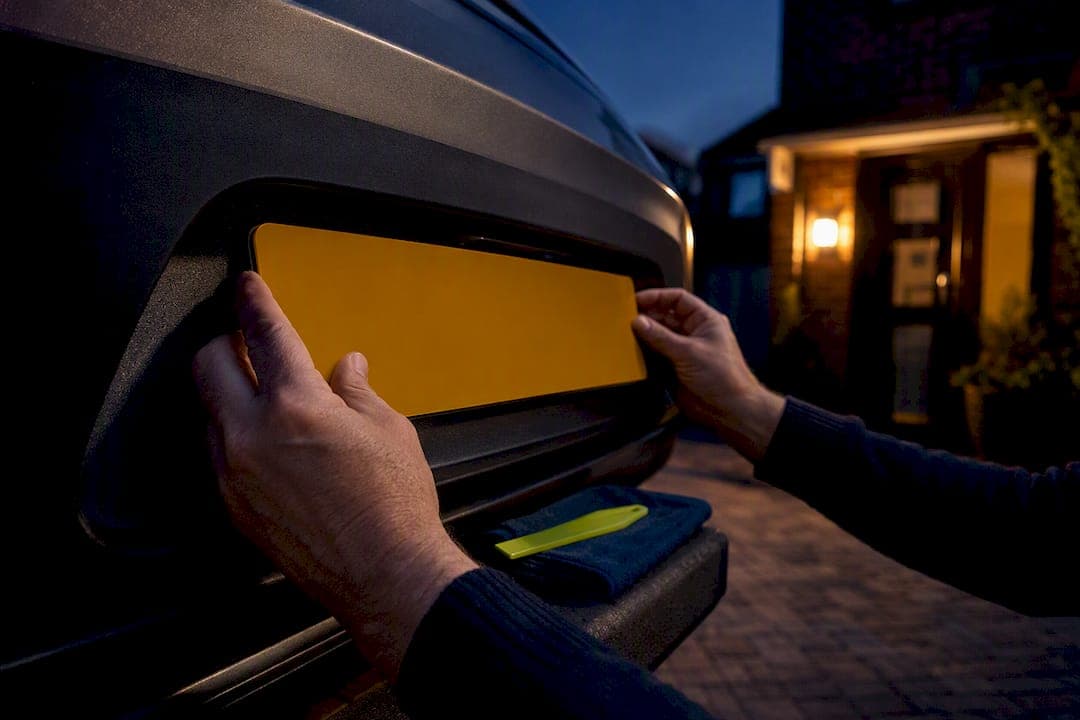
Yes, you can usually fit a private registration to a leased car in the UK, but only with your leasing company's written permission and once the DVLA has confirmed the change. Expect to fill in a V750, V778, or V317 depending on your circumstances, pay the DVLA's £80 take-off fee, and allow 4 to 8 weeks for everything to clear before you fit anything.
TL;DR:
- Most funders require written permission from the leasing company before you can fit a private registration to a lease car, and processing can take 4 to 8 weeks.
- The correct DVLA documents are V750 for assigning a purchased plate, V778 for retaining a plate, and V317 for transferring a plate between vehicles, with fees up to £80 for removing a plate.
- Build in at least 6 to 8 weeks for approval and processing, starting the removal process early to avoid delays at lease end, especially if retentions are involved.
- Always notify your insurer when the DVLA confirms the change, and expect paperwork costs around £180 to £265 over the lease term, excluding the plate purchase.
- The main mistake is fitting plates before receiving the required approvals, which risks legal issues and invalidates insurance coverage.
Table of Contents
- How to fit a private plate on a lease car step by step
- What forms, fees and timings should you plan for?
- Removing and retaining your plate before the lease ends
- What about insurance, and what will this actually cost you?
- Common mistakes and how to avoid them
- How Lease World helps with the paperwork side
- Where to find the official forms and guidance
- The bit nobody tells you until it's too late
- Get your lease sorted before you worry about the plate
- Sources
- FAQ
How to fit a private plate on a lease car step by step
Start with the leasing company, not the DVLA. Most funders will allow personalised plates, but every one of them wants written confirmation before you touch the registration, and most charge an admin fee for handling the paperwork on their end.
Here's the order that actually works:
- Write to the leasing company first. Ask for permission in writing, and get clarity on their process and their admin fee before you spend a penny on a plate.
- Work out which DVLA document applies. A V750 or V778 covers assigning a number you've bought or already retain, while a V317 moves a plate between two vehicles you already control.
- Ask the funder to act as nominee. Since leasing companies are usually the registered keeper on a PCH agreement, they often need to countersign or submit the DVLA application themselves.
- Wait for DVLA confirmation before fitting anything. Driving with an unconfirmed plate, or having one made before the DVLA has approved it, is not something you want to explain to an insurer after a claim.
- Order plates from a DVLA-registered supplier once confirmation lands, then notify your insurer straight away.
This isn't a same-day job. The Auto Express guide to private plates on lease cars points out that most delays come from drivers assuming the funder will move as fast as they want to, rather than confirming a timeline upfront.
Pro Tip: Send the leasing company a specific date by which you need a decision, not a vague request. Funders process dozens of these requests a month, and a firm deadline gets your file off the bottom of the pile.
What forms, fees and timings should you plan for?
Three DVLA documents cover almost every private plate scenario on a leased car, and knowing which one applies saves you a wasted application.
- V750 is the certificate of entitlement issued when you first buy a private registration and want to put it on a vehicle.
- V778 is the retention document, used when you're holding a plate off a vehicle and want to keep the right to use it later.
- V317 handles transferring a plate directly from one vehicle you control to another.
The DVLA doesn't charge for assigning a retained plate to an eligible vehicle, but taking a plate off a vehicle costs £80.
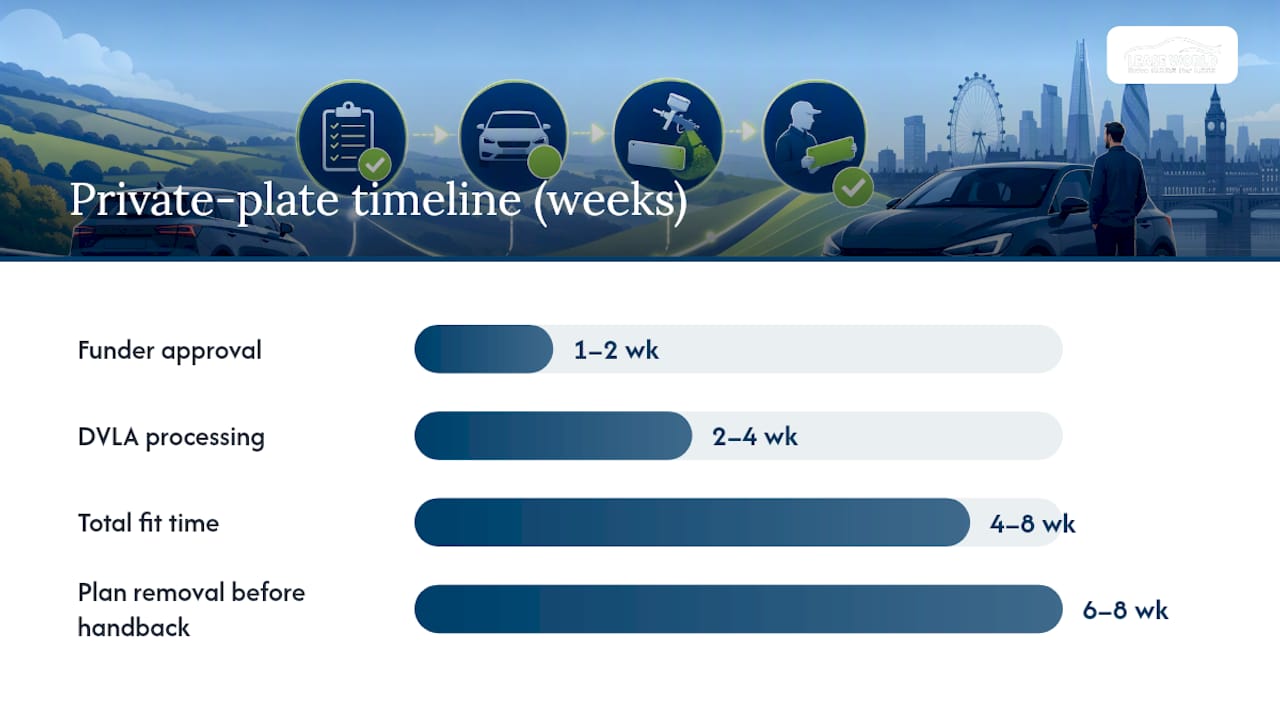
Timing matters more than most drivers expect. Funder approval alone can take one to two weeks, DVLA processing adds another two to four weeks on top, and the two rarely run in parallel. Budget 4 to 8 weeks overall, and start the removal process at least 6 to 8 weeks before your lease ends if the plate needs to come off before handback. Because the vehicle isn't registered to you personally, most of this has to go through postal applications rather than the DVLA's online routes, which is exactly where extra weeks disappear.
Removing and retaining your plate before the lease ends
Leaving this until the last fortnight of a lease is the single most common way drivers lose a private registration they've paid for.
- Start 6 to 8 weeks before your return date. Confirm with the funder how they want the paperwork handled, since some prefer to submit it themselves rather than have you apply directly.
- Use a V317 or V778 to take the plate off. This is what secures a retention certificate in your name, separate from the vehicle you're handing back.
- Budget for the DVLA's £80 fee, plus whatever admin charge the funder applies for processing the removal on their side.
- Confirm original plates go back on before collection. Returning a lease car still wearing your private plate, or without its original registration reinstated, can trigger delays or disputes at handback.
Miss the window and you risk the funder collecting the car before the paperwork clears, which can mean losing access to the number altogether or facing a scramble to sort it retrospectively. Once retained, the plate sits on your V778 certificate until you're ready to assign it to your next car.
What about insurance, and what will this actually cost you?
Tell your insurer the moment DVLA confirmation arrives, not after the plate is fitted. A private registration rarely pushes premiums up on its own, but insurers treat it as a policy amendment, and an unreported change to your vehicle's identity is the kind of gap that can undermine a claim later.
Here's a realistic total for the paperwork side of the process, excluding whatever you paid for the plate itself:
- DVLA take-off fee: £80
- Funder admin fee (each way): £35 to £75
- Plate manufacture: £20 to £60
That puts the practical extra cost of moving a private plate onto and off a lease car somewhere in the region of £180 to £265 across the life of the agreement, on top of the plate's purchase price. Check your lease contract's clauses on vehicle modifications too. Most PCH agreements require the car to go back with its original registration, and treat unauthorised changes as a breach worth flagging before you start, not after.
Common mistakes and how to avoid them
The single biggest error is fitting plates before both the funder and the DVLA have confirmed the change. It's a legal risk and an insurance risk rolled into one, and it's entirely avoidable.
- Get every approval in writing, including who pays which fee.
- Keep your original V750, V778, and DVLA confirmation letters somewhere you can find them in a hurry.
- Only order plates from a DVLA-registered supplier.
- Remember your certificate needs renewing every 10 years if it isn't assigned to a vehicle, or you lose the number permanently.
Pro Tip: Ask the funder to be named as nominee on the V750 application. It lets them submit directly to the DVLA rather than relaying paperwork through you, which is where a lot of postal delays creep in.
If you're on PCP rather than PCH, check who's actually the registered keeper. On some PCP agreements it's you, not the finance company, which changes who can apply to the DVLA directly.
How Lease World helps with the paperwork side
Some vehicle leasing brokers coordinate with funders on this kind of admin, helping drivers work out timing, confirm who pays which fee, and understand what a lease contract allows before committing to a private plate change. Their role is often practical rather than promotional: pointing you towards the right form, funder contact, and a realistic schedule.
If you're weighing up a new lease alongside a personalised registration, Lease World's guides to leasing cover PCP versus PCH in more depth, which matters because it decides who applies to the DVLA in the first place.
Where to find the official forms and guidance
Go straight to the source rather than a summary of it. The GOV.UK page on keeping or assigning a private number covers V750, V778, and V317 eligibility. The DVLA registrations portal handles online submissions where they apply, and Lease World's own explainer on private plates and leased cars walks through the practical side.
The bit nobody tells you until it's too late
Most advice on this topic treats the DVLA as the bottleneck. It usually isn't. The DVLA's own processing is fairly predictable once an application lands correctly, but funders vary wildly in how quickly they respond to a permission request, and that's the stage where weeks vanish without anyone noticing.
What gets underestimated is how much a firm deadline changes behaviour. Ask a leasing company for "permission to add a private plate" with no timeframe, and it sits in a queue behind renewals and complaints. Ask for a decision by a specific date, tied to a lease-end deadline you can point to, and it moves.
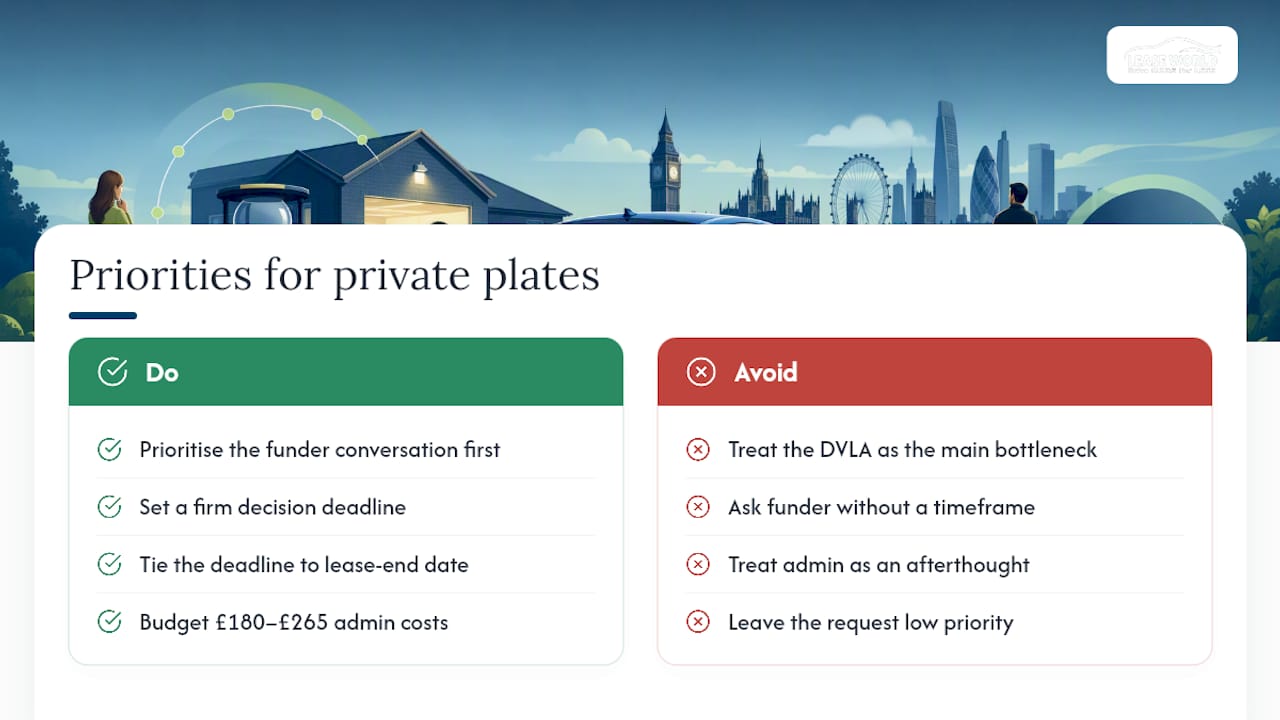
The other thing worth saying plainly: if you're leasing specifically to run a personalised registration, build the admin cost into your decision from day one rather than treating it as an afterthought. £180 to £265 across a lease term isn't dramatic, but it's real money that catches people out because they only think about the plate itself, never the paperwork around it.
Prioritise the funder conversation first, the DVLA forms second. Get that order wrong and everything downstream slips.
— Jason
Get your lease sorted before you worry about the plate
Some brokers offer an alternative to going it alone with a funder. They may arrange various leasing options on eligible vehicles and provide information about leasing companies' policies once you're mid-contract.
If a private plate is part of the plan, the funder you choose matters as much as the car. Lease World's personal car leasing deals come with transparent contracts and no hidden fees, so you know exactly what admin charges to expect before you sign anything. Browse current deals or get a quote and ask directly about private plate permissions as part of your enquiry. It's a five-minute conversation that saves weeks of chasing paperwork later.
Sources
FAQ
Can I put my private number plate on a lease car?
Yes, most leasing companies allow it, but you need their written permission first and must complete the correct DVLA form (V750, V778, or V317) before fitting anything.
Is leasing a car a good idea in the UK?
Leasing suits drivers who want fixed monthly payments and a new car every few years without the hassle of resale, though it comes with mileage limits and condition rules at handback, including returning the vehicle with its original number plate.
Can I get a private number plate on my lease car?
The process works the same across most funders: the leasing company, as registered keeper, needs to cooperate with the DVLA application, so contact them before applying for anything.
What is the 1.5 rule when leasing a car?
There's no official DVLA or leasing rule relating to private plates called the "1.5 rule"; if you've seen this mentioned elsewhere, it likely refers to a specific finance calculation rather than registration or plate procedures, so check the source directly.
How much does it cost to move a private plate onto a lease car?
Budget for the DVLA's £80 take-off fee, a funder admin charge typically between £35 and £75, and £20 to £60 for the physical plate, putting the paperwork total in the region of £180 to £265 across the lease.