
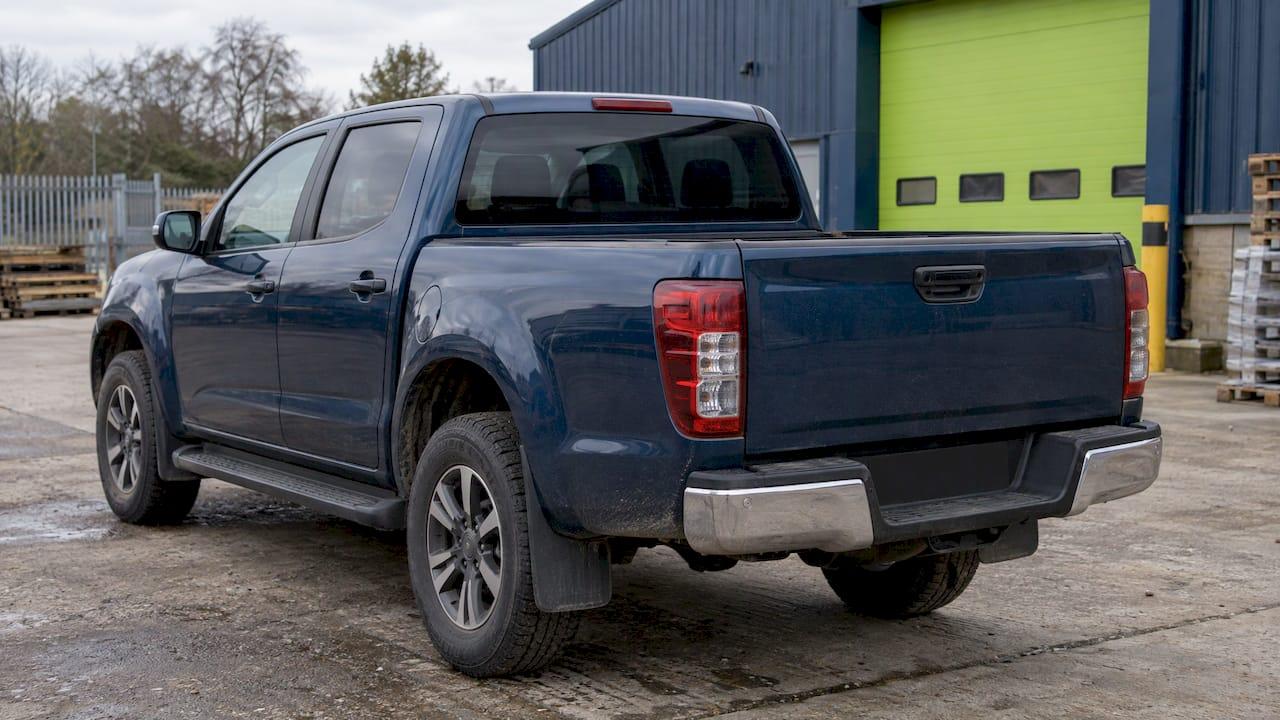
Leasing a pickup in the UK means paying a fixed monthly rental to use a new truck for an agreed term and mileage, then handing it back. You never own it. For most drivers the real work is choosing the right contract, because the term, mileage, maintenance and tax treatment change what a pickup actually costs you. We are a family-run, FCA-authorised broker and BVRLA member with 30+ years' experience, and we compare contracts so the monthly payment you sign for is the one you pay. You can see our pickup truck lease options at any point while you read.
TL;DR
- Pickup leasing is contract hire: fixed monthly payments, an agreed term and annual mileage, and the vehicle goes back at the end.
- Most double cab pickups have been treated as cars for company car tax since 6 April 2025, which matters if you are a business or a driver taking one through a company.
- Mileage, the initial rental, maintenance cover and return condition decide the real cost, so compare them rather than just the headline monthly figure.
- Match the pickup to the job: payload, towing capacity and cab size matter more than badge or trim.
- We offer no deposit options, optional maintenance packages and free mainland UK delivery on eligible new vehicles.
Table of Contents
- How pickup leasing works
- Who can lease a pickup
- What a pickup lease really costs
- The 2025 tax change for double cab pickups
- Matching the pickup to the job
- Short-term or long-term
- Returning the pickup at the end of the lease
- Get your pickup quote
- FAQ
- Sources
How pickup leasing works
A pickup lease is a contract hire agreement. A finance company buys the truck, you rent it for a set period, and the monthly rental covers the drop in value over that time, not the full price of the vehicle. Terms commonly run from two to five years, with an annual mileage you choose at the start.
The steps are simple:
- Choose the pickup. Pick the model, cab style (single, extended or double cab), engine and trim.
- Set the term and mileage. A longer term usually lowers the monthly rental. A higher mileage raises it.
- Decide on the initial payment. Many contracts ask for an upfront rental, expressed as a multiple of the monthly price. No deposit options exist, in which case the cost is spread differently across the monthly payments.
- Application and credit check. The funder checks your credit history and, for a business, the company's accounts or trading record.
- Delivery. The pickup arrives on a date agreed with you. We deliver free to mainland UK on eligible new vehicles.
- Hand back. At the end you return the vehicle for inspection against the contract's condition standards.
Because the funder is the legal owner, you cannot sell the pickup or keep it at the end. If you want to keep a vehicle long term, that is a different kind of agreement.
Who can lease a pickup
Private drivers, sole traders and limited companies can all lease one. The credit check is the same idea in each case, but the evidence differs.
- Private motorists are assessed on credit history, income and affordability. A good credit status gives the widest choice of funders and the keenest rates.
- Sole traders and companies are assessed on the business. Newer businesses may be asked for more information.
- Driving instructors and NHS staff often want a car, not a pickup. If that is you, we have dedicated leasing for driving instructors, NHS staff and short-term needs, and our personal car leasing covers everyone else.
A lease application is a credit search, so apply for the deal you actually want rather than several at once. Applying through a broker means one set of details goes to the funders best suited to you, which is why we compare contracts before you commit.
What a pickup lease really costs
The headline monthly rental is only one line. These are the terms that move the total:
| Term | What it means | What to look for |
|---|---|---|
| Initial rental | Upfront payment, normally a multiple of the monthly rental | The multiple, and whether a no deposit option is available |
| Contract length | Months you are committed to | Shorter terms suit changing work; longer terms usually lower the monthly figure |
| Annual mileage | The distance included each year | Choose realistically: pickups used for site work often cover more than expected |
| Maintenance | Servicing, tyres and repairs packaged in | Optional with us; worth it if you want predictable running costs |
| Excess mileage charge | Pence per mile over your limit | Charged at the end, so set the mileage correctly at the start |
| Early termination | Cost of ending the contract early | Usually substantial, so pick a term you can finish |
We publish no standard prices, because every pickup, term and mileage gives a different quote. Our leasing terminology guide explains each contract term in plain English, and a tailored quotation shows the exact figures for the pickup you want.
Single, extended or double cab
A single cab gives the longest load bed and the most carrying space. A double cab seats up to five and is the choice for crews or families, but its shorter bed carries less. Check the bed length against what you actually load, not against the brochure.

The 2025 tax change for double cab pickups
This is the biggest shift in pickup leasing in recent years, and it affects businesses most.
From 6 April 2025, HMRC stopped using payload alone to decide whether a double cab pickup is a car or a van. Under its guidance on double cab pickups from 6 April 2025, most double cab pickups are expected to be classified as cars when the benefit-in-kind charge is calculated. Benefit in kind (BIK) is the tax an employee pays on a company vehicle they can use privately.
In practice:
- A van carries a flat-rate benefit charge. A car's benefit is a percentage of its list price, so it can be much higher for a well-equipped pickup.
- Tax Adviser magazine reports that most double cab pickups were reclassified as cars for capital allowances and BIK from 2025-26, with transitional relief for vehicles acquired before the end of 2024-25. It also says input VAT recovery remains available because double cabs are still treated as plant for VAT.
What this means by reader:
- Private drivers are not affected by company car tax. The lease is simply a monthly rental.
- Sole traders and company directors should check the treatment of a specific model with their accountant before signing, because the answer depends on the vehicle and how it is used.
- Employers providing a pickup to staff should have an accountant confirm the BIK position of the exact vehicle, especially where one was ordered before the change.
Our guides on whether a car lease is tax deductible and business contract hire cover the wider business rules. For tax treatment of your own vehicle, your accountant has the final word.
Matching the pickup to the job
A pickup that looks right on paper can be wrong on site. Before you ask for a quote, work through these:
- Payload. Add up the heaviest load you carry, including tools and equipment, and compare it with the payload in the vehicle's specification.
- Towing. If you tow a trailer, plant or horsebox, check the maximum braked towing weight for the exact engine and gearbox, as it varies within one model range.
- Cab and bed. Decide how many people ride along and how long your loads are.
- Fuel type. Diesel remains the usual workhorse choice. Plug-in hybrid pickups are now available, and we list a Ford Ranger double cab short-term lease as an example of one.
- Mileage. Look at last year's odometer readings, not your guess.
- Accessories. Roof bars, tonneau covers and liners are best specified at the start so they are part of the agreement.
If your work is better suited to a panel van, our panel van leasing and van leasing pages cover the alternatives, and our guide to reasons to lease a van shows when a van fits better.
Short-term or long-term
A standard contract hire runs for years. If you need a pickup for a seasonal job, a project or a gap between vehicles, our short-term leasing runs on 3, 6 and 12 month terms. It avoids committing to a long agreement for work that is not permanent.

Returning the pickup at the end of the lease
Handback is where unexpected charges appear, and a pickup works harder than a car, so plan for it from day one.
- Know the standard. The industry's fair wear and tear standard is set by the BVRLA, the trade body for the sector. Your contract states which condition standard applies, and charges at the end reflect the loss of value caused by damage beyond normal use.
- Expect wear on work vehicles. Load bed scratches, dents and tyre wear are the usual disputes. A bed liner fitted at the start helps protect the vehicle.
- Keep the service history. Servicing to the manufacturer's schedule is normally a condition of the contract. An optional maintenance package keeps this organised.
- Check mileage. Going over your agreed annual mileage is charged per mile. If your work changes during the term, tell us early so the contract can be reviewed rather than waiting for the end.
- Return everything. Keys, manuals and the vehicle documents are part of the check.
Photograph the pickup from every angle when you return it, with the date visible.
What we think
Pickup leasing works best when the contract is chosen for the job and not for the headline price. The right mileage, the right term and the right cab are what keep the monthly payment you agreed the only payment you make.
That is why we are a family-run business and not a call centre. We compare contracts across funders, explain each term plainly and arrange fixed monthly payments with no hidden fees. Since the 2025 tax change, double cabs deserve an extra conversation, so we encourage business customers to bring their accountant into the decision before ordering.
Our aim is simple: a pickup that suits the work, a contract you understand, and a handback with no surprises.
Jason
Get your pickup quote
We arrange personal and business pickup leases with fixed monthly payments, no deposit options and optional maintenance packages. Eligible new vehicles come with free delivery to mainland UK, and we compare contracts so you can see the options side by side.
Browse our pickup truck lease deals, or send us your requirements through the quote form. Our guide, what is a pick up lease, is a good next read if you want the basics first.
FAQ
Can I lease a pickup with no deposit?
Yes, we offer no deposit options on leasing. The cost is then built into your fixed monthly payments rather than paid as a larger initial rental. Tell us your budget and we will show the options.
Is a leased pickup treated as a car or a van for tax?
Since 6 April 2025, most double cab pickups are treated as cars for company car tax, according to HMRC's guidance. Single cabs and some other models can differ. Ask your accountant to confirm the position for the exact vehicle you are choosing.
Can I lease a pickup for a short period?
Yes. Our short-term leasing runs on 3, 6 and 12 month terms for situations where a long contract would not suit. Availability depends on the vehicle, so check the current options on our short-term page.
Can I tow with a leased pickup?
Yes, provided the pickup you choose is rated for your trailer. Towing limits vary by engine and gearbox within a model range, so confirm the figure for the specific vehicle before you sign.
Sources
- HMRC Employment Income Manual EIM23151: car benefit, double cab pickups from 6 April 2025
- Tax Adviser: Choosing your lane, tax-efficient vehicle fleets