

Yes, in most cases: if your car lease is financed through a regulated consumer credit agreement, you get a 14-day statutory right to withdraw under Section 66A of the Consumer Credit Act 1974, no reason required. The catch: withdrawing from the finance doesn't automatically cancel your vehicle order, and once you give notice, the lender has up to 30 days to repay any credit you've already drawn down.
TL;DR:
- You must notify the lender in writing within 14 days of the latest relevant date to withdraw from regulated car lease finance, not just signatory day.
- The 14-day cooling-off period only applies to regulated credit agreements, while distance or off-premises vehicle sales have a separate, often shorter, cancellation window.
- Withdrawal from finance does not automatically cancel the vehicle order; you need to separately notify the dealer for the supply contract.
- After withdrawal, you have up to 30 days to repay any amount of credit drawn and may face deductions for handling damage or diminished value, depending on your agreement terms.
- If you miss the deadline, negotiating alternative options or refinancing may be necessary, as automatic cancellation rights are lost after 14 days.
Table of Contents
- What the car lease cooling off period actually covers
- How do I cancel a car lease within the cooling-off period?
- What happens to repayments after you withdraw?
- Why cancelling the finance doesn't always cancel the car
- What to include in your cancellation notice
- What if the vehicle order doesn't get cancelled with it?
- What Lease World sees in practice
- How Lease World can help you sort your paperwork
- Where to check the rules yourself
- Sources
- FAQ
What the car lease cooling off period actually covers
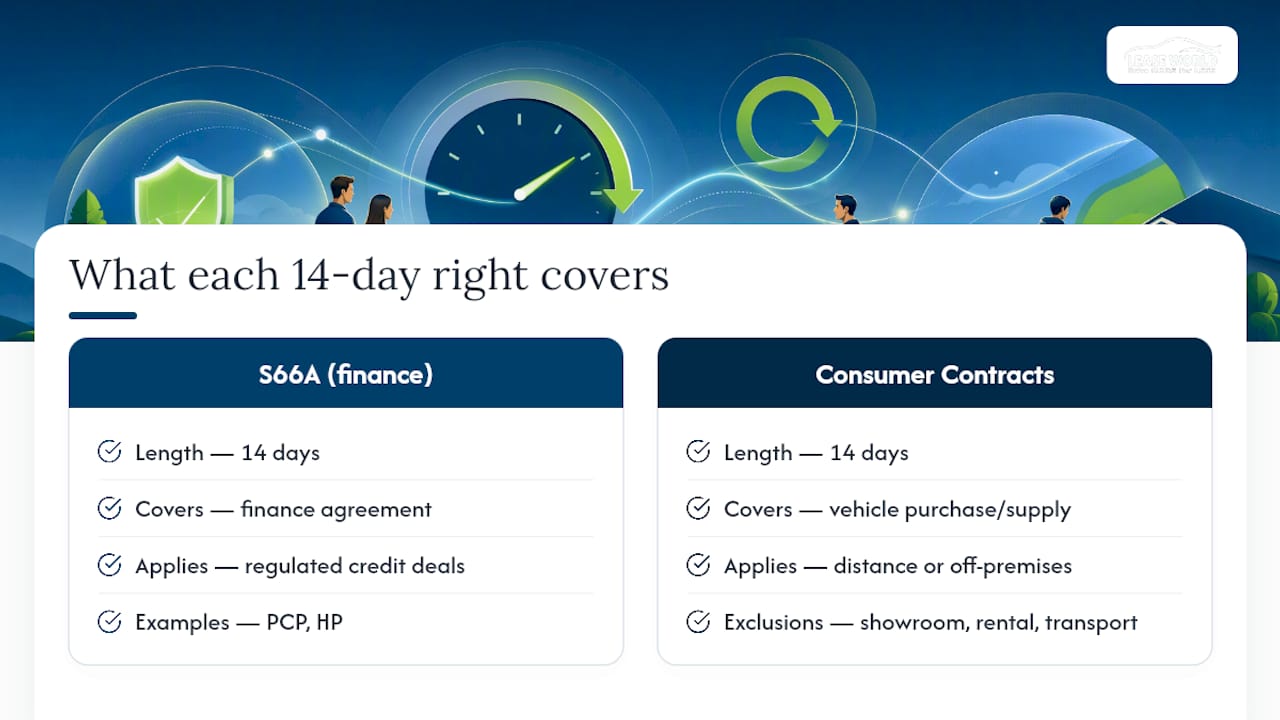
A car lease cooling off period isn't one single rule. It's two separate legal rights that happen to run in parallel, and mixing them up is where most people trip themselves up.
The first is the statutory withdrawal right under Section 66A of the Consumer Credit Act 1974. If your lease is a regulated consumer credit agreement, such as personal contract purchase or a hire purchase deal, you get 14 days to withdraw without giving a reason. This applies regardless of where you signed.
The second is the Consumer Contracts Regulations 2013, which govern the vehicle purchase or supply contract itself, not the finance. This gives a separate 14-day cancellation window but only for distance contracts (bought online or by phone) or off-premises contracts (signed away from the dealer's usual trading premises, such as at a car show or in your home).
Buy a car face to face in a showroom and sign there, and the Consumer Contracts Regulations generally don't apply to that purchase, though your finance agreement's cooling-off period for leases still does. Vehicle rental agreements and some transport-of-goods contracts are also excluded from the regulations. One important extension worth knowing: if the trader didn't give you the required cancellation information, Regulation 31 can extend your withdrawal window, sometimes for up to 12 months.
How do I cancel a car lease within the cooling-off period?
Getting this right comes down to speed and paperwork. Here's the order that actually works when you're trying to work out how to cancel car lease finance correctly.
- Identify the funder, not the dealer. Your withdrawal notice under Section 66A goes to the creditor named on the finance agreement, since the lender is the primary contact for statutory withdrawal, not the showroom you dealt with.
- Work out your actual deadline. The 14 days doesn't necessarily start on the day you signed. Under Section 66A, the clock starts the day after the latest of three events: the agreement date, you receiving the key credit information, or you receiving a copy of the executed agreement. If you're close to what you think is day 14, check your paperwork dates before assuming you've missed it.
- Put it in writing. State clearly that you're withdrawing from the agreement, include your name, address, and agreement number, and send it by email with a read receipt or by recorded delivery. Keep screenshots and timestamps.
- Chase written acknowledgement. Ask the lender for a repayment figure and confirmation they've received your notice, then separately tell the dealer you're withdrawing from the finance so there's no ambiguity about what you've cancelled and what you haven't.
Pro Tip: Never rely on a phone call alone to withdraw. If it ever comes down to a dispute, you carry the burden of proving you cancelled within the period, and a phone call leaves no trail.
What happens to repayments after you withdraw?
Withdrawing isn't free of consequence. You still owe money, just on a fixed timetable rather than the original one.
Once you give valid notice, you must repay any credit already provided plus interest that has accrued up to that point. The lender can't demand this back instantly.
- The lender must give you up to 30 days to repay after you've given notice of withdrawal.
- If your withdrawal also covers the vehicle supply contract under the Consumer Contracts Regulations, the trader must reimburse you without undue delay, using the same payment method you used originally unless you've agreed otherwise.
- Traders can deduct for diminished value caused by handling the goods beyond what's reasonable, but this is limited, not an open licence to withhold your deposit—using a clay bar before ceramic coating can help minimise such handling damage.
Where a deposit or initial rental payment has already changed hands, check the specific terms in your agreement before assuming the full amount comes back automatically.
Why cancelling the finance doesn't always cancel the car
This is the trap that catches out more people than the deadline itself. Citizens Advice and Which? both flag it clearly: the finance agreement and the vehicle supply contract are legally separate documents, even though they feel like one transaction. Withdraw from the finance and the dealer's order for your car can remain live unless you deal with it separately.
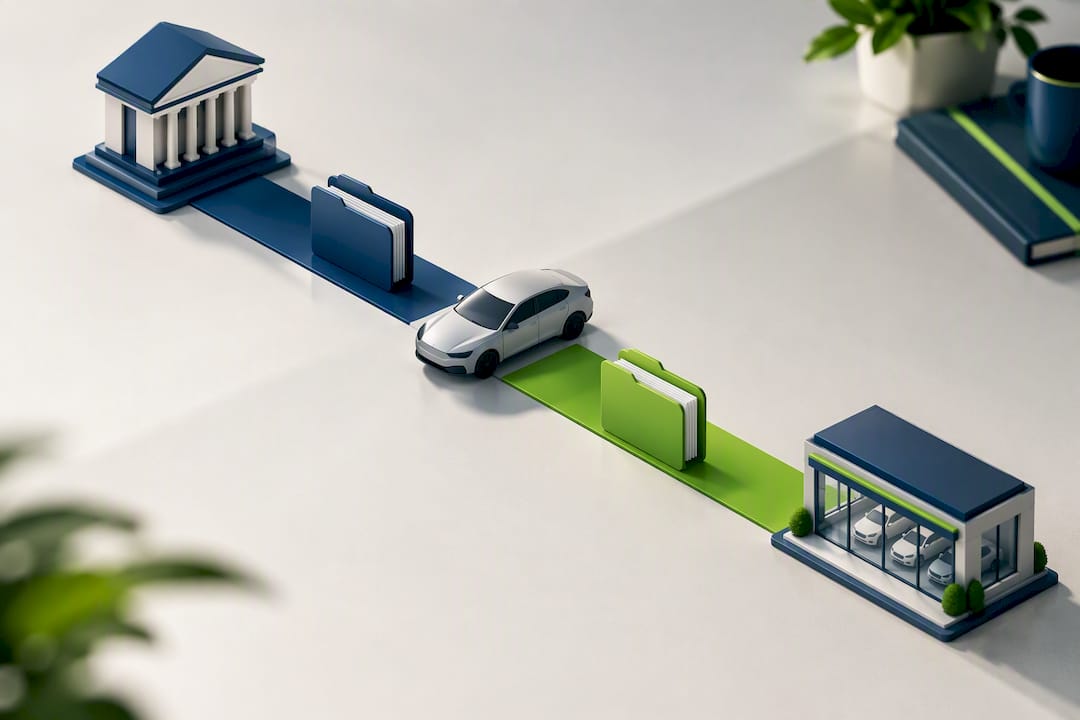
Don't assume your 14 days started on the day you signed in the showroom. Verify the actual trigger date under Section 66A. Get written acknowledgement from both the lender and the dealer, and keep proof of when you sent your notice. Check your deposit and initial rental terms, too, since some amounts may be retained depending on what's already been spent on your behalf.
What to include in your cancellation notice
Your notice doesn't need legal jargon. It needs to be unambiguous and complete.
- Your full name and address as they appear on the agreement
- The agreement or finance reference number
- Vehicle registration or order reference, if you have one
- A clear, direct statement that you are withdrawing from the agreement
- The date and time you're sending the notice
- The lender's correct contact details, taken from your paperwork, not guessed
You can use the standard model cancellation form referenced in Schedule 3 of the regulations, or simply write your own clear statement, both are valid. The trader has a duty to acknowledge receipt on a durable medium, meaning email or letter, not a verbal "yes, got it." Save every copy, request a repayment figure in writing, and get written confirmation of what happens next before you consider the matter closed.
What if the vehicle order doesn't get cancelled with it?
If you've repaid the credit in full following withdrawal under hire purchase, PCP, or conditional sale terms, ownership questions resolve cleanly since you never held title in the first place under those structures. Where the vehicle supply contract remains active despite your finance withdrawal, refunds follow the same broad timelines: traders reimburse within the statutory window, lenders repay within 30 days of your notice, and any deductions must be lawful and proportionate rather than punitive.
If the dealer insists the order stands, you have options. You can look at refinancing through a different provider, negotiate directly with the dealer to unwind the order, or, in some hire purchase and conditional sale cases, consider voluntary termination if you meet the eligibility conditions. Check whether cancellation is even possible before delivery has happened, since that timing changes your leverage. If the dealer disputes your position, that's the point to get formal advice rather than negotiate alone.
What Lease World sees in practice
Most disputes we come across at Lease World trace back to the same root cause: someone withdrew from the finance, assumed that was the end of it, and never put anything in writing to the dealer. The fix is straightforward if you act early. Check the funder's details first, notify them in writing, secure a written acknowledgement, then contact the dealer separately about the vehicle order itself.
As a car leasing specialist, we help customers make sense of contract terminology and comparison paperwork that isn't always written in plain English. The 14-day window is short, and evidence decides disputes. Get help reading your agreement before the deadline passes, not after.
— Jason
How Lease World can help you sort your paperwork
Lease World is the alternative to going it alone against a lender's call centre. If you're inside your cooling-off window and the paperwork feels like a maze of clauses and reference numbers, you can get help comparing contract terms in plain language, working out what's actually owed, and clarifying what has happened to your deposit or initial rental.
You can also get guidance on what a written notice needs to say, and if you decide the lease itself isn't right for you, help finding alternatives with fixed monthly payments and no deposit required on eligible deals is available. Whether you're after personal car leasing or need something for business use, our team can talk you through options once your current agreement is settled. Start with a no-obligation quote and we'll help you find the right fit without repeating the mistakes that caused the last one to unravel.
Where to check the rules yourself
For the primary legal text, see the Consumer Credit Act 1974 and the Consumer Contracts Regulations 2013 on legislation.gov.uk. For plain-English consumer guidance, Citizens Advice and Which? both cover cancelling credit agreements and distance purchases in more depth.
This article is general information, not a substitute for advice from a qualified financial advisor. Consult a qualified financial professional about your own circumstances before acting on anything here.
Sources
FAQ
How long is the cooling-off period for a car lease?
It's typically 14 days from the latest of the agreement date, receiving your key credit information, or receiving your executed copy, under Section 66A of the Consumer Credit Act 1974. A separate 14-day window can apply to the vehicle purchase itself if it was a distance or off-premises sale.
Can I cancel my car lease after signing?
Yes, if it's a regulated consumer credit agreement, you can withdraw within 14 days without needing a reason. After that window closes, your options shift towards negotiation, refinancing, or voluntary termination rather than a straightforward statutory cancellation.
Does cancelling car finance also cancel the vehicle order?
Not automatically. The finance agreement and the dealer's vehicle supply contract are legally separate, so you need to notify both the lender and the dealer in writing to withdraw from each.
What happens to my deposit if I withdraw?
If the vehicle purchase falls under the Consumer Contracts Regulations, the trader must reimburse you without undue delay, though reasonable deductions for handling or diminished value can apply. Check your initial rental terms closely, since not every amount paid upfront is treated the same way.
What if I miss the 14-day deadline?
You lose the automatic statutory right to withdraw without reason, but you're not without options. You can look at early termination routes, negotiate with the dealer, or speak to a leasing specialist like Lease World about refinancing or renegotiating terms.