
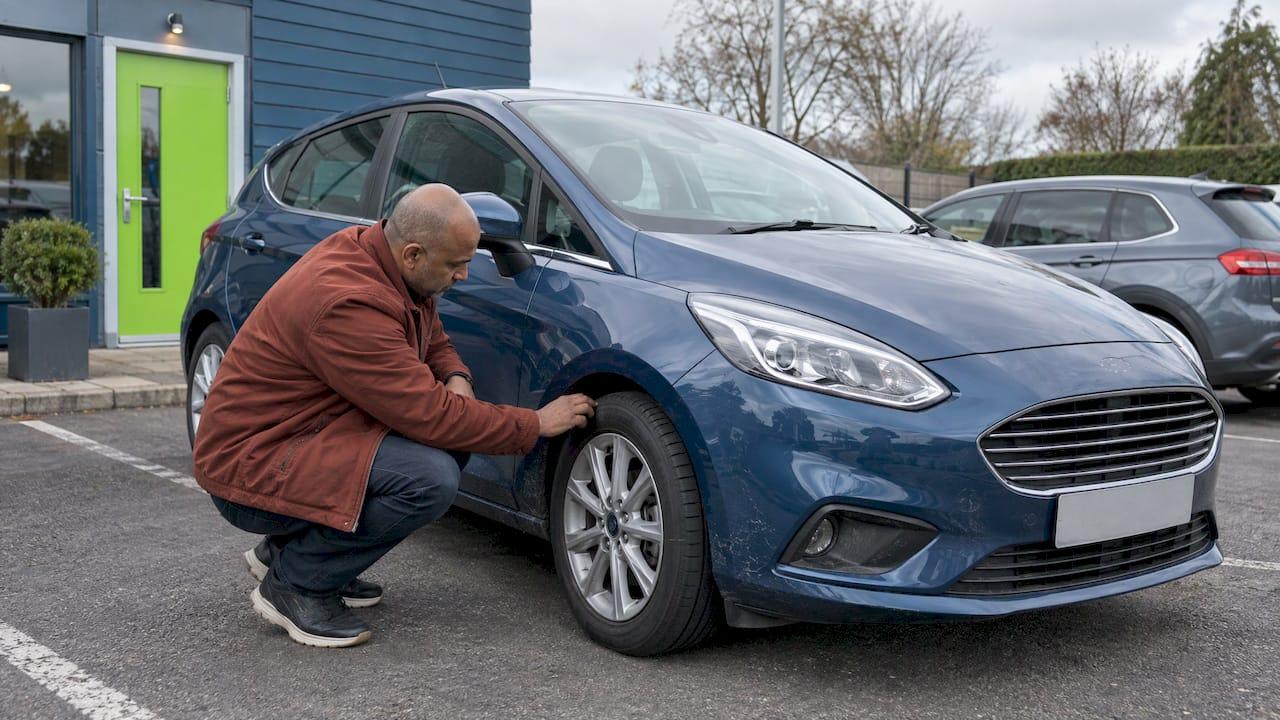
For most full-time driving instructors, leasing the tuition car beats buying it. Your mileage is high, your car is your income, and a fixed monthly payment that covers a car you hand back after three years is easier to plan around than a depreciating asset with an unpredictable repair bill. Buying can still suit part-timers and cash-rich instructors, and the tax treatment differs. Here is how to work out which side you are on.
TL;DR
- Full-time instructors doing 20,000 to 30,000 miles a year usually come out ahead on a lease, because the car is replaced before the expensive repairs and the near-zero resale value arrive.
- Compare the whole deal, not the monthly figure: mileage allowance, excess-mileage charge, maintenance, handback rules and whether dual controls are allowed.
- Buying gives you capital allowances and an asset to sell, but sale proceeds are taxable and a high-mileage tuition car holds little value.
- Tax rules differ by route and by CO2 emissions, so check your own figures with an accountant before you sign.
- No deposit and fixed monthly payments make a lease easy to budget for in your first year.
Table of Contents
- What actually differs between leasing and buying
- Why mileage decides it
- What the maths looks like for a part-timer and a full-timer
- What to compare in a lease
- How tax treats each route
- Cash flow and your first year
- When buying is the sensible choice
- Our view: lease the car, keep the income
- Ready to compare dual-control lease deals?
- FAQ
- Sources
What actually differs between leasing and buying
When you buy, you pay the price (outright, or through a loan or hire purchase), you own the car, you carry its depreciation and you pay every repair. When you lease on contract hire, you pay a monthly rental to use the car for an agreed term and mileage, then return it. You never own it.
For an instructor the practical differences are these:
| Lease (contract hire) | Buy (cash, loan or HP) | |
|---|---|---|
| Upfront cost | Often an initial rental, and no deposit options exist | Full price or a deposit |
| Monthly cost | Fixed rental | Fixed repayments, plus repairs on top |
| Repairs and servicing | Can be included in a maintenance package | All yours |
| Resale risk | The funder's | Yours |
| Mileage | Capped by an agreed allowance | Unlimited |
| Tax route | Rental is a business expense | Capital allowances, plus interest if financed |
The mileage cap is the trade-off to take seriously. A tuition car covers far more miles than a private one, so the allowance you choose at the start matters more than the headline rental.
Why mileage decides it
High mileage is what pushes a bought tuition car into trouble. One driving school owner described buying a dual-control car and covering 25,000 to 30,000 miles a year. The warranty handled repairs in years one and two. By around 60,000 miles in year three the car had become unreliable, with large repair bills, lost lessons while it was off the road and almost no resale value because of its driving-school history. The same owner then took a three-year lease with a 30,000-mile allowance. The monthly payment was higher than the purchase repayments, but the total cost over the term was lower because maintenance, repairs and a replacement car within 48 hours of a breakdown were covered.
That is one instructor's account from 2021, not a universal rule, but the logic holds. Instructor cars are used harder than almost any private car, and a lease passes the late-life risk to the funder. The author's conclusion was that buying makes sense mainly for low-mileage instructors, and that at 20,000 to 30,000 miles a year leasing wins.
The running costs of owning add up quickly. One driving school lists fuel at £3,000 to £4,000 a year, servicing three or four times a year, roughly a tyre a month and a clutch replacement at £1,100 to £1,800, and notes that most manufacturer warranties end at 30,000 miles. Fuel is yours either way, but the tyres, clutch and servicing are where a lease with a maintenance package can take cost and surprise out of the year.
What the maths looks like for a part-timer and a full-timer
How many hours you teach changes the answer. A driving-school franchisor's worked model (Anthony Johnson, December 2018) puts a 15-hour week at £27 an hour. Owning netted roughly £220 a week after fuel, insurance, franchise fees, miscellaneous costs and £20 a week of lost car value, against about £185 a week on a 20,000-mile lease at £70 a week. On those numbers a part-timer does better owning.
The same source finds the picture reverses for people teaching 40 to 50 hours a week, where leasing the cheapest cars (a 40,000-mile contract at roughly £330 a month) lifts the net hourly rate to about £19 to £20. These are 2018 prices, so use them as a method rather than as today's rates: put your own hours, fuel and franchise costs into the same sum.

For a newly qualified instructor building a client base, a more recent start-up guide suggests leasing a dual-control car for £300 to £500 a month, depending on make, fuel type and mileage, with contracts often covering routine servicing, road tax, tyres and breakdown cover. Buying a modern hatchback outright is £15,000 or more, plus £300 to £500 to fit dual controls. Leasing for the first year while cash flow builds is the pattern it recommends.
A simple test: write down your expected weekly hours, annual mileage and how many years you want the same car. If you teach full time, cover more than 20,000 miles and do not want to sell a worn car yourself, lease. If you teach a few days a week, keep the car for years and have cash to spare, buying deserves a proper calculation.
What to compare in a lease
A cheap-looking rental can be the wrong deal. Check these points on every quote:
- Annual mileage allowance. Pick it on your real lesson mileage plus your personal use, not a round number. Exceeding it brings a per-mile charge. MoneyHelper confirms that penalties apply for going over the agreed annual mileage.
- Excess-mileage rate. Ask for the pence-per-mile figure in writing and work out the bill if you go 5,000 miles over.
- Maintenance. Find out whether servicing, tyres and repairs are included, and who must keep the car to the manufacturer's schedule.
- Fair wear and tear. Dual-control cars see heavy daily use. The BVRLA, the trade body for leasing, publishes the standard for what counts as acceptable condition at return. MoneyHelper notes that charges apply for damage beyond fair wear and tear. Keeping the paintwork protected helps; this guide to sealant versus ceramic coating explains how long each lasts.
- Dual controls. Confirm the funder permits fitting them and what happens at the end of the term.
- Initial rental, term and early return. On a personal lease MoneyHelper says the upfront payment is usually three to six months of payments, and monthly cost is set by car value, deposit, mileage and term. Ask what an early return would cost before you sign.
- Insurance, fuel and fines. These stay with you as the lessee under a standard personal contract hire, and your insurer needs to cover tuition use.
This is the routine we go through with instructors. A broker sets several contract options side by side, so the mileage, maintenance and return terms are visible together rather than hidden behind one rental figure. Our driving instructor lease deals page shows what is available, and our instructor starter guide covers the first-year questions.
How tax treats each route
Tax is where leasing and buying look most different on paper. Since rules change and your own circumstances matter (private use, sole trader or company, the car's emissions), treat the following as a map and take your figures to an accountant.
Buying. A dual-control car can qualify for the annual investment allowance, because it falls outside the legal definition of a car for capital allowances as it is not commonly used as a private vehicle. Any private use reduces the allowance proportionally. Writing-down allowances apply where relevant, and a 100% first-year allowance covers new zero-emission cars purchased, not leased. The same factsheet records that the main writing-down rate was 18% until the 2026 year-end changes and is now 14%. When you sell or part-exchange, the proceeds are taxable. If you borrow to buy, only the interest is deductible, not the capital repayments.
Leasing. Under contract hire, each rental is an allowable business expense, deducted from turnover when you work out profit. For cars emitting more than 50g/km of CO2, 15% of the rental is disallowed. The factsheet's example: a car at 86g/km with a £6,000 annual lease charge has £900 disallowed, leaving £5,100 deductible. Low-emission and electric lease cars avoid the disallowance. Sole traders claim only the business share where the car has any private use.
So the tax benefit of buying is real, but it does not outweigh a tuition car's depreciation and repair bill on its own. A deduction reduces a cost; it does not erase it. If you are weighing an electric car, our electric car leasing page is the place to start, and our guide on whether a lease is tax deductible sets out the 2026/27 rules.
Cash flow and your first year
The most common reason new instructors lease is cash. A tuition car bought outright is a large sum before your first paying pupil: CPD Online puts a used dual-control car from around £5,000 and a new one from £20,000 up to £100,000. Money tied up in the car is money not available for marketing, franchise fees and insurance while your diary fills.
A lease replaces that lump sum with a fixed monthly payment. We offer no deposit options and fixed monthly payments, so you know the figure each month, and free UK delivery is available on eligible vehicles. That predictability matters when lesson income swings with the seasons and cancellations.
When buying is the sensible choice
Buying can work if you teach part time, keep the car for five years or more, have cash available and are comfortable selling a used car at the end. One finance comparison gives the same rule of thumb: keep a car five years or more and ownership is usually cheapest. Most full-time instructors replace the car long before that, because the mileage wears it out sooner.
If you are unsure, a short-term lease is a way to start teaching while you decide on a longer commitment. Our short-term vehicle leasing covers 3, 6 and 12 month options.
Our view: lease the car, keep the income
We are a family-run broker with more than 30 years of experience, and we are FCA authorised and BVRLA members. The question instructors ask us most is whether the monthly payment is worth it. We tell them to look at what the car does for the business: it is the tool that earns every lesson fee.
A tuition car that breaks down costs you the repair and the lessons you cannot teach. A lease with fixed monthly payments, a mileage allowance that matches your diary and optional maintenance cover turns that unpredictability into a number you can plan around.
We compare contract hire agreements side by side for each instructor, so the terms that matter (mileage, maintenance, return conditions) are clear before you commit, and there are no hidden fees. For most full-time instructors, that is a better start than tying up savings in a car that will be worn out in three years.
Jason
Ready to compare dual-control lease deals?
We arrange dual-control car leases for driving instructors across a wide range of makes and models, with fixed monthly payments, no deposit options and free mainland UK delivery on eligible new vehicles. Tell us your weekly hours and annual mileage and we will compare contract options for you.
See our driving instructor car leasing page for the range, or request a quote to get started.
FAQ
Is it cheaper to lease a car or buy it outright as a driving instructor?
For high-mileage, full-time instructors, leasing often costs less over the term once repairs, downtime and the low resale value of a driving-school car are counted. For part-timers who keep the car for years, buying can come out cheaper. Run both with your own hours and mileage.
What mileage allowance should an instructor choose?
Add your lesson miles, travel to pupils and personal use, then leave some margin. Excess mileage is charged per mile at the end of the contract, so a slightly higher allowance is usually cheaper than going over.
Can I claim tax relief on a leased instructor car?
Yes, lease rentals are an allowable business expense, with 15% disallowed for cars above 50g/km CO2. Low-emission and electric cars avoid that disallowance. Sole traders claim only the business share if the car has private use, so ask your accountant to confirm your position.
Does a lease include servicing and breakdown cover?
That depends on the contract. Maintenance is optional on many leases, so check what is included, who keeps to the manufacturer's service schedule and how a replacement car is arranged if yours breaks down.
Sources
- Union School of Motoring: dual control vehicle, purchase or lease
- Innov8 Driving School: keeping an instructor's car on the road
- driveJohnson's: buy or lease a car for driving tuition
- BG Insurance: driving instructor business start-up costs
- MoneyHelper: leasing a car with personal contract hire
- Jennions Macken: business motoring tax aspects
- FBTC: buying vs leasing a car
- Croner-i TaxWise: capital allowances on dual-control vehicles
- CPD Online: how to start a driving instructor business
- MoneyMeister: car finance comparison UK 2026
- Diamondbrite: sealant vs ceramic coating