

TL;DR:
- Many drivers are often unaware of the true costs involved in end-of-lease vehicle buyouts, including VAT, fees, and market value comparisons. Understanding the residual value, timing, and market conditions can help select the most financially advantageous option, whether purchasing, extending, transferring, or reselling the vehicle. Proper research and early planning are essential to making confident, cost-effective lease-end decisions.
Approaching the end of a vehicle lease can feel surprisingly complicated. You know the contract is wrapping up, but what actually happens at lease end is something many drivers have never properly considered. Understanding the types of end-of-lease purchase options available to you is not just useful — it could save you a significant amount of money. Most consumer leases are closed-end agreements with a predefined purchase price and mileage cap, which means your choices are largely set before you even pick up the keys. This guide breaks down every option clearly, so you can make a confident, well-informed decision.
Table of Contents
- Key takeaways
- 1. What to consider before evaluating your purchase options
- 2. Lease-end buyout: the standard purchase route
- 3. Early lease buyout: buying before the term ends
- 4. Lease transfer and swap arrangements
- 5. Lease extension: buying time before deciding
- 6. Post-buyout resale: buying to sell
- 7. Side-by-side comparison of your lease-end choices
- My honest take on lease-end purchase decisions
- How Lease World can help you at lease end
- FAQ
Key takeaways
| Point | Details |
|---|---|
| Residual value drives the buyout price | Your purchase price is set at contract start, not at market rates when the lease ends. |
| Lease-end buyout is the most common route | Paying the residual value plus fees is straightforward but requires market value research first. |
| Early buyout usually costs more | Additional termination fees make buying before the lease ends a more expensive choice. |
| VAT rules differ for business drivers | UK businesses can typically reclaim only 50% of VAT on leased cars used privately. |
| Alternatives exist beyond buying | Lease extensions, transfers, and post-buyout resale are all worth considering before deciding. |
1. What to consider before evaluating your purchase options
Before you look at any specific type of buyout, you need a clear picture of the factors that will shape your decision. Jumping straight to the numbers without this framework is where most drivers go wrong.
Contract terms and residual value. Your lease agreement sets the residual value — the precalculated price you can pay to purchase the vehicle — at the very start of the contract. This figure, along with your mileage limit and any end-of-term fees, is the foundation of every purchase decision you will make.
Market value comparison. The single most important financial check is comparing the residual value in your contract against the current market value of your vehicle. If the car is worth more on the open market than your buyout price, purchasing it is immediately attractive. If it is worth less, walking away is usually the smarter move.
Timing: lease-end versus early buyout. There is a meaningful difference between buying the vehicle at the end of the agreed term and buying it before the term concludes. The costs, fees, and processes involved are quite different, and conflating the two is a common and costly mistake.
Wear, tear, and inspection charges. Wear and mileage charges apply separately from the buyout price. Even if you decide to purchase the vehicle, you may still face inspection fees if the car has damage beyond fair wear and tear. These are separate layers of cost that many drivers overlook entirely.
UK tax and VAT considerations. For business drivers, the picture is more complex. UK tax rules limit VAT recovery on leased cars to 50% if the vehicle is available for private use. Personal drivers do not face this complication, but both groups need to understand how VAT is applied at the point of purchase.
Pro Tip: Request a full lease-end statement from your finance provider at least three months before your contract ends. This gives you time to research market values, arrange alternative finance if needed, and avoid rushed decisions.
2. Lease-end buyout: the standard purchase route
The lease-end buyout is the most widely used of all end-of-lease options. It is the arrangement most drivers think of when they consider keeping their vehicle, and it works in a straightforward way.
At the end of your lease term, you have the option to purchase the vehicle by paying the residual value that was written into your contract at the outset. The buyout price is based on the residual value plus applicable taxes and fees. In the UK, VAT is applied to the final residual payment as a supply of goods at that point in time, which is worth factoring into your total cost calculation.
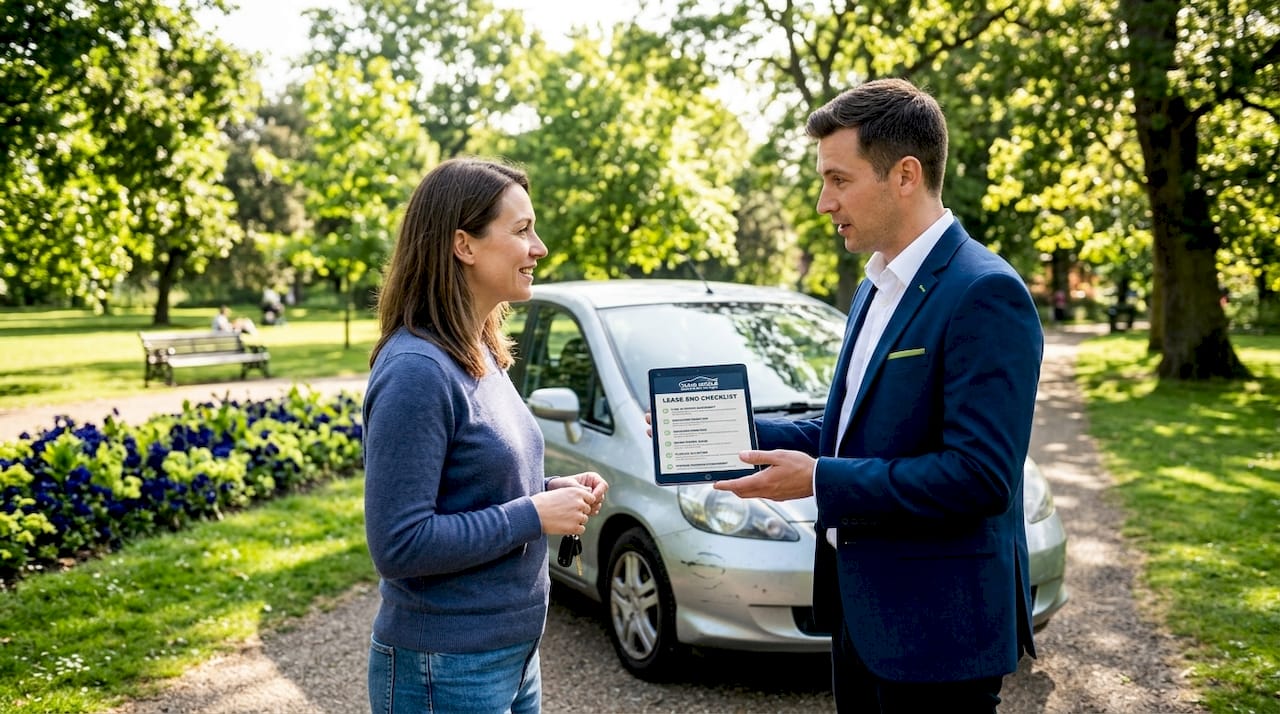
When does a lease-end buyout make financial sense? The clearest signal is when the vehicle's current market value exceeds the residual price in your contract. This situation became notably common during the used car market disruptions of recent years, when many drivers found their residual values were set well below what the car could actually fetch. If you can buy at below-market value, you are immediately in a position of equity.
There are a few practical points to be aware of:
- Most lease contracts set a non-negotiable buyout price, though enquiring about fee waivers is always worthwhile
- You will typically need to arrange your own finance or pay in full if you want to proceed
- The transaction is usually handled through the finance provider, not the dealership
- Understanding how finance leases work in the UK can help clarify your obligations at this stage
The lease-end buyout suits drivers who have grown attached to the vehicle, who have kept it in excellent condition, or who have found that the residual value represents genuine value against the market.
3. Early lease buyout: buying before the term ends
An early lease buyout means purchasing the vehicle before your agreed contract end date. It is less common than the standard route, and for good reason. Early buyouts can involve early termination fees and are generally more expensive than waiting until the lease concludes.
That said, there are situations where an early buyout makes sense:
- You are approaching your mileage limit and want to avoid excess mileage charges
- The vehicle has sustained minor damage and you want to avoid an end-of-term inspection penalty
- Your circumstances have changed and you need to own the vehicle outright for insurance or business reasons
- Market conditions mean the car's value has risen sharply and you want to lock in a purchase
The key distinction is that early buyouts differ fundamentally from lease-end buyouts in their cost structure. The finance provider calculates what you still owe on the contract, adds any early termination fees, and presents a settlement figure. This figure is often higher than simply paying the residual value at the end of the term.
Before pursuing this route, check your contract carefully. Some agreements do not permit early buyouts at all. Others allow them but with significant financial penalties. You can also find out more about early lease termination and what it means practically before making any commitments.
Pro Tip: Ask your finance provider for a settlement figure in writing before making any decisions. Compare this against the vehicle's current market value and the cost of simply running out the remaining lease months. The maths often favours patience.
4. Lease transfer and swap arrangements
Not all end-of-lease options involve buying the vehicle yourself. A lease transfer, sometimes called a lease swap, allows you to transfer your remaining lease contract to another driver. This can be a practical solution if your circumstances have changed and you no longer need or want the vehicle.
The key points to understand about lease transfers in the UK:
- Not all finance providers permit lease transfers, so your contract is the first place to check
- The incoming driver must meet the finance provider's credit criteria
- You may remain liable for the contract if the new driver defaults, depending on the agreement
- Lease transfer platforms exist to match drivers looking to exit contracts with those seeking shorter-term arrangements
This option does not result in you purchasing the vehicle, but it is a legitimate lease termination purchase choice that avoids end-of-term charges if handled correctly. It can also be faster and cheaper than an early buyout in the right circumstances.
5. Lease extension: buying time before deciding
If you are not ready to buy or return the vehicle when your contract ends, a lease extension is often available. This gives you additional months in the vehicle without committing to a purchase.
Lease extensions are typically offered on a rolling monthly basis by the finance provider. They are useful if you are waiting for a new vehicle to arrive, if you are still deciding whether to buy, or if market conditions are shifting and you want to wait before committing.
The cost of an extension is usually based on your existing monthly payment, though some providers adjust the rate. Extensions are generally straightforward to arrange but should not be treated as a long-term solution. Most providers will not extend indefinitely, and the vehicle will continue to depreciate in your care.
6. Post-buyout resale: buying to sell
This is an option that relatively few drivers consider, but it can be genuinely profitable in the right market conditions. Lease contracts sometimes allow buyout and resale as a legitimate course of action, particularly when the residual value is set below the current market price.
The process is simple in principle. You complete the lease-end buyout, take ownership of the vehicle, and then sell it privately or to a dealer at market value. The difference between what you paid and what you sell for is your profit.
This approach requires careful timing and a solid understanding of the used car market. It works best when residual values were set during a period of lower projected values, and the market has since moved upward. It is worth comparing leasing versus buying costs in detail before committing to this route, as transaction costs and taxes can erode the margin quickly.
7. Side-by-side comparison of your lease-end choices
Here is a clear comparison of the main end-of-lease options to help you weigh them up:
| Option | Typical cost | Flexibility | Timing | Key risk |
|---|---|---|---|---|
| Lease-end buyout | Residual value plus VAT and fees | Low (price is set) | At contract end | Overpaying if market value is lower |
| Early buyout | Settlement figure plus termination fees | Low | Before contract end | Higher total cost than waiting |
| Lease transfer | Minimal (admin fees) | Moderate | Before or at contract end | Remaining liability if new driver defaults |
| Lease extension | Existing monthly rate | High | At or after contract end | No ownership, ongoing depreciation risk |
| Post-buyout resale | Residual plus VAT, offset by sale price | High | At contract end | Market value may not exceed total cost |
For business drivers, the VAT treatment on the final residual payment is treated as a supply of goods, meaning VAT applies at that point. This is distinct from the VAT on monthly lease payments, where businesses with mixed-use vehicles can typically only reclaim 50% anyway. Personal drivers pay VAT on the buyout price but have no reclaim mechanism, so the gross cost is the true cost.
Hidden costs worth keeping in mind across all options include inspection fees, documentation charges, and any mileage reconciliation that applies regardless of whether you buy or return the vehicle.
My honest take on lease-end purchase decisions
I have spoken with a lot of drivers over the years who arrive at the end of their lease genuinely surprised by what the buyout actually costs once you add VAT, admin fees, and any outstanding mileage charges. The residual value figure sounds clean and simple in the contract, but the total cost of a lease purchase is always a combination of that figure plus several additional layers.
The most common misconception I encounter is that the buyout price is negotiable in the way a used car purchase might be. In most cases, it simply is not. The price was fixed at the start of the contract, and the finance provider has no commercial reason to reduce it. That said, asking about fee waivers or admin charge reductions is always worth doing. The worst answer you will get is no.
My strongest advice is this: do your market research at least 90 days before your contract ends. Check what your vehicle is actually selling for privately and at auction. If the residual value is below market, you have a genuine opportunity. If it is above market, returning the car is almost certainly the right financial decision, and you can explore a fresh personal car lease deal from a position of clarity rather than pressure.
Business drivers need to involve their accountant before making any buyout decision. The VAT implications at the point of purchase are different from the treatment during the lease, and getting this wrong can be an expensive oversight.
— Jason
How Lease World can help you at lease end
Whether you are weighing up a buyout, considering a lease extension, or simply ready to move into a new vehicle, Lease World is here to help you make the right call. As a family-run business, we take the time to explain your options clearly, without the corporate runaround. We work with a carefully selected panel of finance providers, so whether you are looking at personal car leasing or a business arrangement, we can find a deal that suits your situation. Explore our full range of car leasing deals or get in touch directly for a tailored conversation. We are always at the end of a phone or email, ready to help you get the best outcome. Request a quote and let us take the complexity out of your next step.
FAQ
What is a lease-end buyout?
A lease-end buyout is when you purchase your leased vehicle at the end of the contract by paying the residual value set at the start of the agreement, plus applicable taxes and fees.
Can you negotiate a lease buyout price in the UK?
Most lease buyout prices are non-negotiable as they are fixed at contract start, but it is worth asking your finance provider about waiving admin or documentation fees.
Is an early lease buyout worth it?
Early buyouts usually cost more than waiting until the contract ends due to early termination fees and settlement calculations, so they are only worth considering if you need to avoid significant mileage or damage penalties.
How does VAT apply to a lease buyout in the UK?
VAT is applied to the final residual payment as a supply of goods at the time of purchase. Business drivers with mixed-use vehicles can typically only reclaim 50% of VAT on lease payments, and the buyout payment is treated separately.
What happens if you do not want to buy or return the vehicle?
You may be able to arrange a lease extension on a rolling monthly basis, or explore a lease transfer to another driver, subject to your finance provider's approval and your contract terms.